All posts by Margrethe Harboe

MSD’s legacy of antimicrobial innovation and action

Delivering on our commitment to fight infectious diseases for more than a century.

For more than 100 years, MSD has contributed to the discovery and development of novel medicines and vaccines to fight infectious diseases. With the growing burden of antimicrobial resistance (AMR), we’ve focused on stopping the increasing threat of AMR

Read full article here.

Øker CO2-kompensasjonsordningen med 1,7 milliarder kroner

Regjeringen foreslår å øke bevilgningen til CO2-kompensasjonsordningen for industrien med om lag 1,7 milliarder kroner til 6,4 milliarder kroner sammenlignet med fjorårets budsjett.

Samtidig foreslår regjeringen å øke kvoteprisgulvet fra 200 kroner til 375 kroner. Dette innebærer at industrien kun får støtte for den delen av kvoteprisen som overstiger 375 kroner.

– Forutsigbarhet rundt ordningen er viktig. Vi ønsker derfor god dialog med industrien med mål om å finne en langsiktig løsning for ordningen som både sikrer forutsigbarhet for dem og økonomisk bærekraft for staten, sier klima- og miljøminister Espen Barth Eide.

Justeringene i ordningen skal bidra til at utgiftene blir mer håndterbare for staten. Regjeringen vil gå i dialog med industrien om fremtidige rammer i CO2-kompensasjonsordningen for å holde ordningen forutsigbar og kostnadene for staten nede.

Regjeringen vil samtidig fortsette dialogen om endring av ordningen, slik at den bidrar med utslippsreduksjoner og/eller energieffektivisering i tråd med Stortingets anmodningsvedtak. Basert på denne dialogen, vil regjeringen foreslå en langsiktig løsning for ordningen.

– Vi vet at ordningen kan bidra med betydelige utslippsreduksjoner i industrien og at flere andre EU-land har innført ulike former for klima- og energikrav i sine ordninger. Det er viktig at ordningen bidrar til å gjøre industrien mer robust møtet med lavutslippsamfunnet. Vi ønsker å fortsette dialogen med industrien om dette temaet, sier Eide.

Read full article here.

Tech Talent Network at Google: AI Innovation, Future & Policy

AmCham’s Tech Talent Network at Google: AI Innovation, Future & Policy

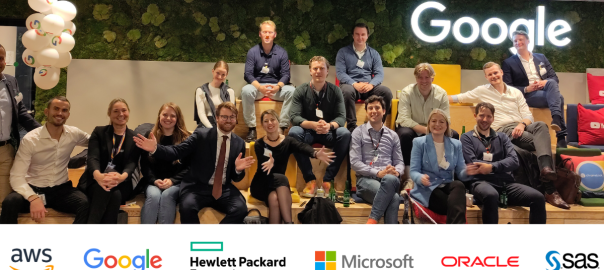
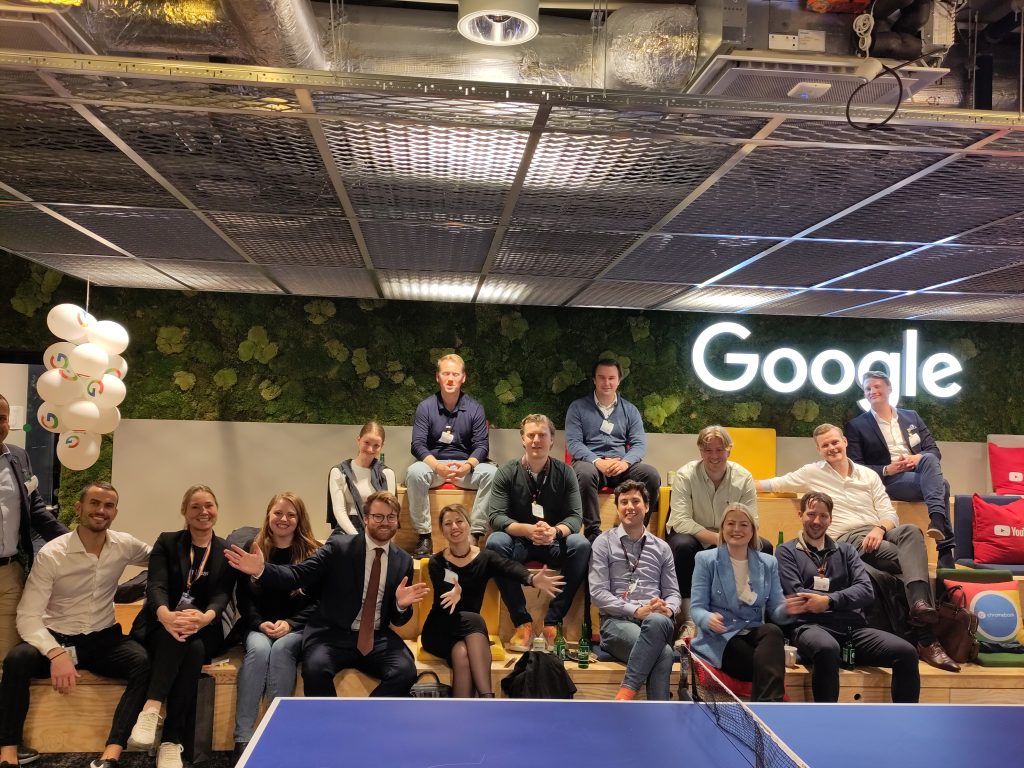
AmCham’s Tech Talent Network (TTN) gathered at Google Norway’s offices, with Country Director Tine Austvoll Jensen warmly welcoming participants and addressing how Google is harnessing AI for good. Recently celebrating 25 years of innovation “1998-style,” a lot has happened since Larry and Sergey started Google in their rented garage.

Tine shared her excitement for what the future holds as we experience one of the biggest technological shifts in our lifetimes, and referenced Pew Research Center’s recent in-depth report As AI Spreads, Experts Predict the Best and Worst Changes in Digital Life by 2035.

Google’s Technical Lead for Data and ML, Sina Nek Akhtar, delved even deeper into the history of AI and demonstrated how the company is helping industries utilize these tools to drive business innovation and success.

What Can Norway Learn from US AI Policy?

Earlier this year, Norway’s Ministry of Education and Research signed an MOU with the US Department of Energy to work more closely on research, innovation, education, and ethical issues in the field of artificial intelligence.

Participants welcomed at Google Norway's offices

Norwegian Artificial Intelligence Consortium (NORA) Senior Policy Advisor Alex Moltzau joined TTN’ers to share policy updates, challenges, and his thoughts on Norway’s new digitalization strategy due out in 2024.

NORA is a collaboration between eight Norwegian universities (NMBU, OsloMet, UiA, UiB, UiO, UiS, UiT and USN), three colleges (BI, HiØ and HK) and five research institutes (NORCE, Simula, SINTEF, WNRI and NR) to strengthen Norwegian research, education and innovation within artificial intelligence, machine learning and robotics.

Alex discussed ongoing developments in the United States, and particularly ongoing National Artificial Intelligence Research Task Force work. Further, the CREATE AI Act introduced to US Congress this summer could be used as inspiration for Norwegian policy development and collaboration.

Alex went on to urge the technology talents in the room to consider getting more involved in local policy work, staying updated and engaging with politicians. He also noted the critical need to educate lawmakers, pointing to the Congressional Bootcamp on AI that the Stanford Institute for Human-Centered Artificial Intelligence (HAI) has organized, and their work to inform political staffers.

About the AmCham Tech Talent Network

TTN is a non-competitive arena for knowledge sharing, professional development, and expanding international market insights, currently open to select Patron-level technology industry member representatives. Exclusive quarterly sessions with industry leaders and external speakers create opportunities for collaboration and leadership development.

For further information and interest in the program, please contact Madeleine.Brekke@amcham.no.

Norway Renames Oil and Energy Department to Reflect Green Shift

Norway’s oil and energy ministry will streamline its name as the country looks beyond the hydrocarbons that today account for about a quarter of gross domestic product.

From Jan. 1, Terje Aasland will take the new title of Energy Minister, the government said Monday, adding that the role of the ministry remains unchanged. The department was previously called the Petroleum and Energy Ministry.

The change was announced amid a government reshuffle and comes just over a month after the government said it would rename two key energy-related offices. Norway’s Petroleum Directorate will become the Norwegian Offshore Directorate from the start of next year, while the Petroleum Safety Authority Norway is due to become the Norwegian Ocean Industry Authority.


Read full article here.

Castlelake Consortium Selected to Provide Private Credit Solution to SAS

Castlelake and its strategic partners including AirFrance-KLM, were selected to provide financing to SAS, as part of its Chapter 11 bankruptcy proceedings. Castlelake will provide a tailored financing solution that demonstrates our 18 years of aviation experience, creative structuring capabilities and relationship-focused approach. Read more about the transaction in the official announcement here: https://www.sasgroup.net/newsroom/press-releases/2023/sas-reaches-major-milestone-in-sas-forward–announces-the-winning-consortium-including-details-of-the-transaction-structure/

Read article here.

The National Budget 2024

A budget to safeguard Norwegian households

The budget for 2024 provides security and opportunity for people and businesses throughout Norway. There are expenditure increases in several areas due to war in Europe, a record number of refugees and higher prices. The Government’s priorities are good public services and support for the most vulnerable, along with security and stability. Norway will play its part in helping Ukraine and Ukrainian refugees. The Government will continue to implement the green transition and take action to achieve our climate goals.

I know a lot of people are affected by higher prices and interest rates now. This budget contributes to security in household finances and the everyday lives of people, young and old, across the whole country. We will support those who are most vulnerable and reinforce public services such as childcare, schools, hospitals and the police. We are making a clear choice in lowering the cost of kindergarten for families with small children. This is all financed within a framework of responsible economic policy”, says Minister of Finance Trygve Slagsvold Vedum (Centre Party).  

The Government wants to preserve Norway’s current conditions of a low unemployment rate and a high number of people in work. Employment continues to increase, and the risk of an abrupt economic setback is lower now than it was a year ago.    

Read full article here.

Vil ha mineralavtale med USA: – Har mer å slå i bordet med

Norske politikere har besøkt USA med mål om å få norske mineraler inn i den enorme skattepakken IRA.

Delegasjonen besto av Bård Ludvig Thorheim (H), Øystein Mathisen (Ap), og Willfred Nordlund (Sp), som er medlemmer av Stortingets arktiske delegasjon. Nordlund er også leder for næringskomiteen.

Målet var å prate om adgangen til det amerikanske markedet for norske mineraler, og en avtale som får norske mineraler inn under støtteordningene for elbiler i den enorme amerikanske skattepakken Inflation Reduction Act (IRA).


Tungvektere

– Det har gått veldig bra. Vi har virkelig fått «linet up» tungvektere. Det er tydelig at dette er et tema de er veldig opptatt av, sa Bård Ludvig Thorheim om besøket.

På møtelisten finner man blant annet lederen av senatets finanskomité Patty Murrey, senatorene Amy Klobuchar og Lisa Murkowski, og Det nasjonale sikkerhetsrådet.

Viktigheten av å ha Kongressen med på laget har gjort at Biden-administrasjonen ikke enda har forpliktet seg til å begynne forhandlinger med Norge.

– Derfor er det veldig viktig at man angriper dette fra mange sider, både i kongressen, og for regjeringen opp mot administrasjonen, forteller Øystein Mathisen.

– Det er ganske «lost» i amerikansk politikk om dagen. De sliter med å få til ting og å finne enighet. Men, dette er det er tegn til at de kan bli enige om, fortsetter han.

Les mer her.

Deadline Looms For U.S.-EU Steel, Aluminum Deal

The U.S. and EU are racing to conclude a “Global Arrangement on Sustainable Steel and Aluminum” and avert a renewed outbreak of tit-for-tat tariffs. Here’s what is at stake.


The U.S. and the European Union face a self-imposed October 31 deadline to conclude what officials are calling a Global Arrangement on Sustainable Steel and Aluminum and avoid a renewed transatlantic trade war.   

The good news is that the tit-for-tat tariffs Washington and Brussels imposed in 2018-2021 seem unlikely to make a comeback, but the broader goals trade officials set for themselves — to address global excess capacity and carbon emissions in metals production — may remain elusive for now.  

In mid-2018, the Trump administration imposed Section 232 tariffs on steel and aluminum imports from nearly every country in the world – including close allies in Europe. The EU retaliated with targeted duties on a wide range of U.S. exports, including motorcycles, bourbon, peanut butter, and jeans.  

Seeking to calm the waters, the Biden administration in October 2021 announced a deal with the EU to replace the Section 232 tariffs with a system of “tariff-rate quotas” allowing duty-free imports of EU-made metals up to a level in line with historical trends. In return, the EU suspended its retaliation for two years. 

However, today’s negotiations aim to go much further, with Washington and Brussels seeking “to discourage trade in emissions-intensive steel and aluminum products that contribute to global non-market excess capacity from other countries and to ensure that domestic policies support lowering the GHG emissions intensity of these industries,” as the USTR has stated. To achieve these goals, the ultimate aim would have to be to extend the scheme to other major players in metals production. 

In addition, the U.S. has been pressing for its exports to be excluded from the EU’s Carbon Border Adjustment Mechanism (CBAM), which technically entered into force on October 1. The CBAM aims to ensure that goods manufactured in Europe, which are subject to a carbon price set under the EU’s Emissions Trading System, don’t face competition from imports made in countries where no similar carbon price is imposed. 

Read full article
AmCham Financial Forum: The Rabbit, the Tortoise and Cross-Border Complexity

AmCham Financial Forum: The Rabbit, the Tortoise and Cross-Border Complexity

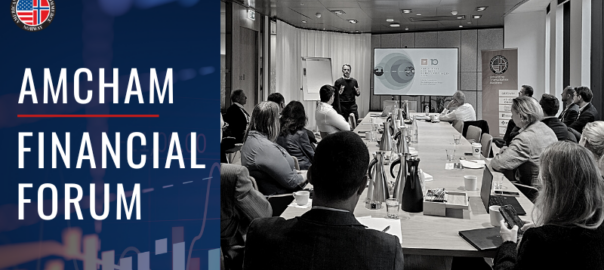
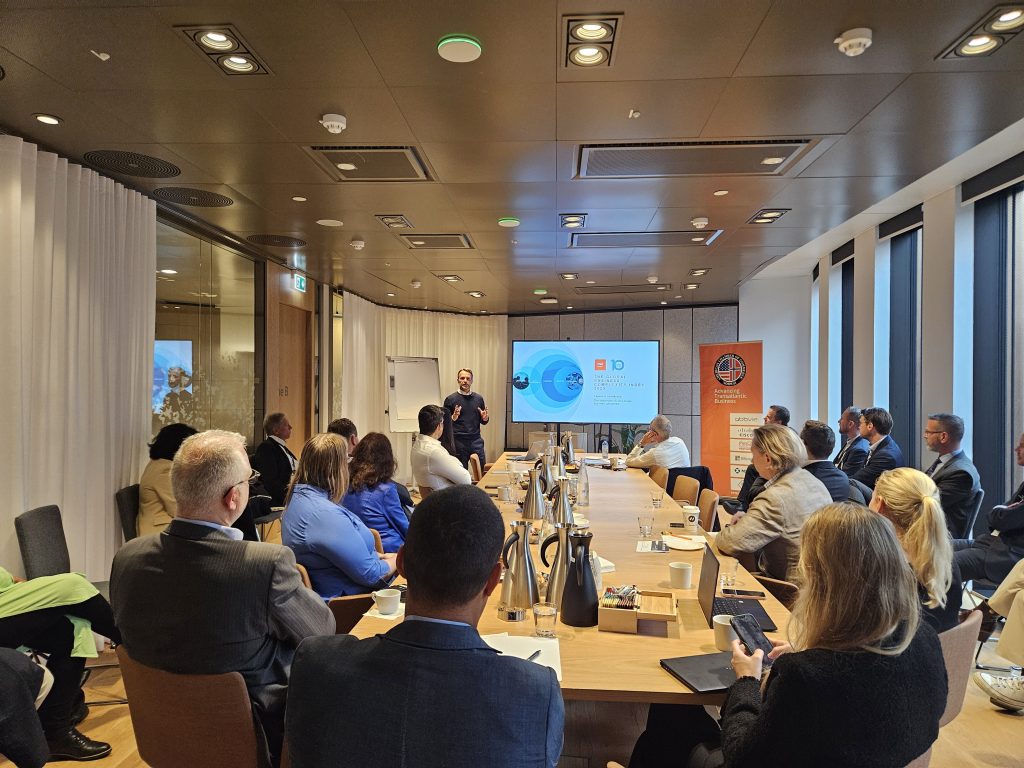
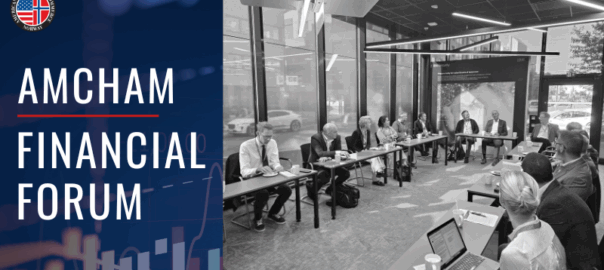
Cross-industry member leaders gathered at Sparebank1 SR Bank’s new Oslo offices for a morning Financial Forum focusing on transatlantic economic trends and TMF’s Global Business Complexity Index.

Sparebank 1 SR-Bank Chief Economist Kyrre M. Knudsen candidly led discussions on persisting international inflation impacts, EUR (“the tortoise”) / USD (“the rabbit”) / NOK (the undervalued) exchange rate indicators, and interest rate movements. US economic bellwethers were in focus, with participants contributing their unique industry perspectives.

Stavanger-based Knudsen, formerly with Equinor, Norges Bank, and the Ministry of Finance, is also a regular business media commentator in Dagens Næringsliv, Finansavisen and E24 among others.

Presenters

Kyrre M. Knudsen 
SpareBank 1 SR-Bank


Niels Didrich Buch
TMF

Business Complexity – Norway and the US in Focus

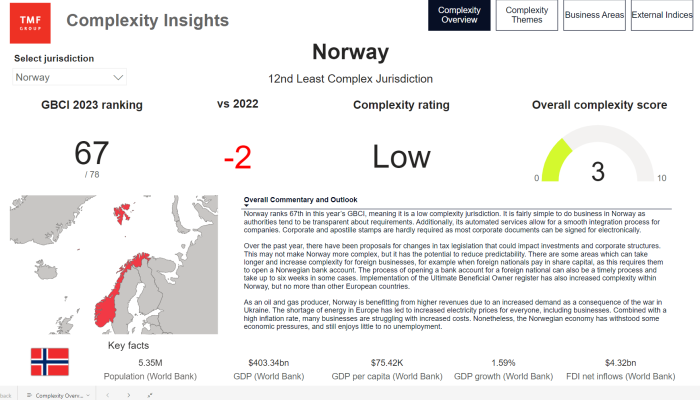
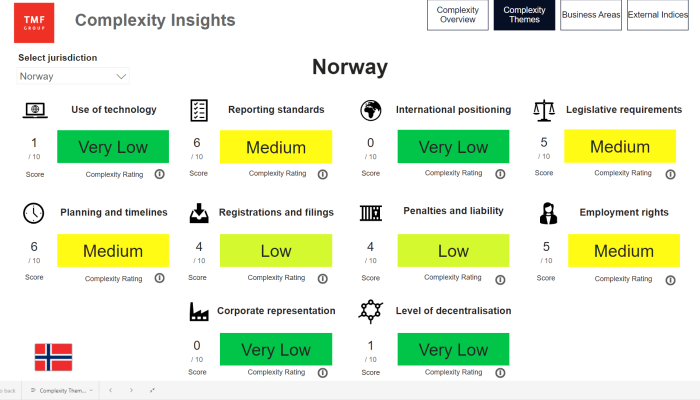
Nordic Market Head Niels Didrich Buch presented TMF Group’s 2023 Global Business Complexity Index, which provides an authoritative overview of the complexity of establishing and operating businesses around the world. It explores factors driving the success or failure of international business, with a focus on operating in foreign markets, and outlines key themes emerging globally.

Focusing on the Norwegian market, Buch gave a summary of the intricacies that face companies here and what new hurdles may impact operations compared to some of our Nordic neighbors.

About the AmCham Financial Forum

AmCham’s collaborative Financial Forum enables cross-industry leaders to openly exchange and learn from their peers – building a better understanding of what it takes to maintain successful international operations in Norway.

Please contact Madeleine.brekke@amcham.no for interest in future meetings.

TMF Complexity Norway
TMF Complexity Norway 2

Previous Forums

AmCham Financial Forum: Advanced Economics – Tech and Policy Evolution

Cross-industry member leaders gathered at IBM’s inspiring Client Center for our Financial Forum focusing on the future of financial trends – an evolving financial landscape. Taking the stage was Paolo Sironi, Global Research Leader in Banking & Financial Markets at IBM’s Institute for Business Value (IBV). With his immense background from fintech innovation, he is considered one of the most respected fintech voices globally.

Read More »

$12 trillion to be spent on renewables and grid infrastructure in the U.S and Canada by 2050 – Report

  • DNV publishes Energy Transition Outlook North America. The report covers the energy future of the U.S. and Canada through to 2050
  • Policies are triggering massive investment into new technologies, accelerating the energy transition in North America
  • Domestic fossil fuel demand declines 60%, mainly in transport and power sectors, but export remains stable while domestic energy use is declining
  • Household energy expenditure halves by 2050 driven by energy efficiency and a cleaner energy mix driving energy affordability

New York, Sept. 25, 2023 – Federal and household spending on energy in the U.S. and Canada will drop sharply as the two countries reduce their reliance on fossil fuels, according to DNV’s Energy Transition Outlook North America. The new report explores the most likely energy future of the U.S and Canada to the middle of the century and it forecasts 12 trillion dollars will be spent in the two countries on grid and renewables between now and 2050. The intrinsic efficiency of renewables and electrification mean that overall expenditure on energy will be the equivalent of 2.5% of GDP by 2050, compared to 4% now. The report forecasts capital expenditure (CAPEX) on renewables will overtake fossil fuel CAPEX by 2040 as domestic demand for the latter falls by some 60% by the middle of the century.

Electrification will be a key driver of the energy transition, which will ultimately benefit consumers. Household energy bills are set to halve by 2050 as they reap the rewards of cheaper electricity generated by renewables. To support the influx of renewable energy resources, the grid must undergo a vast expansion, increasing its capacity 2.5 times by 2050. The Outlook takes into consideration the current bottleneck in transmission lines, which, if not addressed, will limit the attractiveness of wind and solar installations. Policies have already been initiated in the U.S. and Canada to address the lack of grid capacity, although ultimately DNV believes that transmission- and distribution-system operators will be driven by the unprecedented opportunity to capitalize on the vast market for renewable power.

Read full article