AmCham Financial Forum: 2026 Economic Outlook & AI at Scale

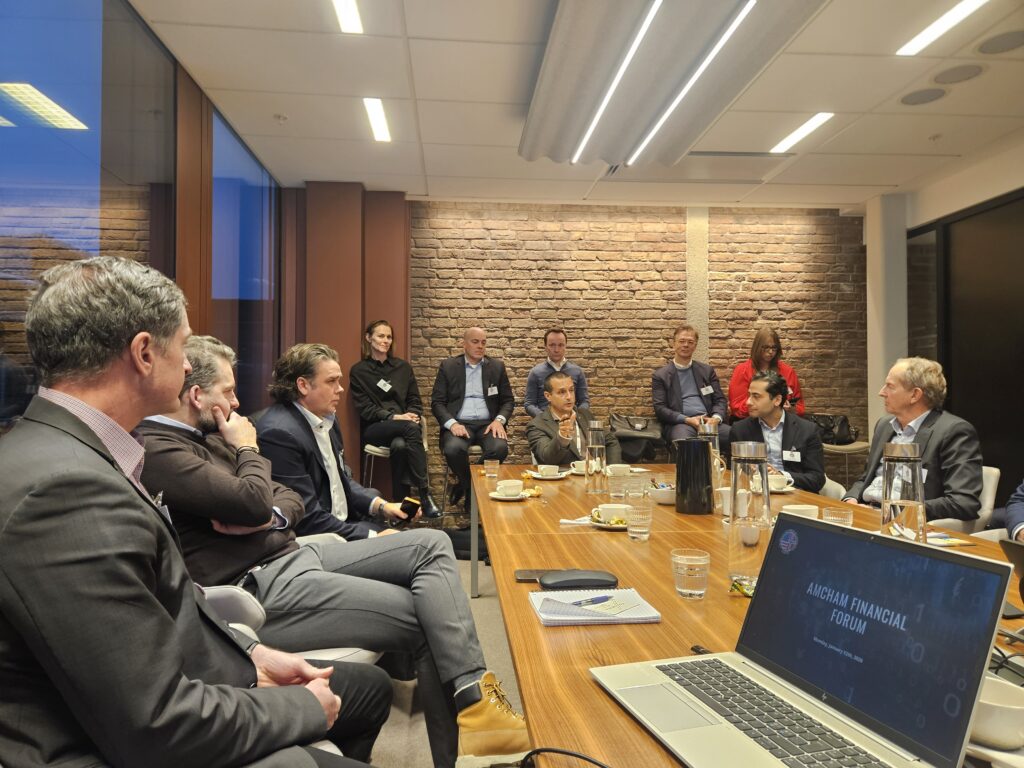
Cross-industry AmCham member leads convened at Citi’s Aker Brygge offices for an assessment of 2026 economic trends and a case study on the growing impact of AI investments.

Speaker Images_Sockin

Robert Sockin
Senior Global Economist

Speaker Images_Tømmeraas

Petter M. Tømmeraas
Managing Director of Data Center Services

"Goldilocks” Performance, but Risks Linger

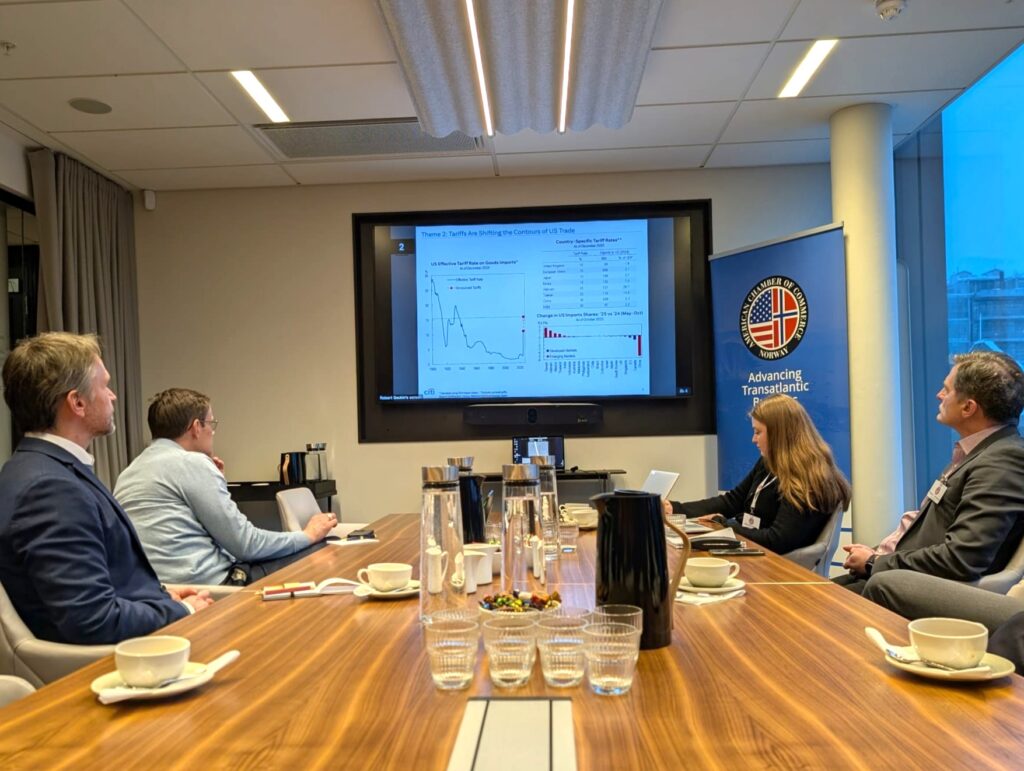
Joining virtually from New York, Robert Sockin, Senior Global Economist at Citi, opened the session by outlining key themes shaping the global economy in 2025 and highlighting what decision-makers should monitor closely in 2026.

The 2026 outlook points to a “Goldilocks” scenario with close to trend growth, moderating inflation, and central bank rate cuts:

• Resilient Economic Performance: The global economy continues to defy expectations despite ongoing challenges. Sockin described this as the “most bullish economic outlook in years.

• US/Global trade shifts due to tariffs: Tariffs have had notable effects on global trade patterns, inflation, and spending, though their impact has so far been less severe than initially anticipated. Tariffs are contributing to a global rebalancing, with the largest gains seen in emerging markets well positioned to compete with China.

• Diverging US & Global Inflation: In the US, spending has been frontloaded in anticipation of higher tariffs, exceeding earlier expectations. As a result, tariffs are delaying the return to the Federal Reserve’s 2% inflation target. Outside the US, inflation continues a downward path and is not a major concern.

• Global Monetary Policy Easing: Globally, central banks are now well into an easing cycle, though approaches vary across countries. Norway, for example, has already begun easing. Sockin noted increasing pressure on the Federal Reserve, including political influence and the prospect of more dovish-leaning appointees over time. While news flow can generate concern, these dynamics are clearly part of the current environment.

• Advances in Artificial Intelligence: AI-related spending remains a positive driver of economic activity. Sockin suggested AI could potentially contribute up to three percentage points to US economic growth, with broader transformation of the US and global economy possible over the next three to five years. AI could also be transformational for developing economies.

However, questions remain around productivity gains. It is still unclear how much of current productivity trends can be attributed to AI versus tight labor markets. Analysts are examining whether AI exposure correlates with unemployment across industries and expressed concern about long-term labor market implications. Investor patience will be critical, particularly as bond investors continue to fund much of the AI buildout.

AI at Scale: From Vision to Reality

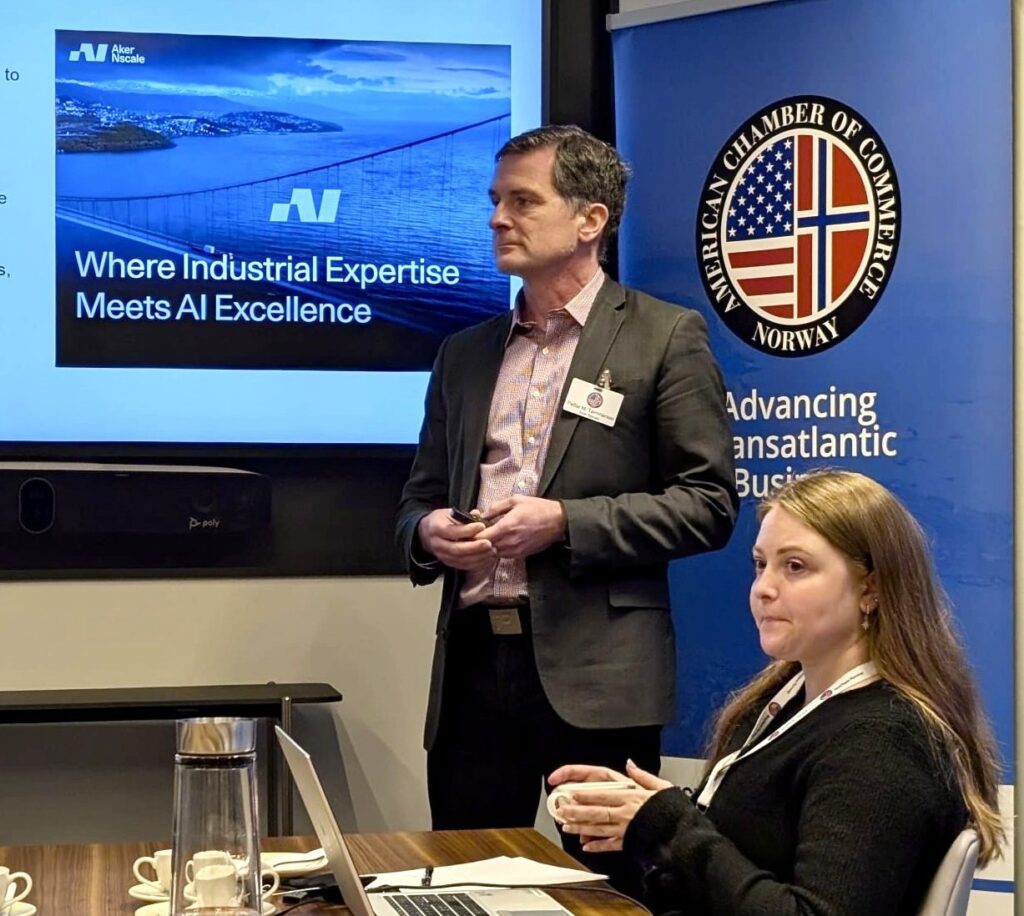
Petter M. Tømmeraas, Managing Director of Data Center Services at Aker Nscale, presented how Aker and Nscale, with the support of Nordkraft, developed Aker Nscale, now building an AI hyperscale site in Northern Norway with OpenAI and Microsoft as two key partners.

During the session, he responded to participant questions and highlighted Aker Nscale’s focus on capital discipline, risk management, and long-term value creation, drawing on his extensive experience in data centers and hyperscale infrastructure. He also addressed common misconceptions about the project, including stakeholder roles, service offerings, and alignment with Norwegian and EU regulations.

“Instead of producing goods, we produce intelligence. I think it is much more important for Norway to export intelligence than energy.”

The Norwegian AI Ecosystem – Credibility on the Global Stage

Tømmeraas underscored how large-scale investments strengthen Norway’s global credibility in AI. He referenced the launch of Stargate Norway in Narvik, announced on July 31 by Nscale, Aker ASA, and OpenAI, followed by the September 17 agreement between Microsoft, Nscale, and Aker to build scalable, renewable AI infrastructure in Narvik, valued at an estimated $6.2 billion.

Tømmeraas stressed the need to optimize a coordinated Norwegian and Nordic AI ecosystem. While acknowledging positive political efforts, he called for faster progress and bolder action to maintain competitiveness. He highlighted Norway’s strong position in global AI adoption, as reflected in Microsoft’s AI Diffusion Report: Global AI Adoption in 2025, and pointed to opportunities for increased productivity, competitiveness, greener transitions, and improved public services when technology is combined with trust, skills, and sound regulatory frameworks.

The establishment of Aker Nscale in Narvik represents a significant long-term investment in Northern Norway, creating jobs and positioning the region as an attractive location for AI infrastructure. Aker Nscale has also entered into a ten-year partnership with UiT The Arctic University of Norway, committing NOK 100 million to strengthen AI expertise in Narvik and the surrounding region. The initiative aims to attract leading researchers and lecturers, encourage collaboration, and build strong links between research and startups.

About the AmCham Financial Forum

AmCham’s collaborative Financial Forum enables cross-industry leaders to openly exchange and learn from their peers – building a better understanding of what it takes to maintain successful international operations in Norway.

Please contact madeleine.brekke@amcham.no for interest in future meetings.

Previous Forums

AmCham Financial Forum: Advanced Economics – Tech and Policy Evolution

Cross-industry member leaders gathered at IBM’s inspiring Client Center for our Financial Forum focusing on the future of financial trends – an evolving financial landscape. Taking the stage was Paolo Sironi, Global Research Leader in Banking & Financial Markets at IBM’s Institute for Business Value (IBV). With his immense background from fintech innovation, he is considered one of the most respected fintech voices globally.

Read More »