All posts by admin

Bloomberg: Tesla’s Model 3 Shatters Record in Electric Car Crazy Norway

Just weeks after Tesla Inc. started rolling out its Model 3 in Europe, the electric-car maker has beaten the monthly sales record in its key Norwegian market by a wide margin.

As many as 3,593 Model 3s have been registered so far in March, according to independent website Teslastats.no. Even with a few days still left in the month, that’s 65 percent more than a previous high set in March 2018 by the Nissan Leaf, Norway’s most sold car last year.

Read entire article HERE.

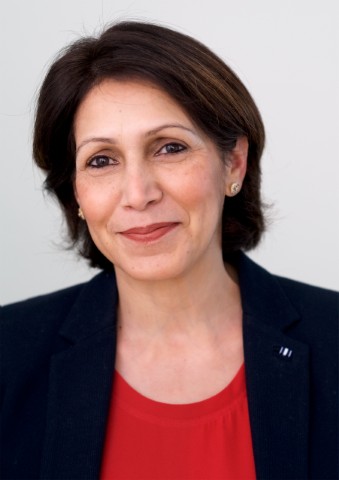
International Leadership Interview: Rajji Mehdwan, General Manager, Roche Norge

Rajji Mehdwan

International Leadership Series

For the latest edition of AmCham’s International Leadership Interview Series, we sat down with Roche Norge General Manager and AmCham Board Member Rajji Mehdwan. Through a globe spanning career that has included stops in several European countries and the United States, Mehdwan has developed a keen sense of what it takes to be an international leader, a sense that has helped her and Roche improve the lives of patients across the world.

Where did you start? International experiences? Can you please give a brief description of how you got to where you are now?

I grew up in India but have since lived and worked in many different countries. I trained as a registered nurse and practiced at the Royal Free Hospital in London. I got to know the English patient care side well, which was pretty cool.

My goal at that time was to get more into hospital administration, but that wasn’t possible because I didn’t have a business background, which led me to business school in the US, followed by many interesting roles in management consulting, opening a startup, and working on the development side at Johnson and Johnson. 

I had always admired Genentech (a member of the Roche Group). I remember watching a TV-program where Genentech, along with some doctors in Boston, had figured out a way to starve tumors. Tumors, like anything else, need to feed, if you think of them as an organism. So, these researchers at Genentech had figured out a way to cut off the blood supply to tumors and the tumor then starves and dies.

Watching this super high-tech, cool science was so inspirational. I remember thinking, “Wow, one day I’d love to work for this company.”  Call it fate, a role opened up with Genentech a couple years later and I’ve never looked back since. That was eight years ago!

What are the important decisions you make as a leader of your organization and how do they impact its global presence? Share any recent examples?

I spend a lot of time reflecting on our long-term vision and strategy, thinking particularly about “What is our purpose?” and, “What impact do we want to have long term?” 

For example, the personalization of healthcare is becoming more and more of a reality. Roche has a lot to contribute in regard to accelerating the personalized healthcare environment in Norway.  One of the decisions we have recently made is to proactively reach out to public stakeholders and encourage co-creation and collaboration to accelerate the capture of meaningful data at scale. Meaningful data, including treatment data and comprehensive genomic data, will be critical in informing patient care, research, and development – and also help us make the system more efficient. Roche with its diagnostics capabilities, technology capabilities via companies such as Flatiron and Foundation Medicine, and our pharmaceutical arm can really bring a lot of expertise and knowledge to the table to help accelerate personalized healthcare in Norway. 

As an expat, I have had to remind myself that I am the one dropping into a new culture. The culture shouldn’t change to adjust to me, I need to adjust to the culture. You need to come in with a lot of respect for how Norwegians engage, how they do business, and how they are as people.

How do you build team morale and maintain the creativity of a diverse team within an international organization?

I believe people feel good when they are in an environment where they know ‘great things are happening,’ so I always start here. Roche is the biggest biotechnology company in oncology. We have one of the deepest pipelines. We’re in the business of bringing really meaningful medicines into diseases where there is high unmet need and our medicines can truly make a difference to people. This really excites the team in Norway.

We place an incredible focus on people at Roche. We spend a lot of time making sure our people have the right tools, have good training, and feel supported, empowered, and developed. The moment people feel that you have their back, that you care about their development – they give their best.

Would you use the same leadership style in a different organization? In a different country? How important is it to tailor your leadership style to your team and environment?

Yes and no. I believe no matter where you work you should be true to your leadership style. So that stays consistent. I tend to believe in the ‘servant leadership’ philosophy – my job as a leader is to be of service to my people. As an expat, I have had to remind myself that I am the one dropping into a new culture. The culture shouldn’t change to adjust to me, I need to adjust to the culture. You need to come in with a lot of respect for how Norwegians engage, how they do business, and how they are as people.

Where do new ideas and exciting proposals come from in your organization? Has your international experience helped you ‘think outside the box’ in your organization?

Ideas come from everywhere. We emphasize an organization where everyone has a voice. We’ve organized our business around different disease areas via multiple cross-functional teams. This cross-functional nature allows for a lot of creativity. 

I believe my international experience helps as I am able to act as the ‘connector.’ At Roche, we are 110+ countries, 93,000 employees. If you have a problem, there are 93,000 people you can tap into for solutions!

We’re living in an uncertain world where things are happening fast. Technology is exploding, our understanding of disease and science is increasing rapidly. We don’t have time to work on something for a year – it’s obsolete by the time you launch it.  Agility will be key to success

How do you ensure that your team and your company’s services are aligned to your company’s core vision?

At Roche our north star is to deliver better outcomes to more patients faster. I spend a lot of time providing clarity on our vision, our purpose, and the why. I believe once people understand the why, the relevance to them, and that they have something of value to contribute – great things happen!

What do you believe are shared traits among leaders? Any common mistakes? What is unique about being a leader in Norway compared to leading an organization in another country?

Strategy and vision. Your job is to set the tone, and you need to be very crystal clear on the direction of the company. Good leaders are also open, transparent, and authentic – I find people respond to that.

Common mistakes – As I said earlier, I have seen leaders who come in and don’t respect the culture. That can lead to a lot of problems

How do you continue growing and developing as a leader?

To grow I believe asking for feedback is critical. I often ask my team “What can I do better? What concerns you?” I also learn from making mistakes. I make many of them! But that is how you learn. 

You get the podium at Stortinget for five minutes, what topic(s) do you address and why?

How do we collectively ensure sustainability of our great healthcare system, where our patients get the best care and medicines when they need them most?

Norway has a great healthcare system when I compare it to other countries. I come from India, where healthcare is still largely for the rich.   

Norway has a very ambitious political agenda to provide the best healthcare for its people. For medicines, the ambition emphasizes speed and faster access to new medicines. However, in the implementation of this vision, the decisions that are being made today by budget holders are not delivering on the political ambitions.

In 2018, over 50% of new medicines got a no from Beslutningsforum. Cost, or budget impact, is the main driver of decisions. Medicines that have proven cost effective by the Norwegian medicines agency are still getting a no. Decision criteria are unpredictable, and often decisions are made on subjective criteria. In reality, the impact of all of this is that Norwegian patients do not have access to as many new and cutting-edge medicines as their neighbors in the Nordics and Europe. Norwegian patients are being given sub-optimal medicines, in some cases, due to economic reasons, and Norway has one of the highest times to market for new medicines, per the latest EFPIA report. 

My question for Stortinget is: Do we want Norway to continue to lead as a healthcare system, or are we okay being one of the slowest markets in Europe to give access to new products?

If we look at Germany as an example – patients come first. Patients have access to medicines right after regulatory approval, then the government negotiates with companies on price. And the Germans still manage to negotiate very well. They make it work – so can we!

Patient voice is being lost in Norway. I acknowledge that budget holders have good intentions and a tough job trying to balance patient needs and costs. My ask of parliament is – let’s solve this disconnect between political ambition and budget holders/decision makers so their decisions actually implement the political ambition we have. 

In the best healthcare systems that I’ve seen in the world, there is a partnership mindset between the government and industry. I would encourage us to do the same. 

Decision criteria are unpredictable, and often decisions are made on subjective criteria. In reality, the impact of all of this is that Norwegian patients do not have access to as many new and cutting-edge medicines as their neighbors in the Nordics and Europe.

What do you see in the next generation of leaders aspiring to run an international organization? Advice to them?

Agility will be the key to success. We’re living in an uncertain world where things are happening fast. Technology is exploding, our understanding of disease and science is increasing rapidly. We don’t have time to work on something for a year – it’s obsolete by the time you launch it. 

What is the latest time you responded to an email last night?

Last night it was pretty good, so 10 PM! I’m a bit of a workaholic, working on this!

Digi.no: Trine Strømsnes er Cisco Norges nye administrerende direktør

I januar ble det kjent at daværende administrerende direktør for Cisco Norge, Sven Størmer Thaulow, sluttet i jobben for å begynne som data- og teknologidirektør i Schibsted. Trine Strømsnes rykket da opp og har siden vært fungerende administrerende direktør.

Fra og med 25. mars blir direktørjobben permanent, og Strømsnes er selskapets nye leder.

Før hun begynte som fungerende adm. dir. var Strømsnes COO – Chief Operating Officer – i Cisco Norge. Strømsnes har også tidligere erfaring som fungerende norgessjef i Cisco, i perioden før Thaulow ble ansatt i 2016. Ifølge Linkedin har hun godt over 18 års fartstid i selskapet.

Les hele saken HER.

Reuters: From California to Oslo: foreign subsidies fuel Norway’s e-car boom, for now

On the outskirts of Oslo, a row of Fiat 500es imported from California stand parked in the snow outside the Buddy Electric dealership, part of a global flow of pre-owned electric cars to Norway powered by green subsidies elsewhere in the world.

The company’s production manager, Tor Einar Hanssen, said it had sold about 110 in the past year and a half, making a small profit on the cars, most of which had been used for a few years by U.S. leasing companies.

“They’re surprisingly good in cold weather,” he said.

A gleaming blue Fiat 500e is on sale for 129,000 Norwegian crowns ($15,000) with 24,000 km (15,000 miles) on the clock. It costs about 20,000 crowns($2,300) to import and adapt each Fiat, Hanssen said.

On U.S. used car websites, similar Fiats in California are advertised for about $10,000.

Read entire article HERE.

Press Release: Nasdaq Extends the Acceptance Period for its Offer for Oslo Børs VPS

OSLO, Norway and STOCKHOLM, Sweden, March 25, 2019 (GLOBE NEWSWIRE) — Nasdaq AB, an indirect subsidiary of Nasdaq, Inc. (Nasdaq: NDAQ) (“Nasdaq”), announced today that it is extending the acceptance period of its offer (the “Offer”) to acquire all of the issued shares of Oslo Børs VPS Holding ASA (NOTC: OSLO/OTCMKTS: OSBHF) (“Oslo Børs VPS”) made pursuant to its offer document published on February 4, 2019, as amended by the announcement made on March 4, 2019 (the “Offer Document”), previously set to expire March 29, 2019 at 17.30 CET, to April 30, 2019 at 17.30 CET.

Nasdaq may in its sole discretion further extend or re-open the acceptance period for the Offer (one or more times) prior to the Drop-dead Date (as defined in the Offer Document), subject to Nasdaq AB’s obligation to re-open the acceptance period for the Offer, or by other adequate means permit shareholders of Oslo Børs VPS to accept the Offer, if the minimum acceptance condition has not been satisfied or waived prior to the expiry of the acceptance period and the Euronext Offer (as defined in the Offer Document) is withdrawn after the expiry of the acceptance period but prior to the Drop-dead Date.

For additional information on the strategic rationale for, and the terms and conditions of, the Offer and on Nasdaq’s future plans for the development of and strengthening of Oslo Børs VPS and the Nordic region’s financial ecosystem generally, please refer to the Offer Document which is available at http://ir.nasdaq.com/acquisitions/oslo-validation-access-rights.

For more information about the press release, including a downloadable PDF version, click HERE.
Forum Summary: AmCham Digitalization Forum – March 2019

Digitalization forum

Event summary

Transformation to a Digital Future

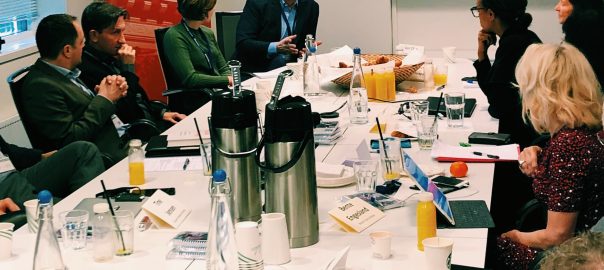
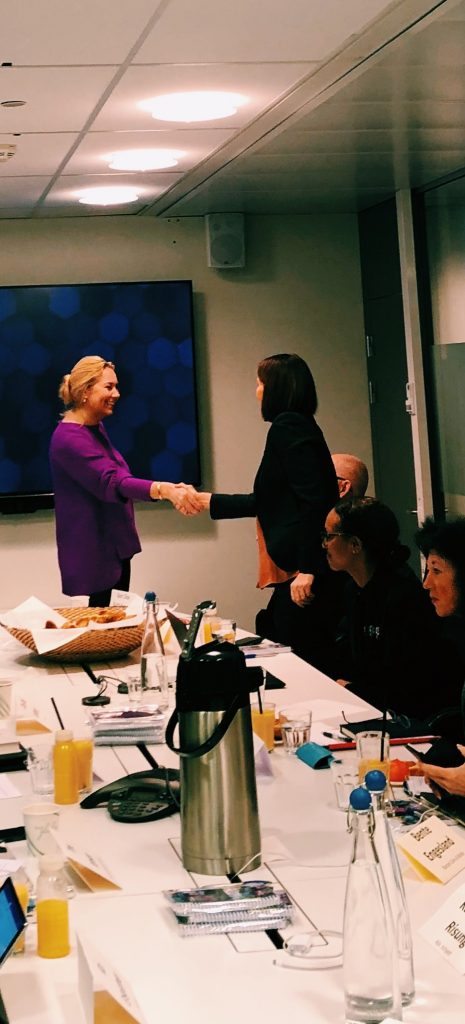
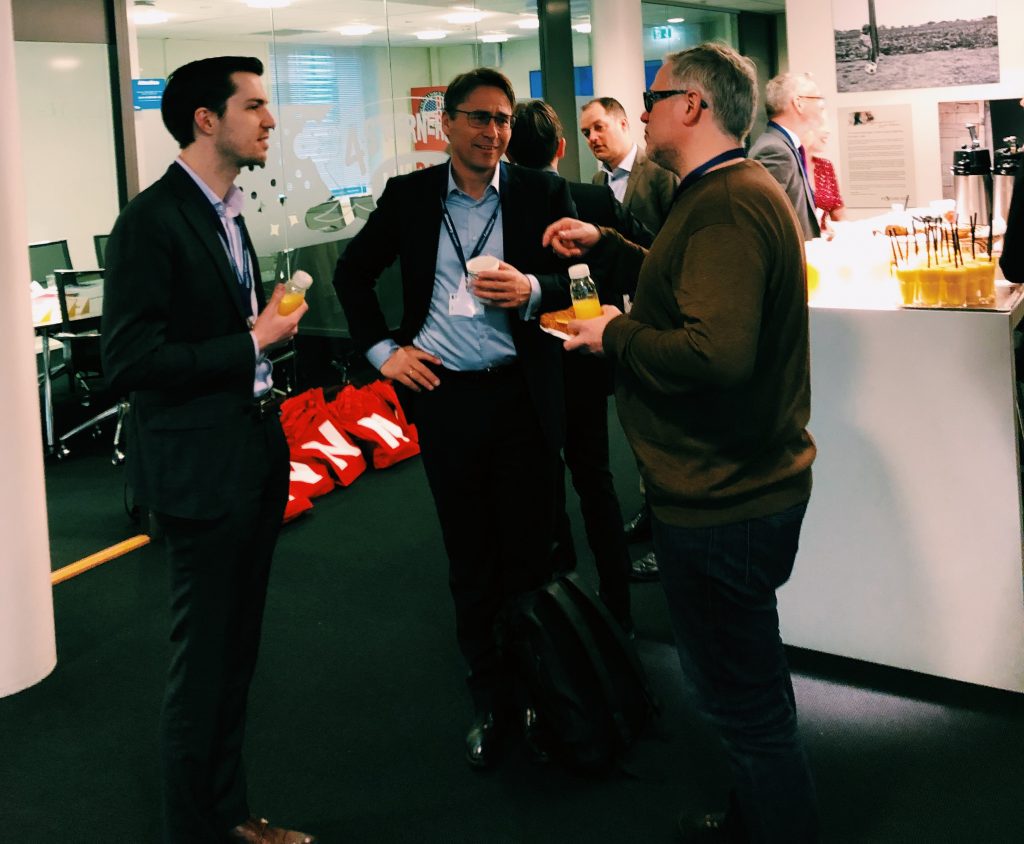
AmCham Managing Director Jason Turflinger warmly welcomed representatives from invited AmCham member companies at Discovery Network Norway’s Nydalen headquarters for the Q1 edition of AmCham’s long running quarterly Digitalization Forum.

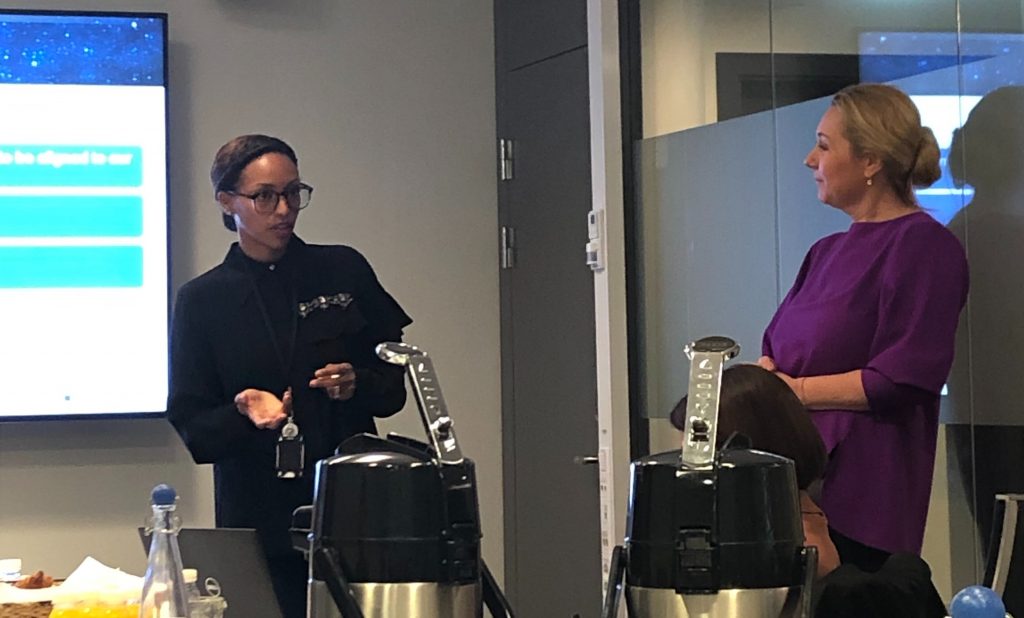
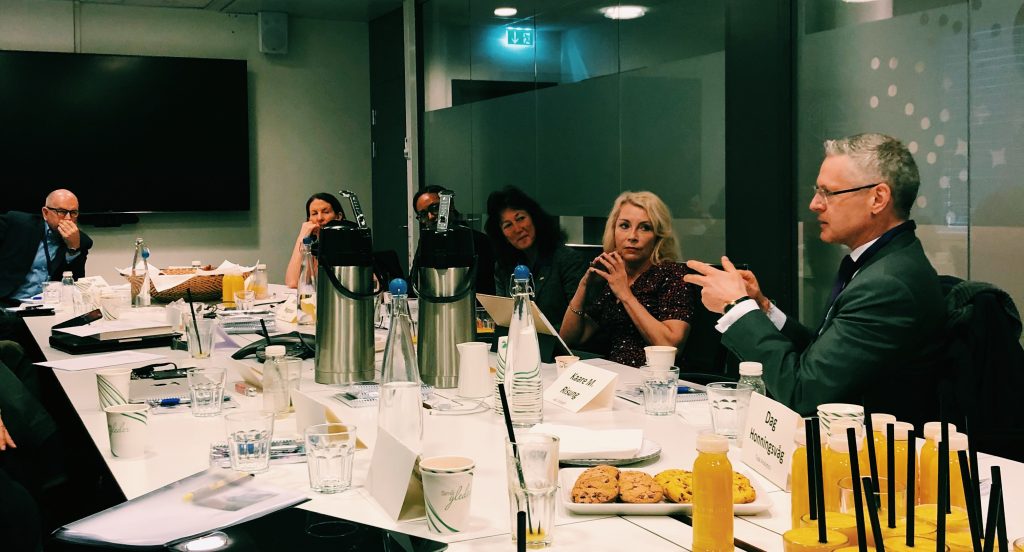
Participants first heard from Discovery Networks Norway CEO Tine Jensen and Senior HR Manager Winta Negassi, with the two discussing the strategic and human resource aspects of guiding a media company through a period of disruption and increased competition.

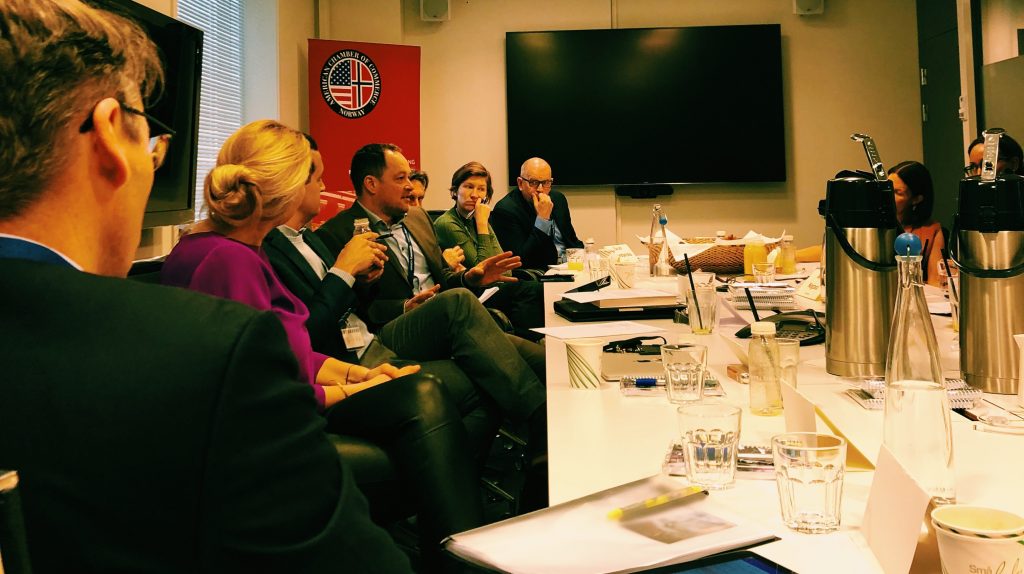
Attendees then participated in a highly engaging roundtable debate, moderated by Next Step’s Jennifer Vessels, with topics including future preparedness, the role of management in facilitating companywide adaptation, and the importance of local content in a globalized world.

Perspectives from the Television Industry – Tine Jensen

In her opening presentation to the forum, Discovery Network Norway CEO Tine Jensen touched upon some of the challenges television companies have faced due to increased industry disruption.

She noted that traditional television companies increasingly found themselves in competition with digital disruptors beginning in 2015. From that point, she noted, the key question for survival quickly became, “Are you able to bring in new business models?”

For Discovery, that came down to investing in the right competencies to turn out the best content at the quickest pace possible – a reflection of today’s high paced digital media environment. She explored the complexities of competing against subscription-based digital newcomers, the advantages and disadvantages of traditional business models in the television industry, and the role of localized content in maintaining a domestic edge.

The Importance of HR in Adapting to Digital Disruption

Winta Negassi, Senior HR Manager for Discovery, then underlined the importance of focusing on human capital in guiding a company through periods of change due to the emergence of new, non-traditional competitors.

Negassi suggested that, instead of getting swept up in a rush to improve technology, increase efficiency and generate quick returns on investment, “The key to managing digital transformation is to understand that regardless of technological advancements, people are still your competitive advantage.”

She then explained how Discovery utilized a four-tiered approach, from instituting digital sales seminars to bringing in guest speakers, to inspire employee confidence as they adapted to the growing role of digital in the television space.

“The key to managing digital transformation is to understand that regardless of technological advancements, people are still your competitive advantage.”

Winta negassi

Senior HR Manager - Discovery Networks Norway

The Role of Management in Adapting to Change

After the conclusion of Negassi’s presentation, participants launched into a lively discussion about the role of management in adapting to change.

A sentiment that resonated with all present, regardless of whether they worked in an industry currently experiencing market disruption, was the importance of corporate foresight – the ability to anticipate change and implement strategies proactively. As one participant reasoned, “If you are vigilantly monitoring changes in your industry and implementing proactive strategies, then you have already planted the seeds necessary to thrive when disruption comes.”

Vessels noted that management does not need to have all the answers, but they do need to give employees the tools necessary to explore new trends and technology – a sentiment built upon by AmCham Managing Director Jason Turflinger who added, “It is not just about management knowing where the industry is headed, it is also about getting employees to buy in.”

About the Digitalization Forum Series

The AmCham Digitalization Forum Series was initiated in 2016 in response to wide interest from AmCham member company leaders in better understanding the challenges and opportunities of today’s digital business environment. From sharing best practices to exploring how different member companies have implemented digital transformations, the series aims to foster confidence, inspire collaboration, and promote cross-industry dialogue across the Norwegian-American business community.

Our next Digitalization Forum on May 29th will feature Harvard Business School’s Sunil Gupta, author of the book Driving Digital Strategy: A Guide to Reimagining Your Business. For interest in participating, please contact us at amcham@amcham.no.

Bloomberg: Oil Riches Put Norway on Divergent Path Toward Higher Rates

Norway’s oil riches are allowing the country to avoid the slow growth, slow inflation trap that’s gripping much of the developed world.

Its central bank on Thursday raised its key interest rate for a second time since September and signaled there’s more to come.

After delivering a rate increase to 1 percent, Norges Bank Governor Øystein Olsen flagged that another hike could come as soon as June, sending the krone soaring. The governor, who also oversees Norway’s $1 trillion wealth fund, acknowledged that his “oil-driven” economy sets his country apart.

Read entire article HERE.

World Oil: Google, Chevron execs say industry must keep up with data transformation, other tech trends

At the Norwegian Energy Day on Tuesday, March 19, hosted by the Norwegian Consulate General and several corporate sponsors, speakers from Google and Chevron told the audience that the oil and gas industry needs to do more, and do it faster, to adapt to the digital transformation and other related trends. “The oil and gas industry, in my mind, is behind in adopting emerging technology,” said Darryl Willis, V.P. for Oil, Gas & Energy at Google Cloud. Willis is uniquely positioned to comment on the situation, given his position at Google Cloud, as well as a 25-year oil and gas pedigree before that, which includes a number of increasingly responsible roles at BP, plus a 2 ½-year stint at TNK-BP.

Read entire article HERE.

Dream Big California Wine Tasting

Grand Wine tasting

Event summary

DREAM BIG!

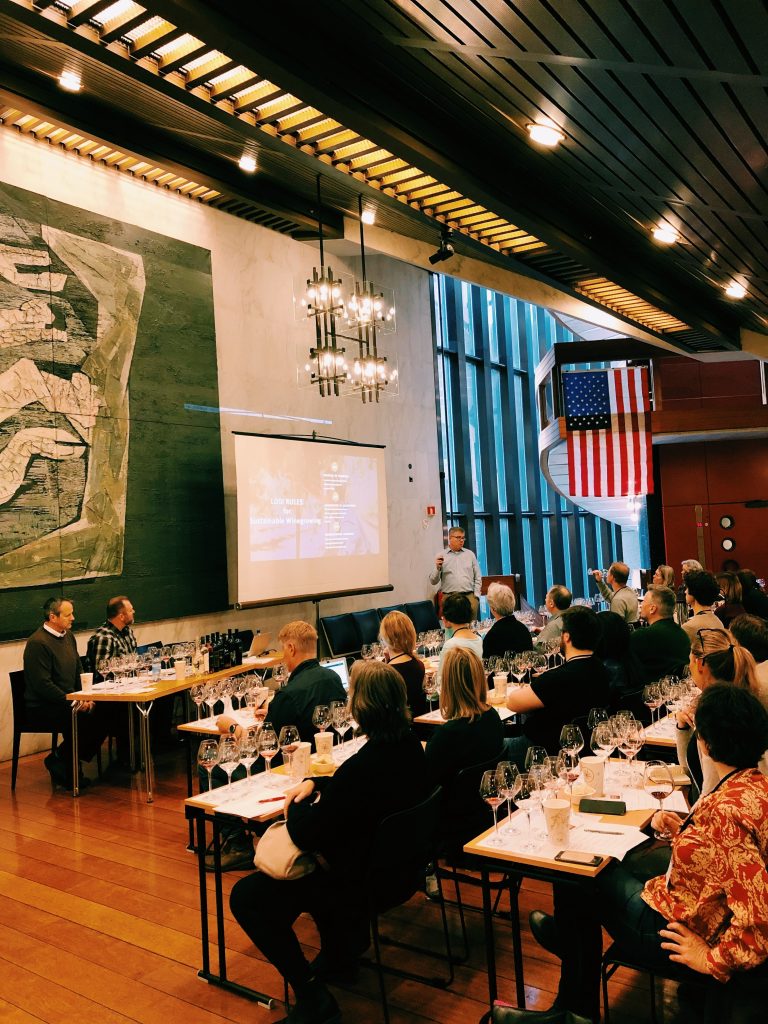
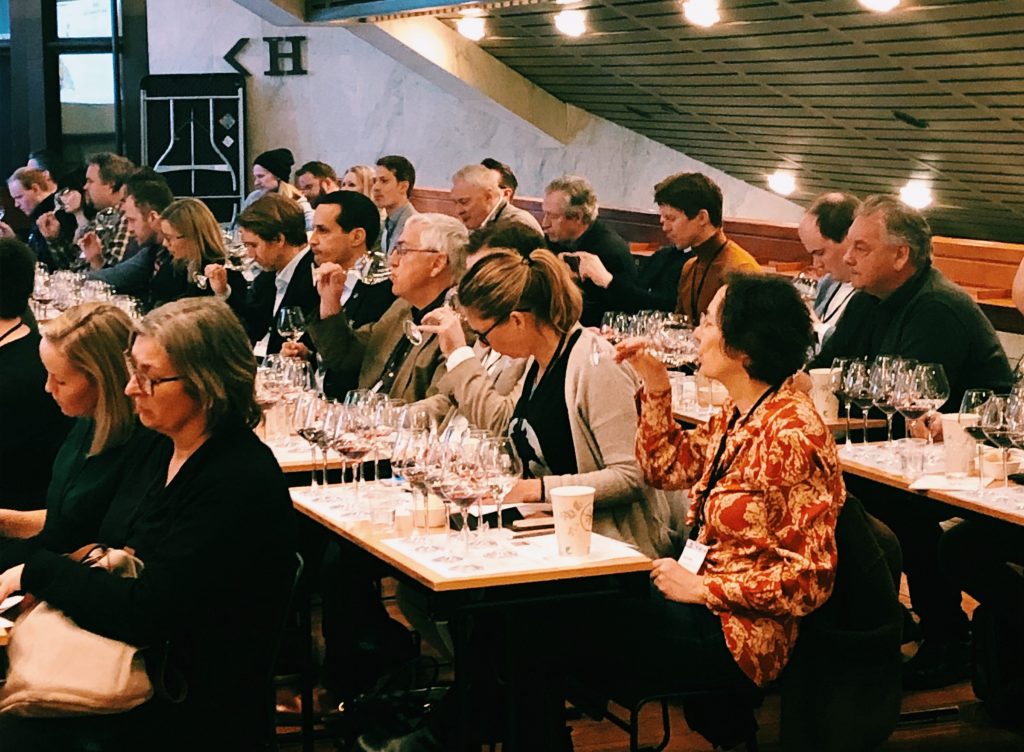
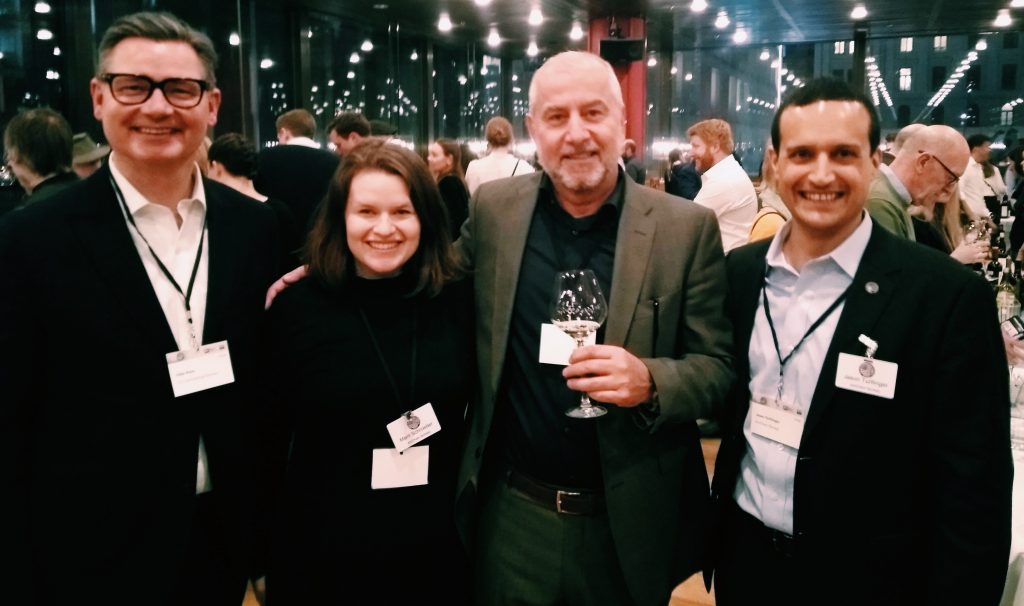
Held in the spacious Oslo Konserthus Glasshuset, AmCham, the US Commercial Service, and California Wine Institute hosted Norway’s largest-to-date American wine tasting on March 13.

Over 50 representatives from almost 100 wineries flew into Oslo for the event as part of their European tour with California Wine Institute. The wineries offered a selection of over 400 wines, ranging from everyday wines to once-in-a-lifetime vintages, to a diverse crowd of AmCham members, government officials, journalists, wine importers, and food and beverage industry representatives from across Norway.

Lodi Seminar

The afternoon kicked off with an exclusive seminar on the Lodi appellation, an area located between San Francisco Bay and the Sierra Nevada Mountains. The region has become known for its vast portfolio of interesting wines and the commitment of its winemakers to creative, cutting-edge, and sustainable winemaking techniques. The seminar was led by a panel of winemakers including Wine Enthusiast Magazine’s 2018 Winemaker of the Year, Adam Mettler, Oak Farm Vineyards’ and Harney Lane’s Chad Joseph, and the director of the Lodi Winegrape Commission, Stuart Spencer.

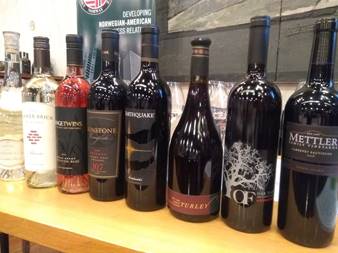
The fully subscribed seminar walked participants through eight wines including a 2017 Acquiesce Grenache Blanc, 2018 Klinker Brick Albariño, 2017 LangeTwins Family Winery & Vineyard Sangiovese Rosé, 2016 Turley Bechthold Vineyard Cinsault, 2016 Oak Farm Vineyards Grenache, 2016 Ironstone Rous Vineyard Zinfandel, as well as Adam Mettler’s own 2016 Michael-David Earthquake Zinfandel and Mettler Family Vineyards’ flagship 2016 Cabernet Sauvignon.

By the numbers

wine Producers
1
Different wines
1
Wineries new to norway
1

Grand Tasting

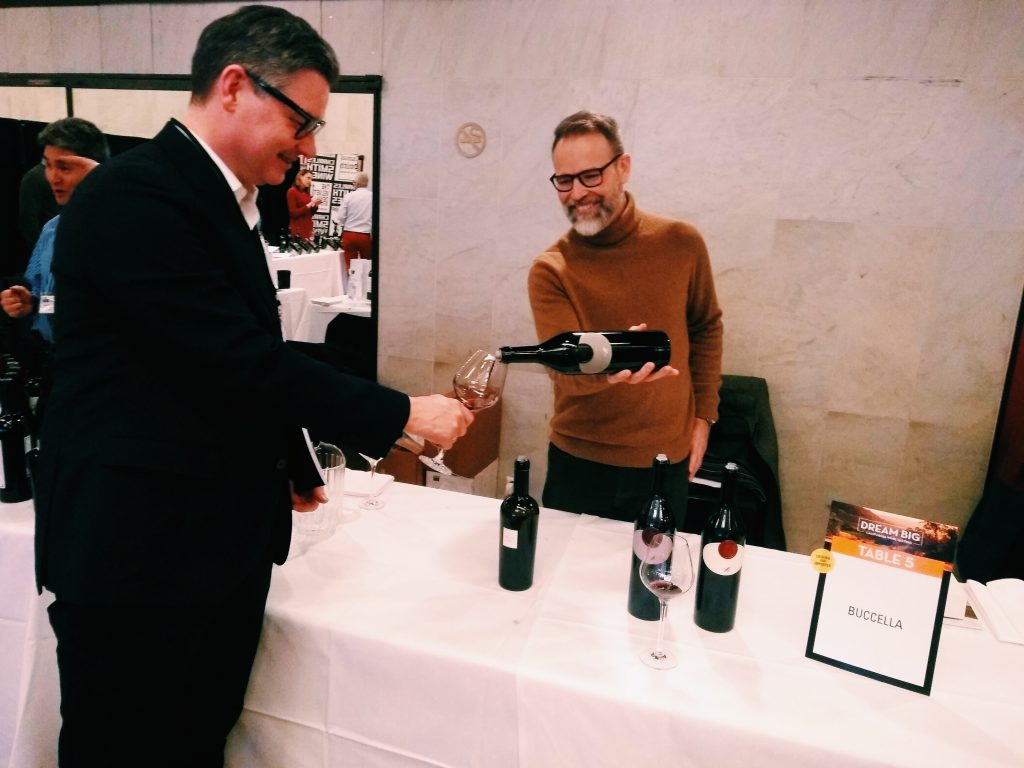
At the conclusion of the masterclass, guests streamed into Glasshuset’s second floor for the main event – the Grand Tasting! AmCham members joined food and wine industry representatives to mingle and sample wines with winemakers, brand ambassadors and sommeliers from across Norway and the United States. It was a record-setting year with 43 stands, more than 400 guests, and nearly 30 wineries presenting in Norway for the first time.

The tasting accurately represented California’s 89% share of American wine production, while still allowing guests to experience the different terroirs found in Oregon and Washington – the home state to a past winemaker of the year, and Norwegian favorite, Charles Smith.

US Wines on the Rise in Norway

American wine sales in Norway have increased considerably in the past two years, in part due to initiatives like these and the 2017 launch of US wines custom-made for the Norwegian market. In 2018, Vinmonopolet sold 3.6 million liters of American wine – a figure representing 5.3% of total wine sales in Norway and an increase of 4.5% from 2017.

AmCham sincerely thanks the US Commercial Service and California Wine Institute for their collaboration in making this event possible and the evening a roaring success!

wine 2 logo

Digital Journal: 24SevenOffice US is Partnering With the City University of New York on Education of Future CPAs

The world’s most comprehensive ERP system, 24Sevenoffice, has just signed an agreement with The City University of New York (CUNY), Medgar Evers College — The School of Business, on education of future CPAs. 24Sevenoffice will be responsible for the academic curriculum for the practical accounting system training. Thousands of students will use the cloud-based accounting system in their studies and become system experts.

This is one of the first Business Schools in the world to recognize that SaaS/cloud-based software and Artificial Intelligence will totally reform the way an accountant/CPA will work in the near future.

To provide their students with the right skills and experience around these new technologies, they have chosen to collaborate with 24SevenOffice, that will provide them with accounting/ERP software and be responsible for the academic curriculum around cloud-based accounting.

Read entire article HERE.