All posts by admin

International Leadership Interview: Jason Turflinger, AmCham Norway

“I collaborate with all kinds of people with all kinds of strengths and try to sponge it all up. It is almost embarrassing, but I have never had a mentor. At least not someone defined as my mentor, but tens of people have been my mentor without really knowing it.”

International Leadership Interview: Jason Turflinger,

Jason Turflinger addressing the attendees at AmCham’s annual Thanksgiving Charity Dinner (Photo: Nancy Bundt)

Originally only planning to live abroad for a few years, little did Jason Turflinger know — back in 1998 — that he, twenty years later, would have a station wagon and a family in suburban Oslo and be heading up the American Chamber of Commerce in Norway, having transformed the organization and quadrupled its size since taking the helm.

Where did you start? International experiences? Brief description of your path to where you are now.

I am from Fort Wayne, Indiana and moved to Tampa, Florida to attend the University of South Florida. There, I happened to have a Norwegian roommate. I went to visit him on my way to move to work for a bank in Moscow – I always thought that I would like to live abroad for a year or two. And here I am, still in Norway, 20 years later.

Having previously worked for Bank of America, in 1999, I got the working papers in Norway and started with a consultancy firm. They did innovative management consultancy while also functioning as an incubator. There were 12 companies in the incubator and the expectation was for four or five of these companies to survive or prosper. Interestingly, my role there also included being the search expert of the office. You see, I was familiar with this amazing tool called Google and knew how to use it properly.

Having worked there for a few years. I subsequently started my own firm. I was then engaged to start at AmCham for a 50% management-for-hire position. I realized quickly, however, that it was more than a 50% job, but I also saw a lot of potential and quite frankly, it was a lot of fun! I’ve always said that if there was no such thing as money, I would still do most of my job for free – and that still holds true after more than 15 years.

Having said that, AmCham has changed significantly since then. In 2003, we had 63 members and we are now close to 250. We have essentially quadrupled in size, both in terms of members and employees. The scope of what we do has changed, too. Our three focus areas are events, members services and advocacy. Previously, we did some member services, but not nearly what we have the capacity to offer our members now. We have always done events, but also the scope of our events has changed. We are currently able to offer more specific, themed roundtables and forums, which enables us to cater to a wide array of our members divided across 22 industries.

What are the important decisions you make as a leader of your organization and how do they impact its global presence? Share any recent examples?

We are one of 117 AmChams around the world. I like to think that our take on issues impacts at least the Nordic and the European groups, of which there are 42. We can draw upon the US Chamber in Washington DC as well, who are working with all 117 AmChams around the world.
International Leadership Interview: Jason Turflinger

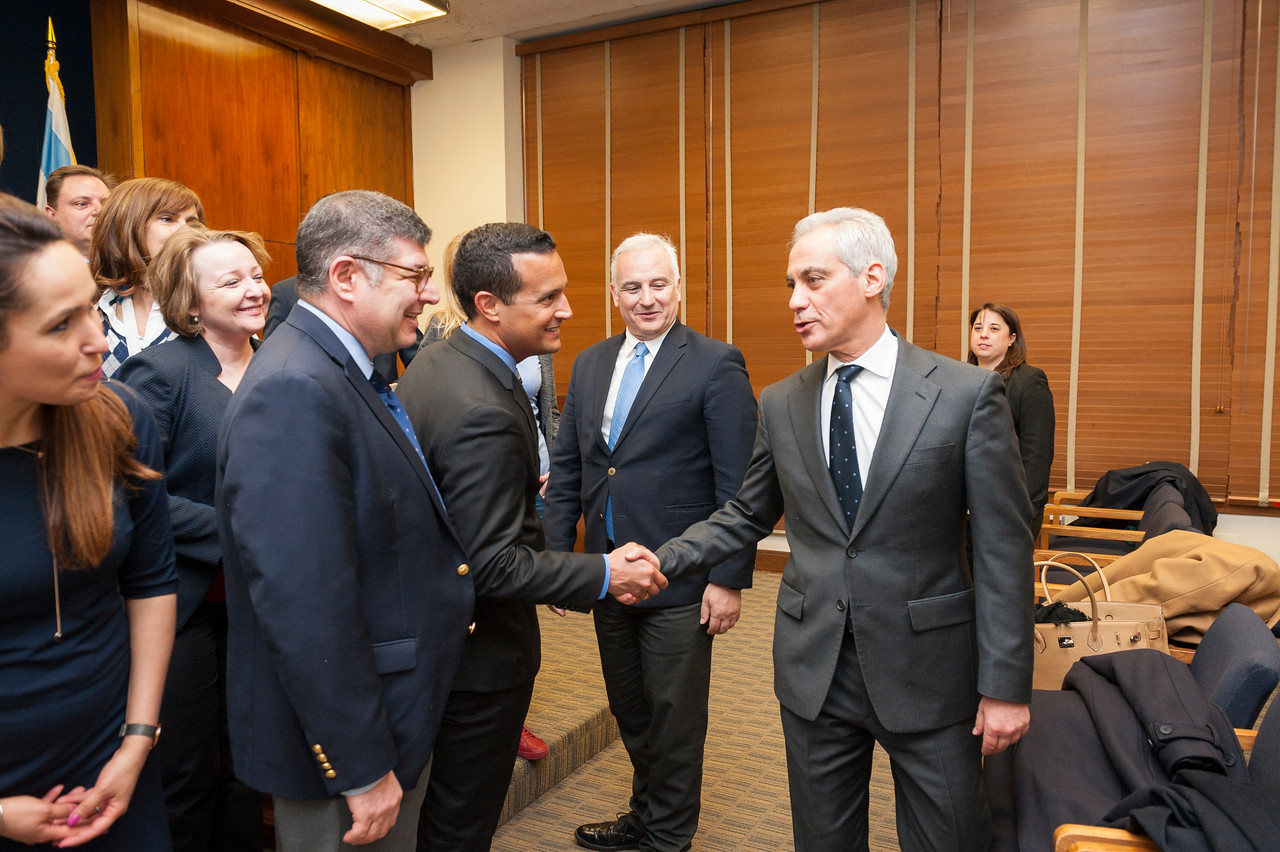
Jason Turflinger meeting Chicago Mayor and previous Cheif of Staff to Barack Obama, Rahm Emanuel as AmChams in Europe visited Washington DC in 2018.

Looking at AmCham Norway-specific decisions; long-term planning and long-term relationship building is some of the most important work I do.

Interestingly, most of the significant decisions that I make are not just what we agree to do on behalf of members and transatlantic interests, equally imperative is what we say no to. For every initiative or issue we take on, we are declining 6-7 suggestions. Not because they are not good initiatives, but we must maximize our resources and choose the issues where we can have the most impact.

How do you build team morale and maintain the creativity of a diverse team within an international organization? 

One of the reasons we come in to the office is to energize each other and for information to flow freely. It is key that communication is open in the office and that ideas are exchanged openly.

In such a manner, I am more of a facilitator than a director. It is my job to facilitate so that the employees can perform. The worst thing I can imagine, is if someone sits on information that could be useful for other people in the organization.

Additionally, I think that creativity and new ideas come when you have a diverse team. Particularly in Norway, the hiring process is one of the most important aspects of a leader’s responsibilities. About 15 years ago, I attended a seminar where a speaker said that “one should hire people that are exactly the same as you, because business is hard enough.” That is probably the exact opposite of what I am trying to do. I look at the totality of the team to see what is missing and try to find that person that improves and compliments the team. I learn something every day from the team and I want to work with people who speak openly and freely. Subsequently, that builds trust among colleagues, our Board and whomever else we collaborate with.

Through AmCham initiatives, such as our forums, we carefully build trust and connect the correct people to ensure good exchange and information flow.

Would you use the same leadership style in a different organization? In a different country? How important is it to tailor your leadership style to your team and environment?

Yes, I would. Everyone likes to talk about how flat the Norwegian structure is in the work place. At the same time, I don’t think it is as rigid in the US as many imply, either.

In the US, like Norway, most companies are small and medium-sized. It is important to remember that most American companies are not the size of Google and ExxonMobil.

However, out of sheer necessity, when you have a company like Lockheed Martin with hundreds of thousands of employees, it must be structured differently than a 10-person shop.

In terms of tailoring my leadership, I have most certainly matured as a leader over the years. I am more hands-off than I used to be. The realization that if the approach used for a project or assignment does not correspond with my idea of how it should be, it does not necessarily mean that it is wrong – it is just a different approach and I appreciate that. I worry less about whether it is done my way or another way, but more about the result for our mission as AmCham and promoting transatlantic business interests.

Quite frankly, I cannot be involved with everything. I would just be a bottleneck for progress and that is the worst thing I can imagine being as a leader.

Where do new ideas and exciting proposals come from in your organization? Has your international experience helped you ‘think outside the box’ in your organization?

From our members and colleagues. I talk to member companies and colleagues daily and they might come up with an idea. Next thing you know, one idea triggers another and suddenly the mold for an initiative starts taking shape. I am lucky, as we have a very engaged and proactive group of member company representatives that we get to work with on a regular basis. That is one of the most enjoyable aspects of this job; there are so many talented people working with different member companies and within different industries – and they all have good ideas.
International Leadership Interview: Jason Turflinger

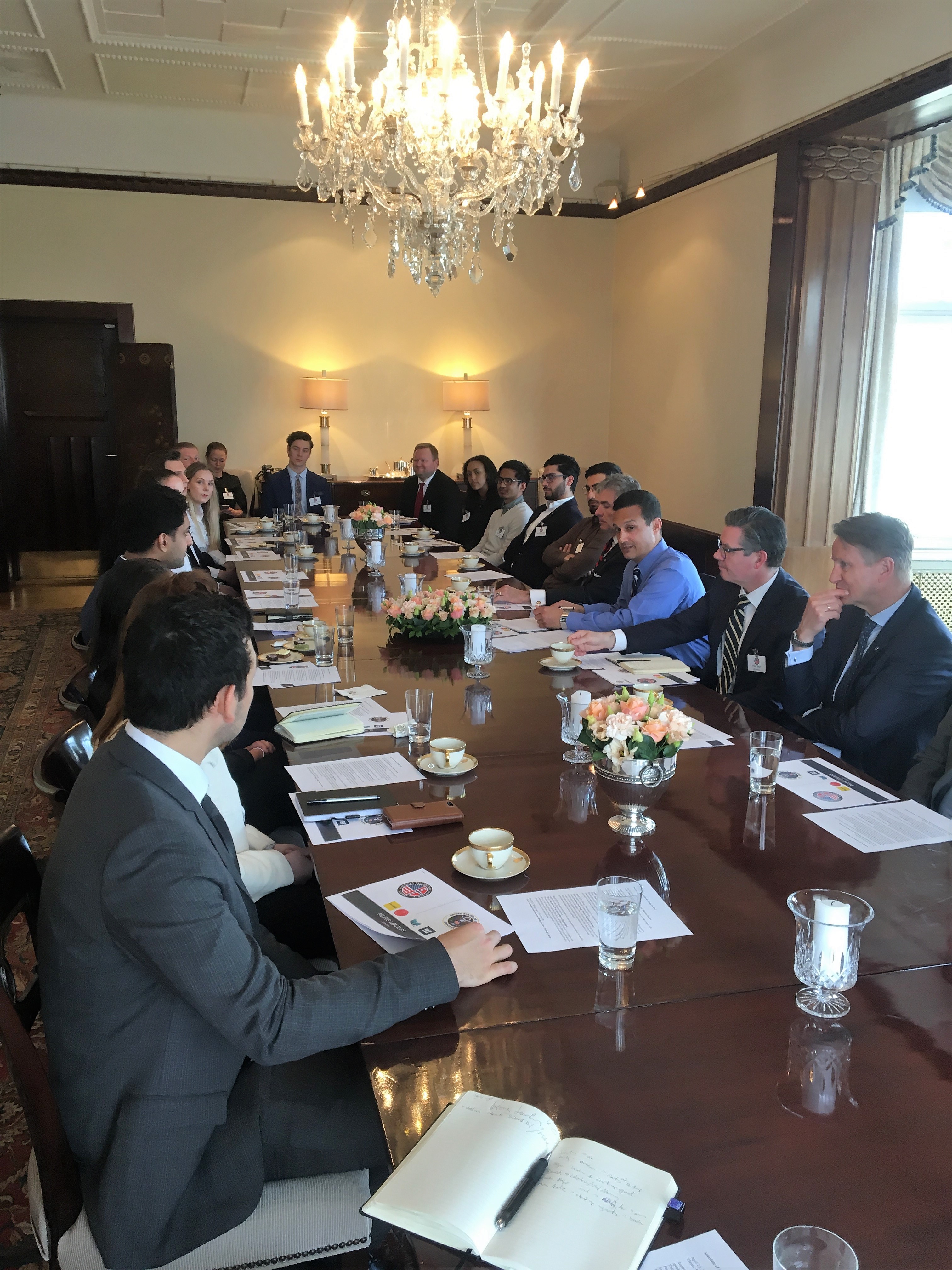
Jason Turflinger addressing the Rising Leaders participants at the kick-off event of the program, co-launched with the US Embassy.

Admittedly, sometimes people must push and tug on me. I – like everyone – can be set in my ways sometimes. But I appreciate when people don’t take “no” for an answer.

Perhaps my international background has an impact there, as well. The ability to look at certain Norway-specific themes from an outside and macro perspective is useful in my job. Looking at long-term development for Norway – and how Norwegians perceive themselves related to international competition – is one example where the outside-view is useful. Sometimes it appears as though domestic decision-makers do not realize that Norway is indeed competing with neighboring countries for foreign investments.

Just consider the rise of attention and funding for start-ups and entrepreneurial activities in Norway. It is great, but neighboring countries have been doing this for a long time – with varying levels of success and lessons to be learned. Being able to see that big picture from a different perspective is important.

How do you ensure that your team and your company’s services are aligned to your company’s core vision?

Through constant dialogue with member companies. Like any non-profit organization, we have our bylaws. But it is through active communication with our member company leaders that we stay updated on relevant issues, as well as matters of importance for the Norway-US relationship. We do not pretend to be at the center of all these issues, but we provide input and assistance where we can be helpful.

In terms of member dialogue, we do sit down to have formal strategy sessions. More informal conversations are, however, the norm. It is all about the level of trust we have with member companies and there is no easy way or shortcut to building a strong foundation of trust. It takes years to establish and can be lost in a matter of minutes. Hence, the importance of being respectful of our relationships with member companies and the relationships they have with each other is key.

What do you believe are shared traits among leaders? Any common mistakes? What is unique about being a leader in Norway compared to leading an organization in another country?

I believe that a shared trait among good leaders is the ability to be open to feedback and to directly engage employees. The members we work with are knowledge-based. For me, being able to draw upon that knowledge and be inspired by them is beneficial. Everyone needs inspiration. Networks such as ours are an ideal way to meet other leaders from various industries and draw inspiration from their developments, ideas or achievements.
International Leadership Interview: Jason Turflinger

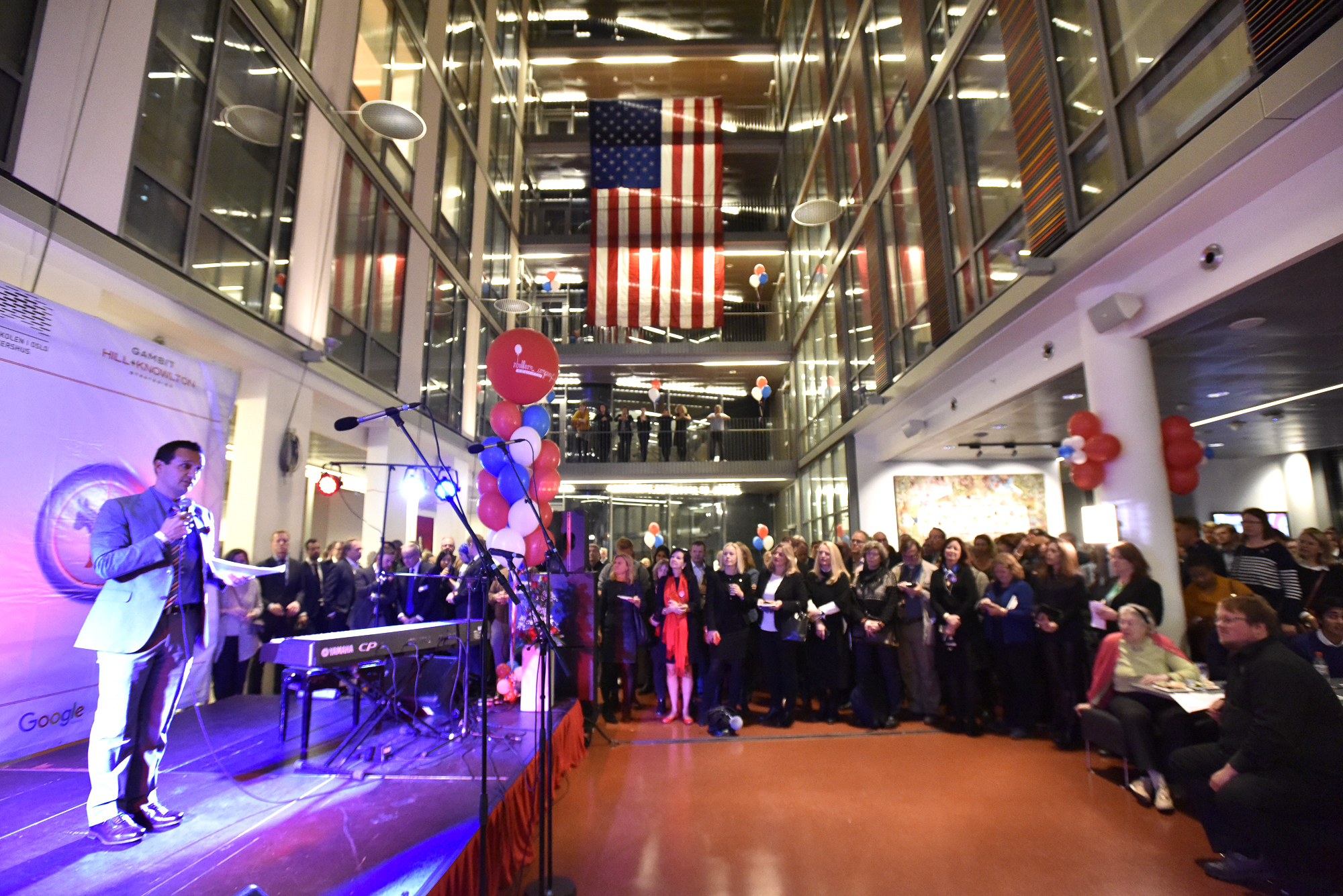
Welcoming attendees at AmCham’s 2016 Election Night event at now OsloMet University (photo: Nancy Bundt)

Generally, in Norway, the open-door policy is very important. The flip side – where we have seen expat leaders not do well – is the top down approach. When new expat leaders arrive and start implementing strategy without explanation or room for interpretation, employees lose the “why.” Those tend not to be long expat leader engagements.

Leaders – and expat leaders in particular – are in their roles to make changes. Particularly important is how they make change decisions and how open they are about them. If they immediately start complaining about working hours and employee engagement, those are challenges they need to adapt to and address, rather than simply being annoyed about.

How do you continue growing and developing as a leader?

I am inspired by the leaders that I work with. If I see a strong public speaker, or an excellent strategic thinker, I try to learn from them. I collaborate with all kinds of people with all kinds of strengths and I try to sponge it all up. It is almost embarrassing, but I have never had a mentor. At least not someone defined as my mentor, but tens of people have been my mentor without really knowing it.

Whatever makes you uncomfortable in your job as part of your professional duties needs to be addressed. If long-term strategic work is painful and you keep putting it off, you need to suck it up and lean on those who can help you address it. It is easy to get set in your ways and you can only progress if you force yourself to improve in the aspects of your job that you are least comfortable with.

What are some of your/company’s recent projects and developments that you are excited to share?

The CFO forum is very exciting. We have been planning it for quite a while. There is no other recurring forum or meeting place for CFOs with internationally-oriented companies to meet – at least without being sold to. Generally, I think that is comforting with our forums. There is no hidden agenda. If there is one, it is to have an open and honest dialogue and dare to discuss failures, not only successes.

A while ago, I attended an event. It was a good and very professional discussion, but not any examples from the participants mentioning any mistakes or anything that had gone wrong. That is the big difference; for these forums to function ideally, it is about creating an environment of trust.

That can be a challenge, as new people are invited to each quarterly session. Consequently, it is essential to keep a core group of participants so that level of trust is maintained.

Moreover, we have always been a very busy shop, but we have not always been good at telling our members and partners about all that we are doing and why. We are now openly sharing our various initiatives and getting that information out. That enables our stakeholders to be more proactive on behalf of Norway-US business interests. Generally, people are now more aware of what our priority issues are – and that is important.

You get the podium at Stortinget for 5 minutes, what topic(s) do you address and why?

Norway’s competitiveness. Yes, we are friends and allies with our neighbors, but at the end of the day, in terms of where companies decide to invest and grow their business, I want Norway to be competitive. Make no mistake, Norway is competing with Sweden, Denmark and Finland to attract foreign investment.

It has come automatically for Norway for the past 40 years, as the energy sector has attracted enormous foreign interests, but now, we are approaching a new juncture.

Yes, a lot of money is being allocated to fund various industrial segments and homegrown startups, which is great. At the same time, we should not forget – and there should be more work – to retain and attract interest from foreign investors. Both through public-private partnerships and direct collaboration. Larger companies need legitimate business motives to partner with smaller companies. Such partnerships are only a good thing.
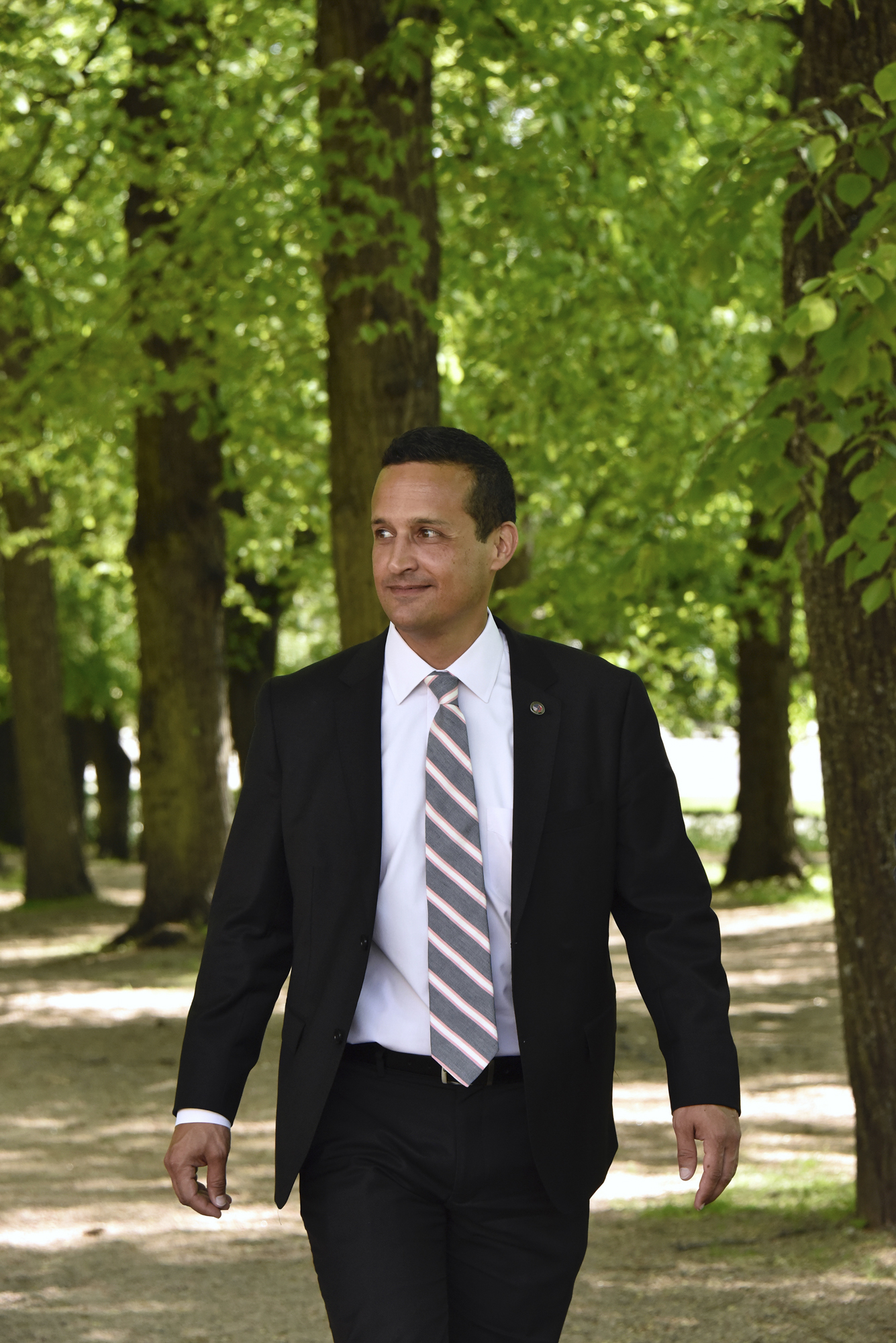
International Leadership Interview: Jason Turflinger

(Photo: Nancy Bundt)

I remember a quote I heard a while back from an established company leader: “just because I don’t hang out at a coffee shop doesn’t mean I am not innovative.”

Look at industries like healthcare, technology, and food & beverage; for them, it does not necessarily matter where in the world they are centralized. We can do more to attract — and be a hub for — some of these industries. If not in the world, at least in Northern Europe.

If you could give your 20-year old self some advice, what would that be?

Don’t work as much! At that time, I was going to university full-time and working full-time. Eating Taco Bell in my car on my way from school to work in the afternoons, five to six days a week. It was rewarding, because I was earning more money than most students, but I should have dedicated more time to being a student, and worried about my career later. I will give that same advice to my kids, who are quickly approaching that age.

What do you see in the next generation of leaders aspiring to run an international organization? Advice to them?

Be patient and do a good job where you are. If you do well, it will get noticed and you will get your chances. People say a lot about millennials and their natural digital awareness, whereas we had to learn all of that in our adult lives. Leaders today need to respect that and be comfortable with the fact that they will never be as digitally advanced as subsequent generations. At the same time, the coming generation needs to respect experience and know-how gained from decades of professional experience.

As I tell my teenage son, you do not know what you do not know yet, and that is ok. Be aware of that, however, and be interested in learning new skills and adapting new knowledge. Your career will span decades, and you will learn.

What is the latest time you responded to an email last night?

I wrote an email last night, or, had written most of it during the day, but needed to check something. I then hit “send” at about nine in the evening.

The Coca-Cola Company Completes Acquisition of Costa from Whitbread PLC

The Coca-Cola Company today announced that it has completed the acquisition of Costa Limited from Whitbread PLC. The $4.9 billion transaction follows approval from regulatory authorities in the European Union and China.

This press release features multimedia. View the full release here:https://www.businesswire.com/news/home/20190103005331/en/

The acquisition was first announced on Aug. 31, 2018.

Costa, which has operations in more than 30 countries, gives Coca-Cola a significant footprint in the global coffee business. Worldwide, the coffee segment is growing 6% annually. Costa has a scalable platform across multiple formats and channels, from the existing Costa Express vending system to opportunities to introduce ready-to-drink products.

“We see great opportunities for value creation through the combination of Costa’s capabilities and Coca-Cola’s marketing expertise and global reach,” said James Quincey, CEO of The Coca-Cola Company. “Our vision is to use the strong Costa platform to expand our portfolio in the growing coffee category.”

“We wish our friends and colleagues at Costa all the very best for their future success,” said Alison Brittain, Whitbread Chief Executive. “Whitbread acquired Costa 23 years ago, when it had only 39 shops. Costa has grown to become a leading, international coffee brand, and Coca-Cola is the right partner to take Costa to the next stage of expansion.”

For more information, see the original announcements about the transactions:

Cisco: Dette er de viktigste teknologitrendene i 2019

– Året vil bli preget av nye steg innenfor blant annet kunstig intelligens, mener nettverksgiganten.

Det er alltid populært å spå om fremtiden ved inngangen til et nytt år, og nå har også Cisco kommet med en oversikt over det de mener blir de seks viktigste og mest dominerende teknologitrendene i 2019.

Ikke uventet står kunstig intelligens og maskinlæring høyt på listen over teknologi Cisco mener kommer til å spille en stor rolle i 2019.

Sven Thaulow. Foto.
Sven Størmer Thaulow, adm. dir. i Cisco Norge. Foto: Studio Design

– For året som kommer ser vi flere store teknologiske «trender» som vil øke ytterligere i omfang i 2019. Da ser vi spesielt på økende internett-, mobil-, video- og maskin-til-maskin-trafikk. Samtidig ser vi at teknologier som blockchain og kunstig intelligens begynner å bli utnyttet i kommersielle tjenester. 5G er naturlig nok ikke helt der ennå – men det kommer. Den viktigste konsekvensen av alt dette, men som mange ikke tenker på, er at vi trenger å tenke helt nytt når det kommer til nettverk og nettverks-drift, samt hvordan vi sikrer samfunnet vårt og virksomhetene våre i en nærmest heldigitalisert hverdag, oppsummerer Sven Thaulow, administrerende direktør i Cisco Norge, i en pressemelding.

Les hele artikkelen på digi.no

Bristol-Myers kjøper Celgene for 647 milliarder kroner

Legemiddelselskapet Bristol-Myers Squibb har inngått en avtale om å kjøpe opp bioteknologiselskapet Celgene i en avtale verdt rundt 74 milliarder dollar, tilsvarende 647 milliarder kroner. Det skriver Bristol-Myers i en børsmelding.
Til sammenligning er Norges mest verdifulle selskap, Equinor, verdt 629 milliarder kroner torsdag ettermiddag.
Avtalen innebærer at aksjonærene i Celgene får en aksje i Bristol Myers pluss 50 dollar for hver aksje de eier i selskapet. Styret i begge selskapene har allerede godkjent avtalen.
– Sammen med Celgene lager vi et innovativt og markedsledende biotekselskap, med en bred portefølje som vil føre til bærekraftig vekst og gi nye muligheter for pasienter med ulike alvorlige sykdommer, sier styreleder i Bristol-Myers i en uttalelse.
Bristol-Myers-aksjen raser 16 prosent i førhandelen torsdag. Samtidig flyr Celgene-aksjen over 30 prosent.

Korn Ferry: The Top 10 Talent Trends of 2019

If 2018 was about who was getting jobs, 2019 may be about how jobs work. Indeed, this may be the year that organizations start retooling how they find, evaluate, and even pay employees. Chalk the shifts up to, among several factors, the tight labor market and a massive influx of data, says Jeanne MacDonald, global co-operating executive and president of global talent solutions for Korn Ferry’s RPO and Professional Search business. “To succeed in attracting, developing, and retaining top talent as we head into another year, it’s critical to be agile and forward thinking,” she says.

Korn Ferry canvassed talent acquisition specialists, compensation experts, and HR professionals from around the world to identify 10 emerging talent trends in 2019.

(Don’t) Mind the Gap!

It has always been a red flag—the “hole” in a candidate’s resume, a period of time where a candidate wasn’t working. But an increasing number of organizations are realizing that those holes are there for very legitimate reasons, such as taking time off to care for children or aging loved ones. Many firms are now actively seeking out people with these types of gaps, MacDonald says. Firms are using workshops, customized landing pages and microsites, and other means to find these people.

Making Artificial Intelligence More “Intelligent”

Artificial intelligence (AI) has been touted as the new holy grail in recruiting. However, experts worry that its “intelligence” could create a lack of focus on diversity and inclusion. Even when resumes are anonymized by removing candidate names, AI often can figure out a candidate’s gender by analyzing the phrases used. For instance, “takes charge” and “tough task master” are often associated with men, while “leads persuasively” and “committed to understanding” are often used by women.

One way to help alleviate the issue is to feed the artificial intelligence with non-partial data, such as talent assessment data, that highlights success factors. The AI also needs to be trained to look more for the skills needed for a specific role instead of focusing on subjective modifiers, says George Vollmer, Korn Ferry’s vice president of global account development.

Personalized Pay: Go Ahead, We’re Listening

There are four generations now in the workforce, each with different expectations when it comes to pay and rewards packages. Forward-thinking firms are using social listening, focus groups, and surveys to figure out what each generation actually wants. With that information, they are able to tailor rewards packages, offering different mixes of pay, flextime, paid time off, international assignments, student loan repayment, and other benefits. This is turning the pay and rewards discussion from a company talking to the entire employee population to a one-to-one discussion with employees.

Rethinking the Annual Performance Review

In the United States, the average job tenure is a little more than four years. Experts say that with such short tenures, annual reviews are no longer the primary way to help employees develop professionally. Many employees already recognize this. In a recent Korn Ferry survey of professionals, 30% said their annual review had no impact or was ineffective at improving their performance, and 43% said it had no impact or was unhelpful at making them understand what to do to improve future performance.

Firms are starting to consider real-time feedback as, at a minimum, a supplement to annual reviews, if not a substitute. Ongoing feedback can help employees learn and stay engaged.

Digging Deeper into the Diversity and Inclusion Pipeline

Around the world, there have been growing mandates for more women on boards and other senior leadership positions. While that’s a good development, firms need to maintain focus across all levels of an organization to create an ongoing pipeline of diverse talent, including women, people of color, disabled persons, and LGBTQ employees. To measure their progress, many organizations have begun using applicant tracking systems to find out what percentage of minority applicants were hired.

How Are We Doing?

For years, consumer product companies and retailers have been surveying customers about their experiences with the brand. Increasingly, that practice is becoming part of the recruiting process. Technology is allowing for real-time feedback from candidates about their experiences during the recruiting cycle. The survey tools seek feedback at all points within the process, which gives recruiters and hiring managers data-driven insights and intelligence.

With the data, they can amend recruiting practices, including specific job requirements and interactions with candidates, to successfully hire the best people.

That’s Really a Title?

Chief happiness officer. Data wrangler. Legal ninja. They may sound like off-the-wall job titles, but roles like these are emerging across many industries to meet the changing strategies of organizations.

For example, healthcare, finance, and other firms are increasingly looking to hire a chief experience officer. These businesses realize that the need is stronger than ever for customers to have positive experiences at every touchpoint, MacDonald says. Another emerging C-suite role is chief transformation officer, who is usually tasked with change-management initiatives, often during times of mergers and acquisitions.

Some names are also popping up to attract younger employees. For instance, data wranglers are responsible for organizing and interpreting mounds of data, and legal ninjas are the new generation of legal aides.

Talent Analytics Is Becoming Just as Important as Business Analytics

Traditionally, business leaders set their strategy by analyzing business analytics to determine cost and operational effectiveness. However, experts say they may fail because they don’t find the right type of talent. Increasingly, firms are incorporating talent analytics into the mix. This data measures things such as competition for qualified talent in a region and compensation norms.

Talking Talent Holistically, From Hire to Retire

With the massive influx of data, one would assume organizations would have an integrated way to analyze all elements of talent decisions, including recruiting, compensation, and development. Unfortunately, in many organizations, each of these functions is operating under a different “language,” often unable to talk with one another.

Experts say there is a trend toward a more foundational, data-centric approach that creates insights from organizational, team, and individual perspectives. That allows for a calibrated approach to talent that is tightly linked to business outcomes. For example, the data garnered during the recruitment process can be used to help create a customized development program once the candidate is hired.

Managing Short-Term Hiring Needs with Long-Term Business Goals

The speed of technological advances and changing business priorities makes knowing what’s going to happen next year—or even next month—extremely difficult. In fact, in a recent Korn Ferry survey of talent acquisition professionals, 77% say they are hiring for roles today that didn’t even exist a year ago.

Leading organizations are taking a holistic approach to talent acquisition. In the short term, they are speeding up hiring by figuring out the right mix of short-term contractors, gig workers, and full-time employees to do the work that currently needs to be done. At the same time, they are focusing on a longer-term approach by taking a deep dive into business imperatives to create a total strategic plan that has clearly defined goals, but one that can be amended as needs change.

Arundo Analytics Initiates Numerous Strategic Partnerships in 2018

Arundo Analytics, a software company enabling advanced analytics in heavy industry, today announced significant achievements in 2018 including initiating numerous strategic partnerships, adding prominent board members and expanding its international presence.

“Asset-heavy companies can no longer afford to make business decisions based on an incomplete view of their organization,” said Tor Jakob Ramsøy, CEO and founder of Arundo Analytics. “By combining deep data and AI knowledge with decades of cumulative experience in enterprise consulting, Arundo is ushering in a new era in IIoT. We’re starting 2019 with a strong foundation of growth, and look forward to empowering our clients with our proprietary technology and experienced team.”

The practical application of advanced analytics delivers proven results in asset-heavy industries where powerful analytics reduce risk, improve efficiency and allow for faster, clearer business responses based on data, both in the cloud and at the edge. Arundo is a critical component, automating the end-to-end challenges to rapidly applying machine learning and advanced analytics, integrating it into daily business operations, and scaling these applications across assets and throughout the enterprise.

This year, the company raised approximately $28 million (in aggregate) in Series A funding that closed in the first half of 2018, in addition to expanding its global presence to include new offices in Houston, StockholmCalgary and London.

In 2018, Arundo also established several strategic partnerships that dramatically advanced the adoption of its software among asset-heavy categories, including oil and gas, manufacturing, shipping and maritime. Notable partnerships formed in 2018 include a collaboration with Dell Technologies to power an IoT solutions bundle for companies in maritime and oil and gas, a joint venture with DNV GL’s Veracity platform to stream data analytics for maritime companies and a partnership with WorleyParsons to power advanced machine learning applications in engineering, procurement, construction and ongoing operations in oil & gas, mining, chemicals, and other heavy industries.

Furthermore, Arundo also announced several new members to its board of directors this year, adding another layer of business, technology and domain expertise to help power the company’s next major phase of growth.

About Arundo Analytics

With offices in Oslo, Houston and Silicon Valley, Arundo Analytics provides cloud-based and edge-enabled software for the deployment and management of enterprise-scale industrial data science solutions. Arundo’s software allows industrial companies and other organizations to increase revenue, reduce costs and mitigate risks through machine learning and other analytical solutions that connect industrial data to advanced models and connect model insights to business decisions.

AmCham Member Profile: Eimskip – fulfilling North Atlantic trade

Fulfilling North Atlantic trade for over a century, Eimskip’s expertise in these rough seas connects Norwegian goods to the global market.

Eimskip

Iceland’s largest shipping carrier — with 63 offices in 20 countries — utilizes seven vessels along the Norwegian coastline to meet the global demand for Norwegian products.

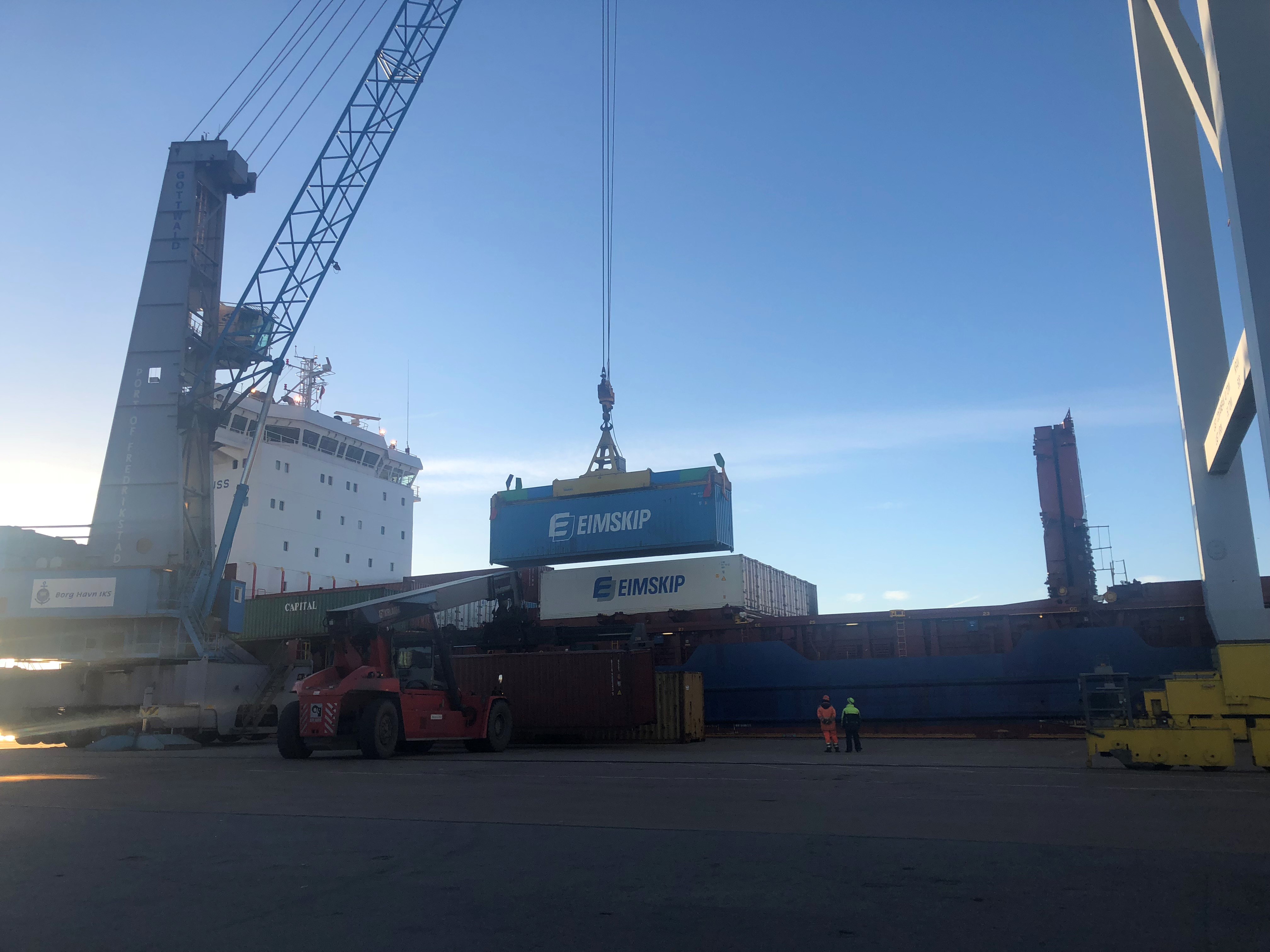
When AmCham visited, we were invited to board a leased cargo vessel due for a pitstop in Denmark that, unlike all other Eimskip-owned ships, was not named after Icelandic waterfalls.

A leading transportation company in the North Atlantic with connections to international markets, Eimskip specializes in worldwide freight forwarding services, with the vision of providing excellence in transportation solutions and service.

Eimskip

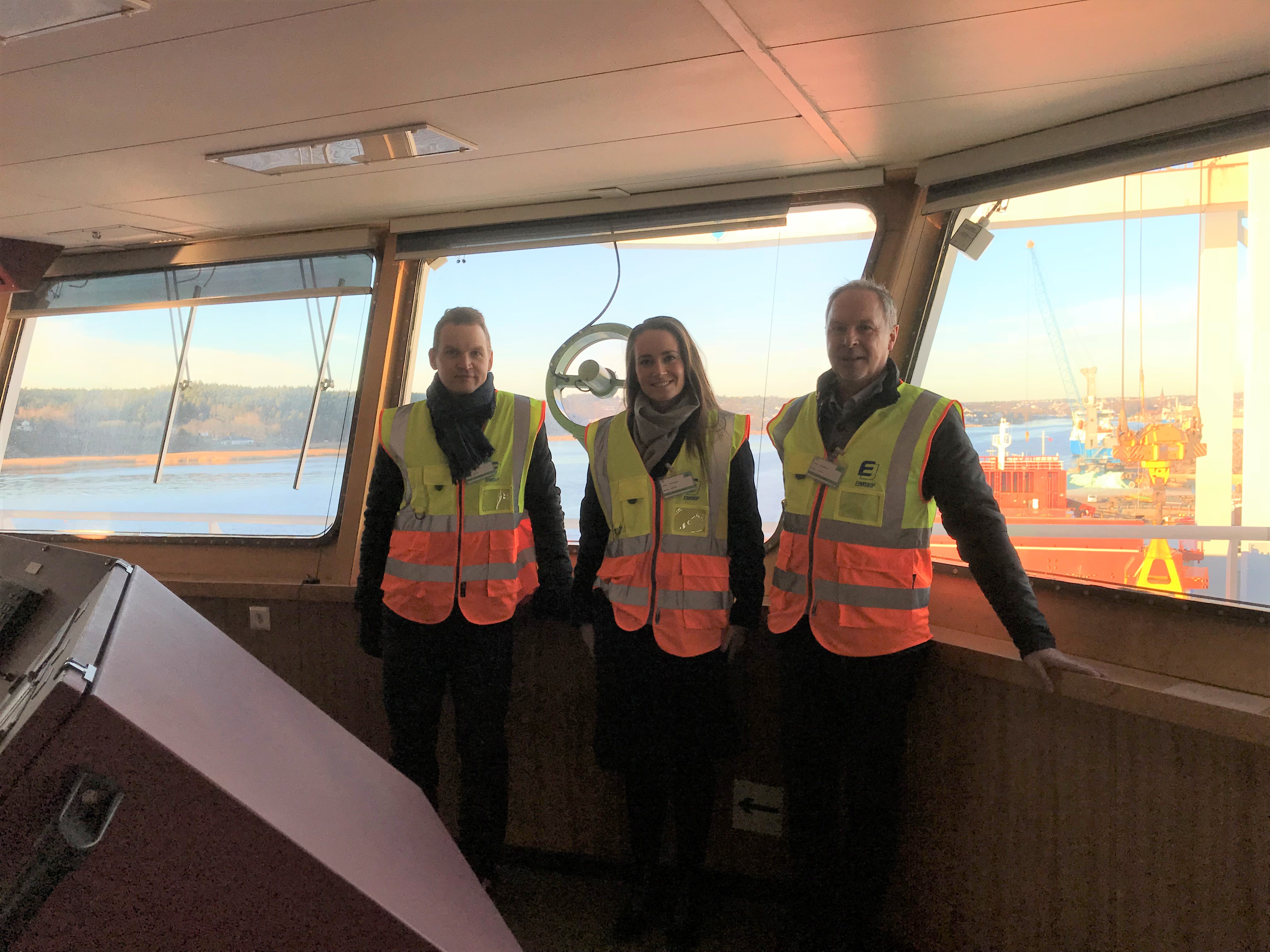
Arne Gjeksrud and Tom Espen Svendsen giving AmCham a tour of the vessel.


Having established their US headquarters in Portland, Maine in 2013, Eimskip actively services niche markets rich in natural resources, such as Northern Norway, Greenland and Newfoundland, before subsequently utilizing their extensive network to further dispatch cargo to its final destination.

 Norwegian Seafood Export

“With a strong presence in the North of Norway, Eimskip sends a substantial amount of seafood to worldwide destinations. The process requires efficiency and cooling systems both onboard the vessels and in the storage facilities for the goods to reach their destination in preserved condition.”

“Eimskip has specialized in transporting these types of refrigerated goods,” Tom Espen Svendsen, Manager of Eimskip’s Fredrikstad port location says during AmCham’s visit.

Although most shipped goods are Icelandic, Norwegian products account for approximately 15 percent of their total linier service volume.

US Operations

“Since selecting Portland as our main US destination, we have increased the number of port calls each year.”

“The potential to expand in the US, however, remains great. Currently Eimskip has weekly port calls in the US, with a goal to increase the number during 2019,” Svendsen explains.

Established with own offices on four continents and approximately 1,800 employees worldwide —50 of which based in Norway, Svendsen highlights Eimskip’s extensive network as a vital factor for their efficient asset operations.

“Being located so close to large East Coast cities such as Boston, without having to go through the larger harbors, makes it efficient reaching the cargo’s final destination on time.“

“Our established partnerships with other distribution companies ensure that the goods reach a number of destinations across the Unites States as well as other global destinations safely and efficiently,” Svendsen explains.

Eimskip Norway operates a fleet of reefer vessels and provides flexible and comprehensive services to its customers. By combining Eimskip’s container vessels, together with its reefer vessels, the company can find the best solutions for customers.

AmCham Christmas Party & Year in Review

Celebrating together with our members and partners, AmCham rounded off an eventful and engaging 2018 as we hosted our annual Christmas Party for the first time at Hotel Continental.

It has been a year of new initiatives at AmCham, having hosted numerous large-scale events, introducing both a cross-industry Sustainability Forum and a CFO Forum, in addition to our very popular Digitalization Forum. Further, we have expanded our staff, membership and revamped amcham.no.

In addition to our newly-established Board Pairing Program, we have also collaborated with the US Embassy to initiate the Rising Leaders Program and we are in the process of completing the third edition of our Mentorship Program— all initiatives designed to develop the leaders of today, as well as tomorrow.

Earlier in 2018, we also launched our US Companies in Norway report in collaboration with Innovation Norway and Menon Economics. The detailed publication emphasizes US companies’ contribution to the Norwegian economy through employment, taxes and direct investments and formed the foundation for the panel discussion at our Transatlantic Assembly in March.

AmCham Christmas Party

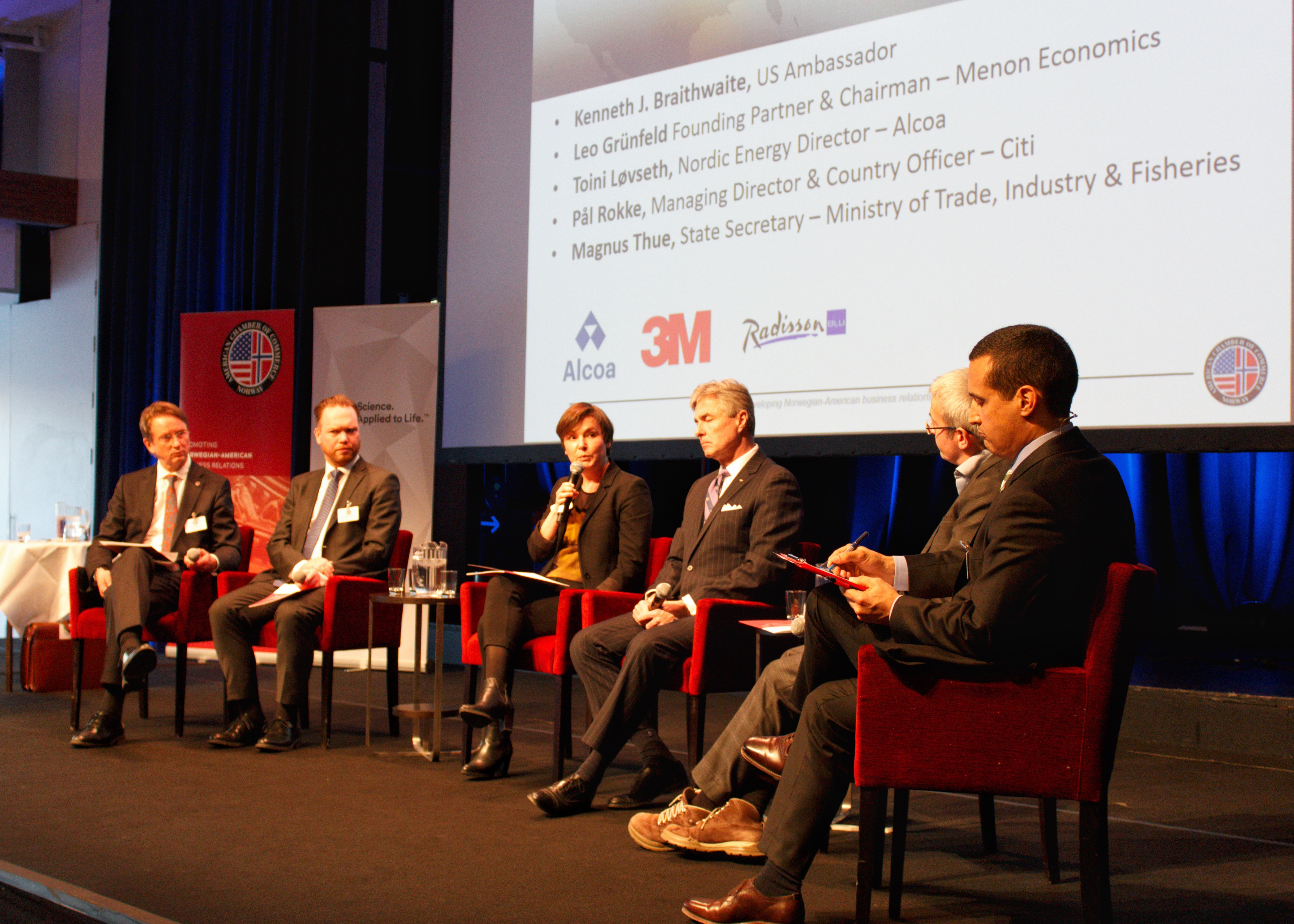
Pål Rokke, Country head for Citibank in Norway, Ministry of Trade State Secretary Magnus Thue, Alcoa’s Nordic Energy Director, Toini Løvseth and US Ambassador to Norway, Kenneth Braithwaite participating at our Transatlantic Assembly.

The new forums, publications and events have been warmly welcomed additions to the AmCham umbrella of initiatives, while increased staff capacity has allowed us to further enhance both our advocacy and member services efforts.

Board Meeting and Christmas Party

The ever-popular end-of-year Christmas event also marked AmCham’s final Board meeting of the year, where the dedicated members listened as American company Salesforce presented their newly established Norway presence.

In keeping with tradition, the Christmas party was a festive, relaxed event allowing for mingling over copious snacks and desserts provided by Hotel Continental and Charles Smith Wines from member Strøm.

Members actively engaged in competition for Chateau Smith wines, testing both their wine and US Holiday knowledge through a Kahoot! of 11 questions, before the announcement of both the winners of the Kahoot! as well as the champion of the Best Christmas Sweater Competition.

AmCham Christmas Party

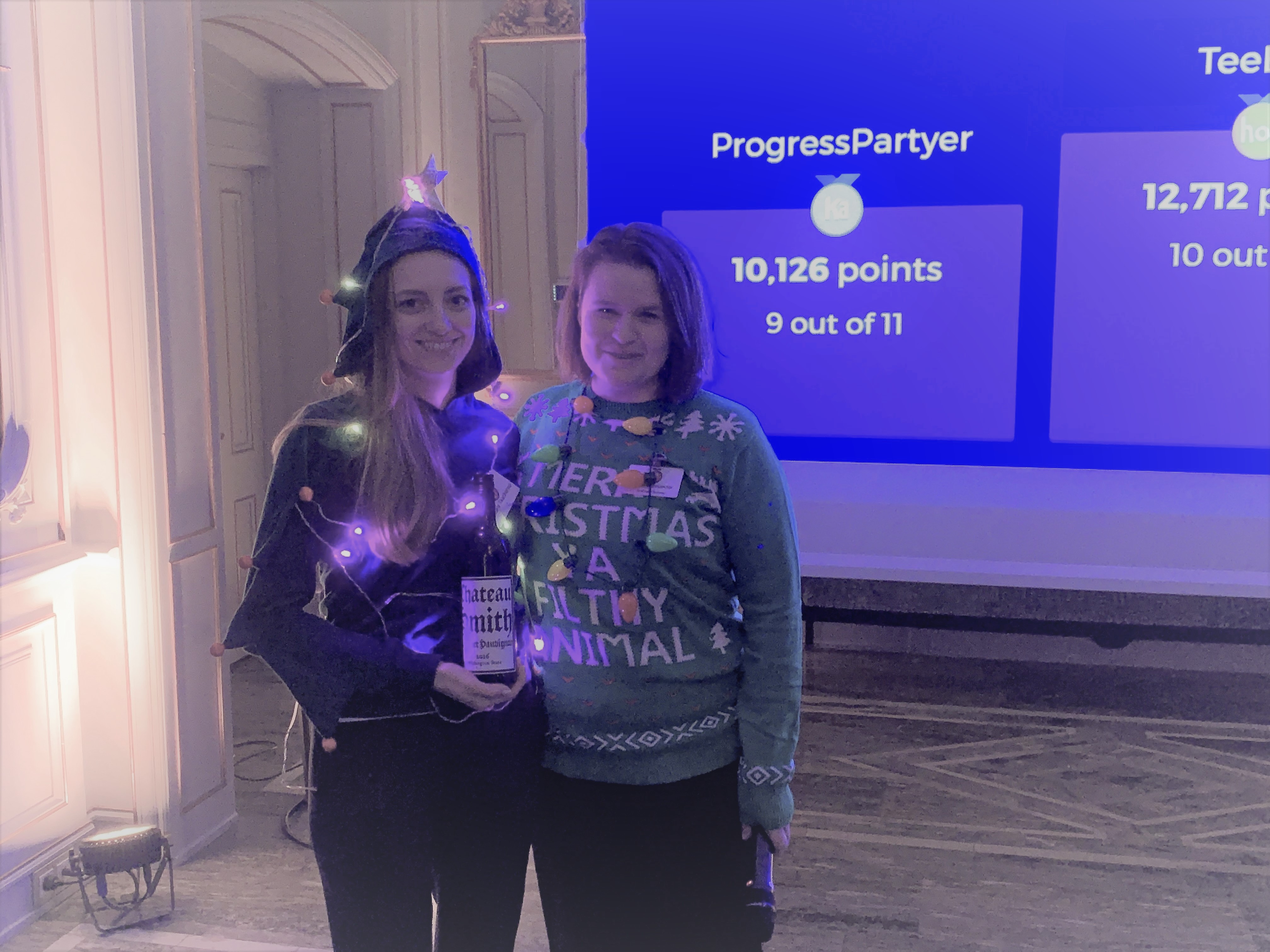
Tatiana Tkachenko from PwC won the Best Christmas Sweater competition.

Try the Kahoot! quiz and test your own American Wine and US Holiday knowledge here!

AmCham wishes to thank all our members, partners and board members for a productive and fruitful year and we look forward to continued collaboration in 2019!

Multinasjonale selskaper betaler mer enn halvparten av Norges selskapsskatt

Ny analyse fra Skatteetaten viser at multinasjonale selskaper i Norge betalte samlet 241 milliarder kroner i selskapsskatt, arbeidsgiveravgift og merverdiavgift i 2016.

Skatteetatens kartleggingsarbeid viser at Norge har omtrent 30 000 multinasjonale selskaper, det vil si selskaper som driver virksomhet i flere land. Disse utgjør ni prosent av alle selskaper i Norge, og betaler over halvparten av all selskapsskatt.

– Analysen gir oss et helhetlig bilde av multinasjonale selskapers aktiviteter og bidrag til skattefundamentet i Norge, slik at vi kan se på utviklingen over tid.  Arbeidet med å sikre skattegrunnlaget ved internasjonale transaksjoner er en prioritert oppgave for Skatteetaten. Det er et komplekst område men vi har gjennom mange år bygget opp god kompetanse, sier skattedirektør Hans Christian Holte.

Resultatene viser at det i 2016 var 29 600 multinasjonale selskaper i Norge, noe som utgjorde 9 prosent av det totale antallet selskaper. 13 800 av de var norskkontrollerte, og 15 800 var utenlandskontrollerte. De multinasjonale selskapene hadde 50 milliarder i utliknet skatt, noe om utgjør omtrent 60 prosent av all skatt for selskaper i Norge. Multinasjonale virksomheter bidro med 127 milliarder kroner i merverdiavgift, 47 prosent av den totale inntekten fra merverdiavgiften i 2016. Samlet proveny for arbeidsgiveravgift var 64 milliarder fra multinasjonale selskaper, av 107 milliarder totalt i arbeidsgiveravgift betalt av aksjeselskaper, allmennaksjeselskaper og filialer totalt.

– Vi ser ofte at debatten om beskatning av multinasjonale selskaper domineres av omtale om selskapsskatt, som er en mindre andel av de totale skatteinntektene enn merverdiavgift og arbeidsgiveravgift. Det er viktig at hele bidraget til skattefundamentet fra multinasjonale selskaper synliggjøres både for vår egne analyseformål men det er kanskje interessant også for samfunnsdebatten, sier Holte.

Skatteetatens analyse er en del oppfølgingen av et internasjonale prosjekt i regi av OECD og G20 som flere land samarbeider om for å bekjempe uønsket aggressiv skatteplanlegging av multinasjonale selskaper.  OECD har estimert at overskuddsflytting og lignende aggressiv skatteplanlegging koster felleskapet til sammen 100-240 milliarder USD i tapt proveny hvert år. Norge og flere enn 60 land samarbeider gjennom prosjektet mot BEPS (Base Erosion and Profit Shifting), som betyr uthuling av skattefundamentet og overskuddsflytting.

Prosjektet handler om hvordan skatteregler bør utformes for å møte dagens utfordringer med skattlegging av verdiskapning i en global og digitalisert økonomi, blant annet hvordan skatteinntektene fordeles mellom landene.  Resultatet er forventet å medføre fundamentale endringer i internasjonale standarder for beskatning basert på tre hovedprinsipper: indre sammenheng, substans og åpenhet.

– Vi ønsker å bidra til å finne omforente løsninger internasjonalt fordi det er nøkkelen til å kunne skattlegge multinasjonale selskaper effektivt, noe som vil hjelpe oss å sikre riktig beskatning i Norge. Analysen vi har gjort nå sier ikke noe om selskapene har betalt rettmessig andel skatt i Norge, men vi etablerer et nyttig grunnlag for videre analyse og for å følge utviklingstrekk fremover, sier Holte.

Les mer om Skatteetatens kartlegging av multinasjonale selskaper og andre artikler blant annet om nordmenns verdier i utlandet på skatteetaten.no/analysenytt.

CBP Reminds Travelers to Allow 72 Hours for ESTA

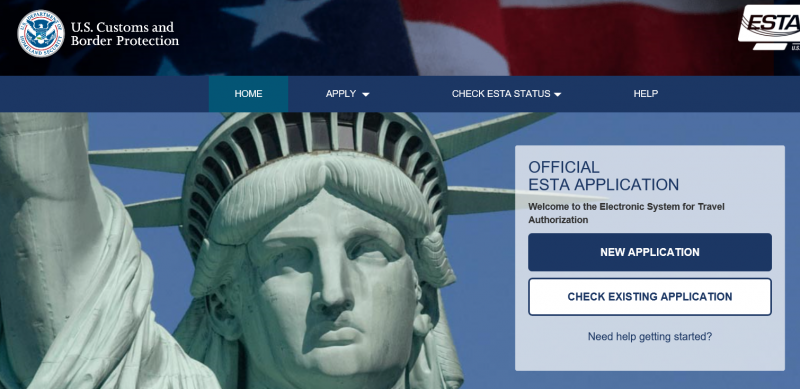
U.S. Customs and Border Protection (CBP), consistent with existing requirements, reminds international travelers using the Electronic System for Travel Authorization (ESTA) for travel to the United States to apply as soon as possible but not less than 72 hours before their international flight is scheduled to depart. 

Visa Waiver Program users are encouraged to apply early.

Due to changes in ESTA application processing, real-time approvals will no longer be available. Citizens of participating Visa Waiver Program (VWP) countries traveling to the United States are strongly encouraged to apply for an ESTA at the time of booking their trip and no later than 72 hours prior to departure. Applicants who apply on the same day of their flight’s departure risk not having an approved ESTA prior to their scheduled departure.  International travelers without an approved ESTA will not be authorized to board their flight.

ESTA is an automated system that assists in determining eligibility to travel to the United States under the Visa Waiver Program and whether such travel poses any law enforcement or security risks.  Upon completion of an ESTA application, travelers are notified of their eligibility to travel to the United States under the VWP.

“Since its implementation in 2007, ESTA has counterbalanced vulnerabilities inherent in visa-free travel by adding a layer of advance scrutiny that enables our officers to focus on the small population of potentially dangerous travelers,” said Todd Owen, CBP Executive Assistant Commissioner of the Office of Field Operations.

Recent enhancements to the ESTA process make querying application status much smoother.  Upon successful submission, the applicant is provide an email containing their application number and a link taking them directly to the ESTA web page.

The Visa Waiver Program (VWP) allows citizens of participating countries to travel to the United States without a visa for stays of 90 days or less for business or pleasure when they meet all requirements.  Electronic System for Travel Authorization (ESTA) is an automated system that determines the eligibility of visitors to travel to the U.S. under the VWP and is required for all VWP applicants in the air and sea environment.

ESTA was one of the measures under the Implementing Recommendations of the 9/11 Commission Act of 2007. The electronic travel authorization system was designed to enhance the security of the Visa Waiver Program by evaluating a traveler’s eligibility prior to their boarding a U.S. bound flight.

For detailed information on VWP/ESTA, please visit the CBP site at: cbp.gov/esta, or, the U.S. State Department travel site. To avoid third-party fees, CBP encourages travelers to apply use the official ESTA website.