All posts by admin

Solvik-Olsen skal starte flyskole i USA

OSM Aviation-sjef Espen Høiby har rekruttert den tidligere samferdselsministeren for å starte en ny flyskole i USA.

– Det var litt tilfeldig at vi kom i kontakt. Vi satser på vår virksomhet i USA og vi så dette som en god mulighet, og han har jo bred erfaring fra samferdselsfeltet, sier Espen Høiby, administrerende direktør i OSM Aviation til E24, om hvordan Solvik-Olsen ble rekruttert.

Den tidligere samferdselsministeren skal nemlig lede etableringen av flyskolen OSM Aviation Academy i USA.

OSM Aviation, med den tidligere SAS-piloten Espen Høiby i spissen, har siden etableringen av selskapet i slutten av 2011 bygget opp en omfattende bemanningsvirksomhet i luftfarten. De har ansatt piloter og kabinpersonale som igjen leies ut til en rekke flyselskaper.

Nå satser de altså for fullt på å trene opp piloter selv.

Les hele artikkelen på E24.no

Inaugural AmCham CFO Forum

Ten invited cross-industry CFOs and financial leads from some of Norway’s leading international companies met in the AmCham offices for a very engaging introductory AmCham CFO Forum.

The meeting began with brief introductions, which highlighted the variance in attendance from both freshly appointed CFOs to those who have been working in the position for many years.

The AmCham CFO Forum is a platform upon which financial leaders can interact, share best practices and learn from each other about what it takes to run a successful international finance department in Norway.

Invited to introduce relevant topics from their respective industries, IBM, Citi and Microsoft representatives introduced highly relatable issues facing CFOs in a time of emerging financial disruptions.

Jessica de Mare, from IBM, introduced the first topic of finance organization management and transformation, giving a background into IBM’s Think Topic of 2018, “mankind meets machine,” along with innovations within finance-related technologies.

Citibank’s Miriam Hood then led the discussion into the impact of centralization on financial institutions and management. The prevalence of outsourcing in today’s offices, and the accompanying challenges and benefits, was a subject that all around the table could personally relate to.

Involving representatives from Microsoft, IBM, Abbvie, KPMG, GIEK, Discovery, Fast Solutions and Citi, the meeting rounded out with a discussion of business performance management, initiated by Sven Oftedal Nicolaisen of Microsoft. He drew attention to the importance of data sources and taxonomy and turned also to different methods of forecasting.

Overall, the amount of information to be shared and commonalities found around the table, preceded all involved to agree on the relevance and importance of the forum.

With the surface merely being scratched on some of these topics, a second CFO Forum is currently being scheduled for Q1 2019, with select invitations extended in the course of January.

Please contact us for interest in future forums.

In loving memory: Kim Nesselquist by Ambassador Aas

“It is with deep sorrow and sadness that I write to inform you that our colleague and friend, consul Kim Nesselquist, passed away this morning, on Dec. 7, after being diagnosed with cancer in April this year. Kim fell into a deep and peaceful sleep, surrounded by his loved ones. 

“I had the pleasure to visit Kim, Krystn, and their children in Seattle earlier this week. As always, Kim was smiling, optimistic, and humorous, despite his illness.

“As many of you know, Kim was a family man. The love and adoration Kim showed his dear wife Krystn and their three children Elise, Per, and Christian was ever evident. Kim was proud and happy about their successes as a family.

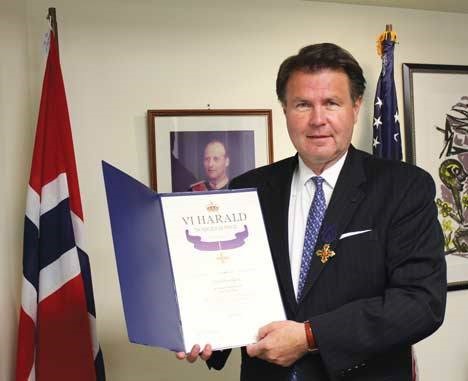
“Kim was appointed by His Majesty King Harald V to represent Norway as our Honorary Consul of Washington State and Idaho in 1998. This was a role Kim performed with great honor. He loved representing Norway; our country’s heritage, culture, and values. Kim carried out his duties with great impact, resulting in significant accomplishments and a long-lasting legacy. He was an important bridge between Norway and the Norwegian-American community.

“For over 20 years, Kim was a mentor for Norwegian students studying at Pacific Lutheran University (PLU) and other American universities on the West Coast. Last month, a fund was established in Kim’s name, the Consul Kim Nesselquist Norwegian-American Community Endowed Fund, which each year will allow several students to attend the University of Washington. Furthermore, Kim advised and assisted Norwegian companies in their U.S. endeavors, and he was the driving force behind planning Their Majesties the Queen’s and the King’s visit to Seattle and Washington State in 1995, and, 20 years later, His Majesty’s return visit in 2015.

“The enduring legacy of Kim’s contribution to the Norwegian-American community can also be witnessed in front of the Norwegian Residence on Massachusetts Avenue, in form of the iconic brass sculpture of HRH Crown Princess Märtha. Kim was instrumental in acquiring the statue from the outset, culminating in her unveiling on Sept. 18, 2005, which also marked the centennial of Norway’s independence.

“Kim was appointed Knight, First Class in 2012 by His Majesty King Harald V for his tireless work in support for Norwegian interests. He did so with remarkable stamina, good humor, and enthusiasm. He cared deeply for Norway and Norwegian interests, and was proud of being Norwegian.

“Norway has lost a champion.

“Kim’s warm spirit will live on through his family, his legacy and the Norwegian-American community.

“I will miss him sorely.”

Equinor strengthens its position in the Norwegian Sea

Equinor and Faroe Petroleum have agreed on a number of transactions in the Norwegian Sea and the North Sea region of the Norwegian Continental Shelf (NCS).

These transactions are calibrated as a balanced swap when it comes to value with no cash consideration.

“The net effect of our agreement with Faroe is to upgrade Equinor’s portfolio in line with our updated roadmap for the NCS. We are strengthening our operated position in the prolific Njord area, which we believe continues to have considerable upside potential. We remain operator and majority equity holder in Alve which is produced via Norne, another important part of the Norwegian Sea for us. And we are reducing our exposure to non-core and partner-operated assets,” says Siri Espedal Kindem, Equinor’s senior V.P. for Operations North.

The Njord field was in production from 1997 to 2016. The platform and the storage vessel have been brought to shore for an extensive upgrade. The field is planned to restart in 2020 and produce until 2040. The remaining reserves for the Njord and Hyme fields are estimated to be 175 MMboe, while Bauge has a reserves estimate of 73 MMboe.

The effective dates of the transactions are Jan. 1, 2019 with closing subject to government approval.

Equinor has awarded wired drill pipe contracts to NOV and Schlumberger

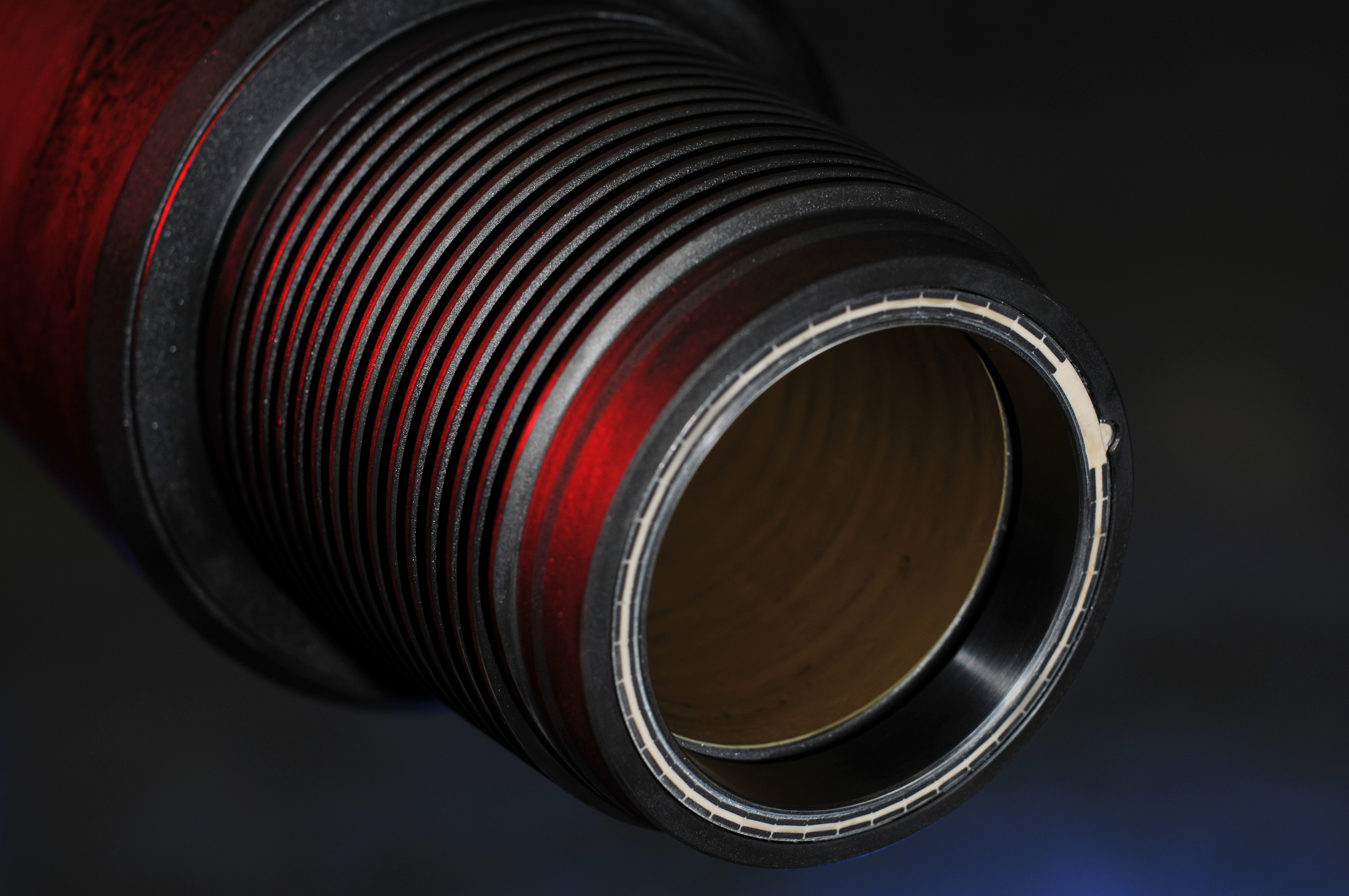
Equinor is stepping up its use of wired drill pipe to acquire subsurface real-time data during drilling operations, in line with the corporate digitalization strategy and to prepare for automated drilling.

null

Photo: Intelliserv. The wire inside the drill pipe allows high-speed data transfer.

NOV and Schlumberger have been awarded corporate frame agreements for global deliveries of wired drill pipes to Equinor. Both suppliers use solutions from IntelliServ, which is owned by NOV and Schlumberger.

In addition to the corporate frame agreements with the two suppliers, commitments have been made on the use of wired drill pipe delivered by NOV for specific operations, such as Mariner in the UK, the West Herkules exploration campaign on the Norwegian continental shelf and Transocean Enabler’s drilling campaign on Trestakk. Estimated value of this work scope is around $35.35 million (NOK 300 million).

The contracts allow the technology to be used on all Equinor installations globally. The total contract value may exceed $117.8 million (NOK one billion) during the first three years of the contract period.

“This technology gives us a deeper understanding of what is happening inside and around the well during drilling, and makes it easier to make the right choices, based on real-time data, during the drilling operation. We will eliminate expensive mistakes, such as obstructions in the open hole during and after drilling and having to drill sidetracks. It also gives us a better understanding of the reservoirs and enables us to optimize the well placement. We become more efficient because we can control the speed and power of the drilling against the limit values that are most suitable underground,” says Geir Tungesvik, head of TPD Drilling & Well.

He says that Equinor has already good experience from using this technology during the Barents Sea exploration campaign last year.

“That is why we are expanding the use of this technology, while we are upgrading all rigs and some platforms in 2018 and 2019 to prepare for more automated drilling. This technology is an important element of our digitalization strategy. I look forward to expanding the use of high-speed data transfer, which I believe will help ensure safer and more efficient drilling operations,” he says.

The wire inside the drill pipe allows high-speed data transfer. The signals transmitted through the drill pipe are estimated to be 10,000 times faster than the pressure waves of the drilling mud in conventional drill pipes.

“We are pleased about awarding these global contracts and we are looking forward to the cooperation with NOV and Schlumberger. At the same time, we want the industry to keep developing this kind of technologies. Technology development in this segment is progressing fast and we are eager to see the development of other solutions in the market that may be relevant for us to test in the short or longer term,” says Peggy Krantz-Underland, Equinor’s head of procurements.

Are Traasdahl nytt superhus for landets ledende startups

En av Norges ledende seriegründere går sammen med en av Oslos ledende eiendomsutviklere, og lager et kollektiv for de mest lovende tech-selskapene.

Les hele artikkelen på Shifter.no

Trillebårer med murstein, hauger med gammel isolasjon, hengende ledninger fra taket og et gulv som er dekket av et forholdsvis tykt lag med murstøv og enda mer betong. Selv om Are Traasdahl var vant til både det ene og andre da han vokste opp i Orkdal i Trøndelag, der han blant annet solgte brukte sykler og biler som han hadde pusset opp, er det ikke helt vante omgivelser for seriegründeren og teknologiinvestoren.

Han kommer imidlertid til å være mye her i bygget som en gang i tiden utgjorde den gamle stallen til Forsvarets hester. Sammen med eiendomsutvikler Aspelin Ramm er han nå i gang med en totalrenovering av den ærverdige bygningen i Myntgata 2. I mars åpner det som skal bli et nytt teknologisenter, som skal huse noen av landets fremste vekstselskaper.

— Vi retter oss mot selskaper som har vokst ut av de tradisjonelle miljøene. De som skal satse internasjonalt, og skal bli gigantiske, forteller Are Traasdahl, som gründet Tapad som han solgte videre til Telenor for 3,2 milliarder kroner.

– Lær grensehandelspolitikk av Danmark!

Ferske tall fra SSB viser at grensehandelen fortsatt er på et rekordhøyt nivå. – Dette vil bare fortsette dersom politikerne ikke evner å iverksette tiltak. Norske politikere bør lære av Danmark og se hvilke grep de har tatt for å kontrollere grensehandelen.

Det sier administrerende direktør Petter Nome i Bryggeri- og drikkevareforeningen (BROD). I morges slapp Statistisk sentralbyrå (SSB) grensehandelstallene for 3. kvartal. De viser at nordmenn har grensehandlet for 15,3 milliarder kroner de siste 12 månedene, en marginal nedgang på 0,7 prosent.

– Grensehandelen ligger fortsatt på et skyhøyt nivå, men regjeringen gir blaffen i signalene fra norsk næringsliv og lukker øynene for problemet, sier Nome.

BROD-direktøren viser til hva Danmark har gjort for å redusere grensehandelen og peker på flere konkrete tiltak.

– I 2014 fjernet danskene brusavgiften og reduserte ølavgiften med 15 prosent. Denne uka senket de ølavgiften med ytterligere 13 prosent. På denne måten har de flyttet handel tilbake til Danmark, uten at staten har tapt inntekter, sier Petter Nome.

Det danske Skatteministeriet oppgir at grensehandelen med øl, brus og godteri er halvert siden årtusenskiftet. Ifølge danskenes skatteminister, Karsten Lauritzen, skyldes det at emballasjeavgiften på drikkevarer er fjernet, planlagte avgiftsøkninger er annullert og flere avgifter er redusert.

– Danskene tar grensehandelen på det største alvor og kartlegger nøyaktig hvor mye og hvilke produkter folk handler i utlandet. Dermed kan de ta grep for å motvirke grensehandelen.

– Her har norske politikere mye å lære. SSBs statistikk sier ingenting om hva nordmenn kjøper over grensa. Hvorfor kan vi ikke gjøre som danskene? spør Petter Nome.

I budsjettavtalen for 2019 mellom regjeringspartiene og KrF, ble det vedtatt å fjerne 350-grensen for netthandel fra 1. januar 2020. Nome tror det vil ha liten innvirkning på totale grensehandelen.

– Når folk mister muligheten til å handle billige varer på nett, vil nok mange sette seg i bilen og kjøre til Sverige for å spare penger. For nordmenn flest tar kjøreturen under to timer.

Ifølge tall fra SSB lå grensehandelen på 13,3 milliarder kroner i 2013, etter åtte år med rød-grønn regjering. I 2017 bikket den 15 milliarder og siden har den holdt seg på rekordhøyt nivå.

– Det er forunderlig at FrP i regjering, som attpåtil har finansministeren, ikke er mer opptatt av å senke norske avgifter og bidra til å redusere grensehandelen. I opposisjon var det ikke måte på hva de ville gjøre med dette om de kom til makt, sier Petter Nome.

Member Profile: Norsk Titanium

It is the epitomization of a bilateral, transatlantic success story – founded and matured in Norway, expanding into large production facilities in the US, and servicing major commercial aircraft manufacturers in the US and Europe – Norsk Titanium from Eggemoen is changing the future of aerospace manufacturing.
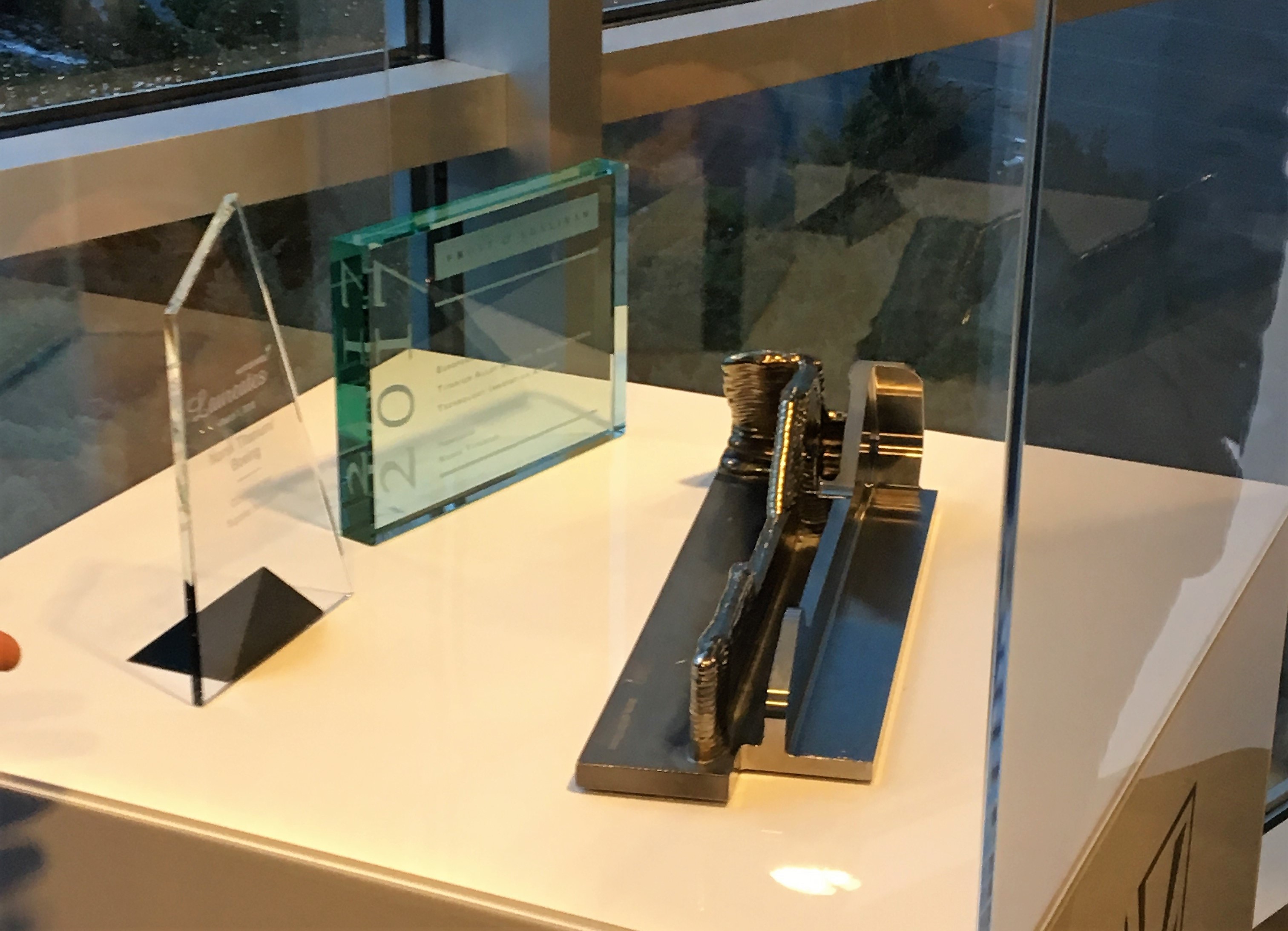
Norsk TitaniumAt first glance to the untrained eye, the titanium shape in the glass display by the front door looks like any piece of shiny metal. At least until Karl Fossum, Director of Boeing Programs at Norsk Titanium (Norsk), starts explaining the reason for its prominent placement and the background behind it.

“This is a model of the exact piece that landed us the agreement to produce aerostructure components for Boeing aircraft in 2016.”

“Prior to this, the company had invested heavily in oilfield solutions with very limited return – now, we are nearly $300 million into our technology for aerospace applications,” Fossum says.
 

Norsk Titanium

Made at their Norwegian headquarters and using a technology that can be best described as 3D printing with titanium, millimeter thin strings are layered to form near net shapes. Norsk has revolutionized the industrial approach to producing aerospace components for major commercial aircraft OEM customers.

A Transatlantic Organization

Norsk’s Rapid Plasma Deposition™ Titanium Additive Manufacturing machines are developed at the Engineering and Technology Center in Norway. The same machines are being used at their Plattsburg, New York facilities as well as in Norway.

“We actively utilize the opportunity the employees have to travel between the countries and to work both in Norway and the US. American engineers come to Norway to learn and Norwegians, in turn, travel to the States to teach.”

“As the production method is the same, it enables us to act as one engineering organization, despite being separated by the Atlantic Ocean,” Fossum explains.

Groundbreaking Production Technology

Being added to Boeing’s official Qualified Producers List, Norsk delivered its first titanium production order for the 787 Dreamliner in 2017, using a technology that honors the traditional forge-based production process but enables quicker production time and less waste material.

Norsk Titanium

Karl Fossum (Photo: Norsk Titanium)

“Melting titanium wire with plasma torches, we are able to manufacture tailored components for customer need at an industrial scale. The ability to control our melt process within an unbroken inert atmosphere of argon gas enables us to deposit these near net shapes approximately 50 to 100 times faster than traditional powder-based systems.”

“Additionally, with the process being so efficient, there is about 50-75% less waste material from our components, making our process more sustainable and less expensive,” Fossum says.

Founded by Dr. Alf Bjørnseth, Norsk Titanium’s success story from the modest Norwegian countryside to the state of New York – the global leader of on-demand manufacturing processes – is on route to fulfill the founder’s ambition when he formed the company; to pioneer the next industrial revolution.

Norsk Titanium

(Photo: Norsk Titanium)

Equinor receives green light for a uniquely profitable project

The Ministry of Petroleum and Energy has approved the plan for development and operation (PDO) of the Troll Phase 3 development.  Capital expenditures of $918.5 million (NOK 7.8 billion) will help extend the productive life of the Troll field beyond 2050.

A unique oil and gas field globally Troll generates highly important to value for the Norwegian society. Since it came on stream in 1995 the field has generated an estimated NOK 1,400 billion, i.e. $20.6 million (NOK 175 million) per day.

“With a break-even of less than $10/bbl, Troll Phase 3 is one of the most profitable and resilient projects ever in our company.  Thanks to the PDO approval Equinor and its partners can now deliver another 2.2 Bboe from the field with a CO2 intensity of 0.1 kilo/bbl,” says Torger Rød, Equinor’s senior vice president for project management.

“Equinor will work closely with partners and suppliers planning start-up of the field in the first half of 2021,” says Rød.

“This adds a new chapter to the amazing Troll story. The field has an important part in our plans to transform the Norwegian continental shelf for sustainable value creation for several decades,” says Gunnar Nakken, Equinor’s senior V.P. operations west.

“Troll is the biggest gas producer on the NCS, meeting 7% to 8% of Europe’s total daily gas consumption. We will deliver safe, profitable and carbon-efficient energy from Troll that helps reduce coal consumption and reduce CO2 emissions in Europe with a long-term perspective beyond 2050,” says Nakken.

The development of Troll phase 3 is also important for Norwegian supply industry. About 70% of the value creation will take place in Norway.

The partnership has awarded contracts within marine installations and subsea facilities totalling an estimated $111 million (NOK 950 million) to the companies Nexans, Deep Ocean, IKM, Allseas and Marubeni.  In addition, the partnership has awarded contracts worth approximately $235 million (NOK 2 billion) for subsea facilities and the construction of a new processing module on the Troll A platform to Aker Solutions.

Troll partners: Equinor (30.58% – operator), Petoro (56%), Norske Shell (8.10%), Total E&P Norge (3.69%), ConocoPhillips Skandinavia (1.62%)