All posts by admin

Dual Citizenship Adopted in Norway

After many years of campaigning, the Norwegian Government today amends the Citizenship Act to allow for the concept of dual citizenship.

The Parliament of Norway will today approve changes to the Citizenship Act that will allow Norwegians to hold dual citizenship, a move that brings Norway in line with much of the world. The changes will come into force one year after Norway notifies the Council of Europe of the change.

I think this is a joyous day. The law is from 1888. It is ripe for revision and must be adapted to the time we live in,” says Parliamentary representative Ove Trellevik.

Some opposition parties supported the coalition government, although the Labour Party (Arbeiderpartiet) and the Center Party (Senterpartiet) opposed the change.

Becoming a citizen is no easier

The long-awaited changes are not making it easier to become a Norwegian citizenship. They will allow foreigners who already qualify for Norwegian citizenship to become Norwegian citizens without having to renounce their current citizenship.

Typically, a foreigner needs to be have been living in Norway for seven of the last ten years holding valid residence permits throughout that time. Additional demands include documented fluency in the language, along with an exam about Norwegian society, laws and history.

There is also no provision for people with Norwegian heritage (for example, a grandparent) to become citizens, without meeting the full criteria for citizenship.

With the amendment, people who have previously had to renounce their Norwegian citizenship could apply for its return.

Following a global trend

“As we allow double citizenship, we are ensuring that Norwegian law follows developments in a more globalised world, with more and more connections to more countries,” said Jan Tore Sanner, Minister of Knowledge and Integration, earlier this year.

Delicato Family Vinyards Named USA Wine Producer of the Year

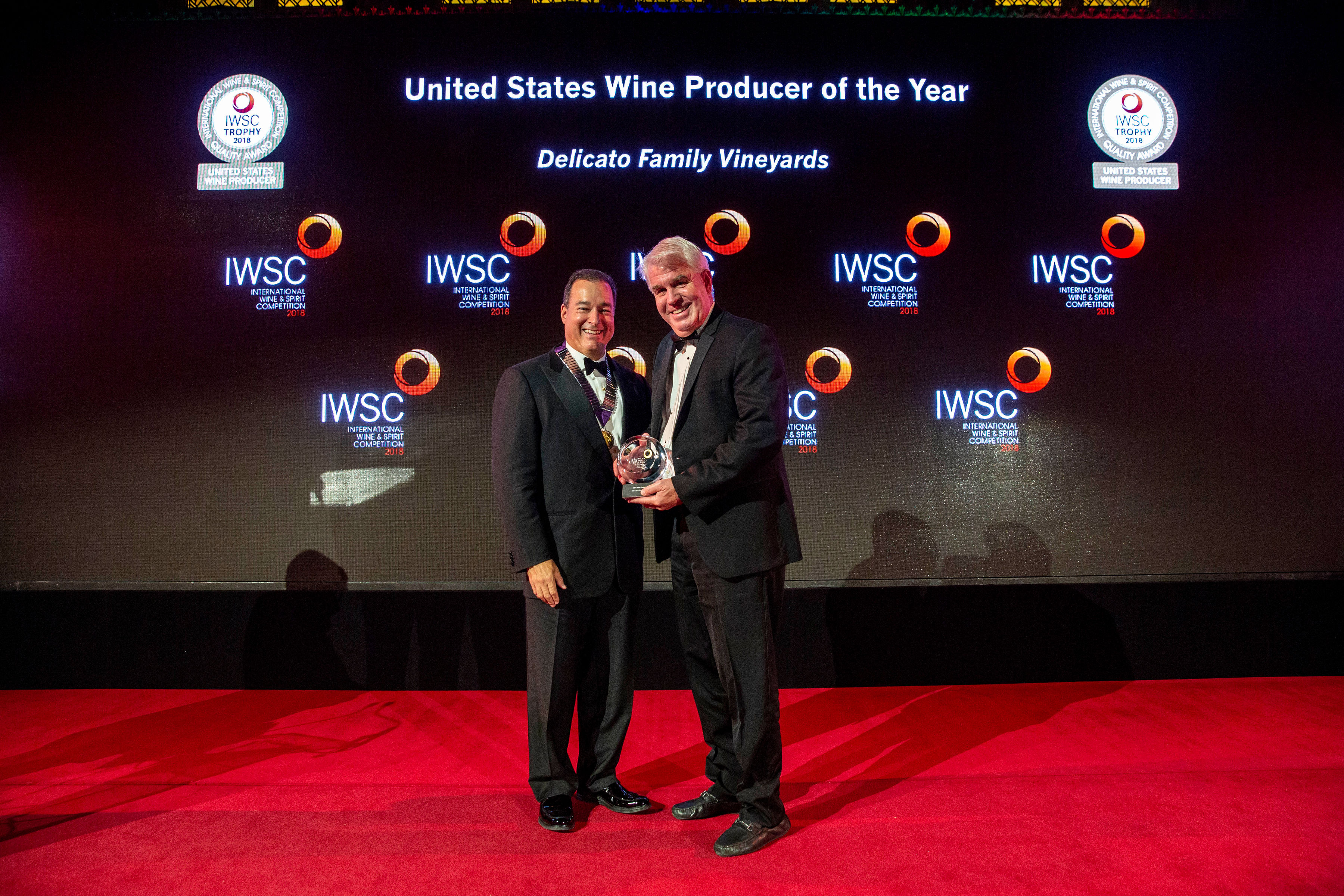
Delicato Family Vineyards announced today that it is the exclusive recipient of the International Wine & Spirit Competition’s USA Wine Producer of the Year award.
Based on the winery’s sustained excellence, Delicato received the esteemed award for the fifth time since 2001.

The trophy was received November 14, 2018, at the IWSC Annual Awards Banquet in London. Last year, Delicato’s halo luxury winery, Black Stallion Estate Winery received the award, and three previous years Delicato was honored with the achievement.

Ten wines from Delicato Family Vineyards received individual awards this year, with the 2014 Black Stallion Estate Winery Limited Reserve Cabernet Sauvignon, earning Gold medal honors. Delicato is now the fifth largest exporter of branded wines in the U.S., moving up two spots from last year’s list.

“Winning the IWSC USA Wine Producer of the Year award is an honor,” said Chris Indelicato, CEO, and president of Delicato Family Vineyards. “This award is a testament to the quality of our wine and the amazing vineyards in California and other top wine regions in the U.S.”

Now in its 49th year, the prestigious International Wine & Spirit Competition remains more relevant than ever, known for its strict submission guidelines and judging process. More than 400 global experts from 30+ countries judge samples for seven months each year, evaluating wines according to their class. Winners are selected based on organoleptic judgment (taste, color, aroma, etc.) in addition to undergoing chemical analysis.

Telenor og Cisco sammen om det raskeste mobilnettet

Et tett strategisk samarbeid mellom Cisco og Telenor har vært avgjørende i byggingen av verdens raskeste mobilnett. Nå forsterker selskapene sitt strategiske partnerskap etter avtalen de signerte på Mobile World Congress tidligere i år.

Gjennom en strategisk samarbeidsavtale skal kundeopplevelsen forbedres innenfor områder som dataanalyse, IoT, smartby og sikkerhetsløsninger.

Som en del av avtalen mellom de to telekomaktørene leverer Cisco teknologien som muliggjør hastighet i verdenstoppen. Kjernen i mobilnettverket er økt grad av sikkerhet sammen med den globale markedsledende Cisco Packet Core*, som bidrar til et superraskt internett til Telenor sine kunder.

– Gjennom målrettet satsning over flere tiår har vi klart det vi ikke trodde var mulig – å gi kundene våre verdens raskeste mobilnett. Den høye nettkvaliteten hadde vi ikke maktet å få til uten et tett samarbeid med Cisco. Cisco er en verdifull samarbeidspartner som bokstavelig talt leverer kjernen i mobilnettet vårt. Vi er svært glade for å ha dem med på laget, sier Bjørn Amundsen, dekningsdirektør i Telenor Norge.

– Telenor, som er et av verdens ledende selskaper innen mobilteknologi, er en svært viktig strategisk partner for Cisco. For å kunne levere den beste brukeropplevelsen for norske kunder har Telenor en unik kompetanse, innsikt og posisjon. Sammen med Telenor ønsker vi å bidra til å bygge dagens, og morgendagens, raskeste og sikreste mobile nettverk, sier Sven Størmer Thaulow, administrerende direktør i Cisco Norge.

Suverene resultater
Ferske tester fra Ookla® og Speedtest® viser at Telenor i Norge har verdens raskeste mobilnett. Uavhengig av hvor kunden befinner seg er forventningen til mobildekning og hastighet den samme, noe som gjør Norge til et spesielt vanskelig land å bygge mobilnett i. Testen til Ookla® tar ikke hensyn til norske særegenheter som høye fjell og dype fjorder, hvilket gjør denne kåringen ekstra imponerende.

Johan Castberg construction begins at Stord, says Equinor

Norwegian minister of petroleum and energy, Kjell-Børge Freiberg, will start cutting the first sheet for the topside of the Johan Castberg vessel at Kværner’s yard at Stord. The construction will create major ripple effects throughout Norway.

“Johan Castberg is the next major development on the Norwegian continental shelf and will open a new area in the Barents Sea for Equinor. Johan Castberg’s development will have ripple effects equivalent to 47,000 man-years in Norway during the development phase. The value of Norwegian goods and services will amount to around $2.9 billion, says Anders Opedal, Equinor’s executive vice president for Technology, Projects and Drilling.

In total, more than 2 million working hours will be included in the construction of the topside, and it is expected to generate jobs for 4,800 people.

“Simultaneously, work will begin at a number of yards along the entire Norwegian coast. Already, many small and large Norwegian suppliers are in the process of delivering to Johan Castberg. This shows the competitiveness and competencies of the Norwegian supplier industry in hard global competition, says project director for Johan Castberg, Knut Gjertsen.

There will be extensive activity at the yards in Verdal, Egersund and Sandnessjøen in addition to Stord over the next few years constructing the many parts that will form the complex topside. It will be installed on the 200-metre long FPSO vessel that will be producing on the Johan-Castberg field for 30 yr from the planned production start in 2022.

Already the construction of the other two big puzzle pieces of the FPSO is well under way. The hull is under construction in Singapore, and the turret is being built in Dubai. These will eventually arrive at Stord in 2020 for assembly and completion before the vessel is moved to its permanent home in the Barents Sea.

The Johan Castberg partnership includes Equinor 50%, Eni 30%, and Petoro 20%.

Avinor Oslo Airport named Airport of the Year

Oslo Airport was presented with the Airport of the Year Award at CAPA’s Aviation Awards for Excellence in Berlin yesterday.

CAPAs Aviation Awards for Excellence is presented to airlines and airports that not only demonstrate success and good operations, but which have also proven to be industry leaders in terms of adapting to new and future-oriented solutions for the environment and sustainability.

Oslo Airport was named Airport of the Year in the category for airports with more than ten million annual passengers. The award is presented to the airport that has established itself as a strategic leader, and which has done most to promote and develop innovative solutions in the aviation industry.

Oslo Airport was presented with the award for the opening of the new terminal in 2017, in addition to innovative work on the environment and sustainability.

“This is a welcome recognition of us and everyone who works at the airport. Every day we work to be perceived as a first class European airport, and this proves that we really are,” says Øyvind Hasaas, Managing Director of Oslo Airport.

Recognition for focus on electric aircraft

In the jury’s justification, CAPA emphasises the planning and commissioning of the new terminal, work on developing routes, new extensions and environmental work, including electric aircraft.

“Oslo airport has been an example to the European aviation industry for a number of years. The opening of the new terminal, in addition to their innovative environmental work, contributes to strengthen Norway’s main airport as a strategic leader in both Europe and the world at large,” says Mr. Peter Harbison, Executive Chairman i CAPA.

Deluge of prizes for Oslo Airport

The award is one of many Oslo Airport has won in the past year for the new terminal:

  • Prosjekt Norge’s “Project of the Year” prize was awarded to Avinor Oslo Airport for the T2 project.
  • Norsk Bergindustri’s natural stone prize was awarded to Avinor Oslo Airport for the floor of the new terminal.
  • The prize for best airport terminal design was awarded to the new Avinor Oslo Airport in conjunction with the Future Travel Experience Global Congress in the US.
  • It was named Best International Project by the UK’s leading professional magazine for the construction industry at the annual Building Awards in London
  • The DOGA label for design and architecture was awarded to Avinor Oslo Airport for the “learning journey” training programme, which was conducted at Oslo airport for 22,000 employees in 2016/2017.
  • The HSMAI prize Internal Event of the Year was awarded to Avinor Oslo Airport for the T2 experience event.
  • Avinor Oslo Airport won bronze at the Best Event Awards 2017 in the Education category for the T2 experience event.
  • Avinor Oslo Airport was nominated in the international Les Trophées de l’Evénement awards in the “Exceptional Event” category for the T2 experience event and the T2 service test.
  • Avinor Oslo Airport was nominated in the international SABRE Awards in the “Employee Communications” category for the communication and training concept related to the commissioning of T2.
  • At the Norwegian travel industry’s Grand Travel Awards in January this year, Avinor Oslo Airport was awarded the prestigious “Newcomer of the Year” prize.
  • In the prestigious international architectural competition, the WAN Awards, held in London in March, Avinor Oslo Airport won the “Sustainable Construction of the Year” prize.
  • In October the team behind the T2 expansion won the buildingSMART International Awards 2018

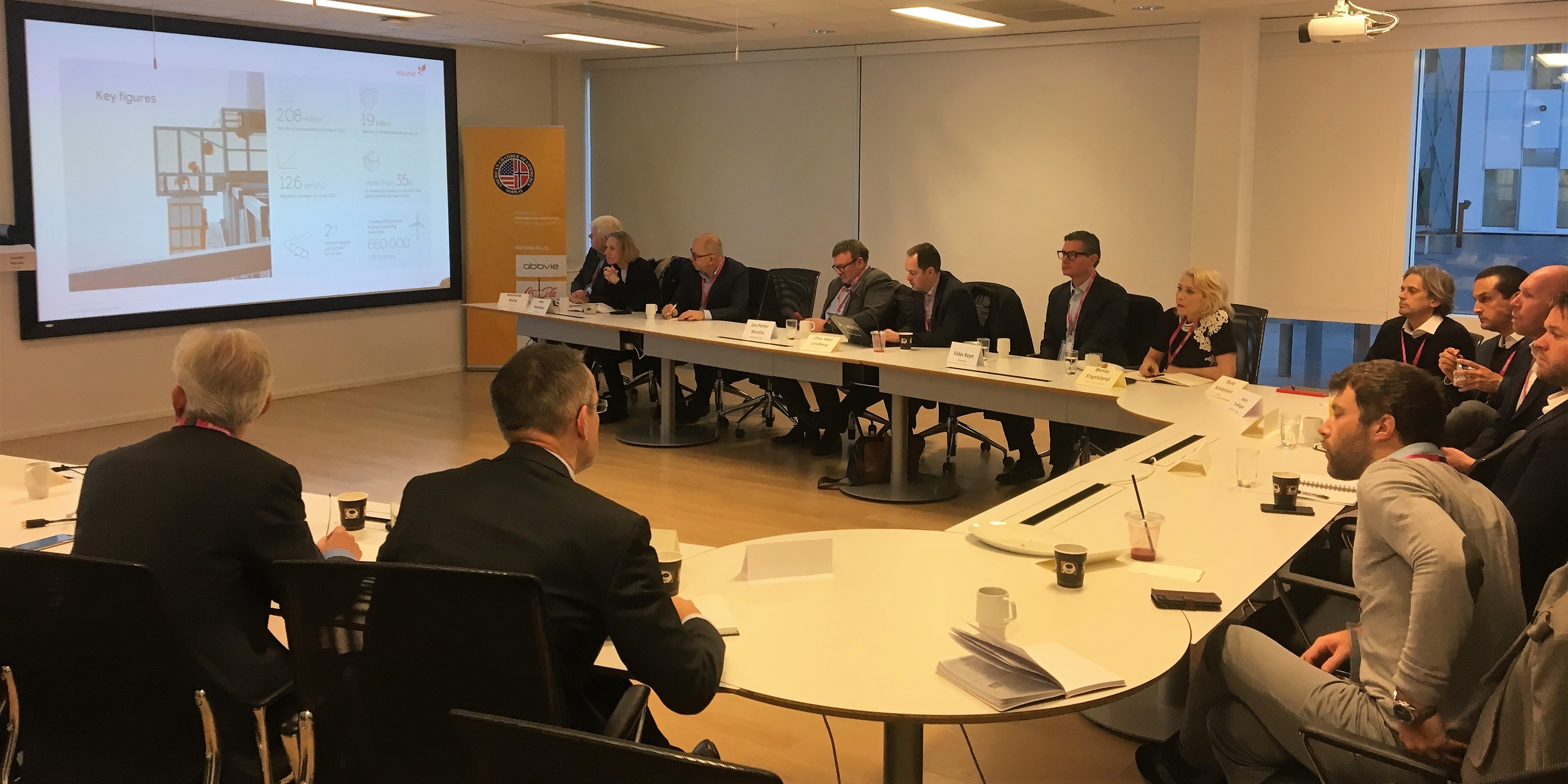
Forum Summary: AmCham Digitalization Forum – December 2018

“What defines our competitive advantage? Digitalization enables innovation, and innovation empowers digitalization” said Kai Erspamer as Equinor hosted a fully-subscribed AmCham Digitalization Forum.

Digitalization Forum – December 2018

Addressing how Equinor is responding to digital challenges via innovative ecosystems, Equinor’s Digital Program Leader focused on why young founders, companies and new ideas are important to Equinor, how Equinor can benefit from collaboration, as well as what they have gained from the various collaborative processes.

“The industry – and particularly this company – has undergone extreme transformation since 2012. One of Equinor’s main strategic goals has been – and remains – to develop digital leaders, which is an important strategic move if we are going to reach our goals of competitively engaging broader energy markets.”

“One of the results of our digital journey is the establishment of our Digital Center of Excellence, where we work on projects that enable, improve or transform business by leveraging digital technologies to turn data into actionable knowledge,” Erspamer continued.

Digital KPI’s, data trove accessibility, risk appetite within safety vs. digital initiatives, and Equinor’s new data center collaboration with Microsoft were also openly addressed by participants.

Techstars Collaboration

Following roundtable discussion, Jens Festervoll, Equinor Liaison to Techstars Energy, presented the largest Nordic company’s collaboration with the Colorado-based seed accelerator.

Having kicked-off in September, the Techstars Energy Accelerator involves ten carefully selected global start-ups, aiming to fast-track their development through an intensive 13-week program.

“If I remember correctly, I think the participants have had a combined 1100 meetings in the last few weeks. Equinor and program partners will utilize this platform to help the company innovate.”

“It is naïve for us to think that Equinor’s people have all the answers. This program helps us to be at the forefront of technology development and innovation in the energy sector,” Festervoll said, while explaining the win-win situation for all involved.

Digitalization Forum – December 2018

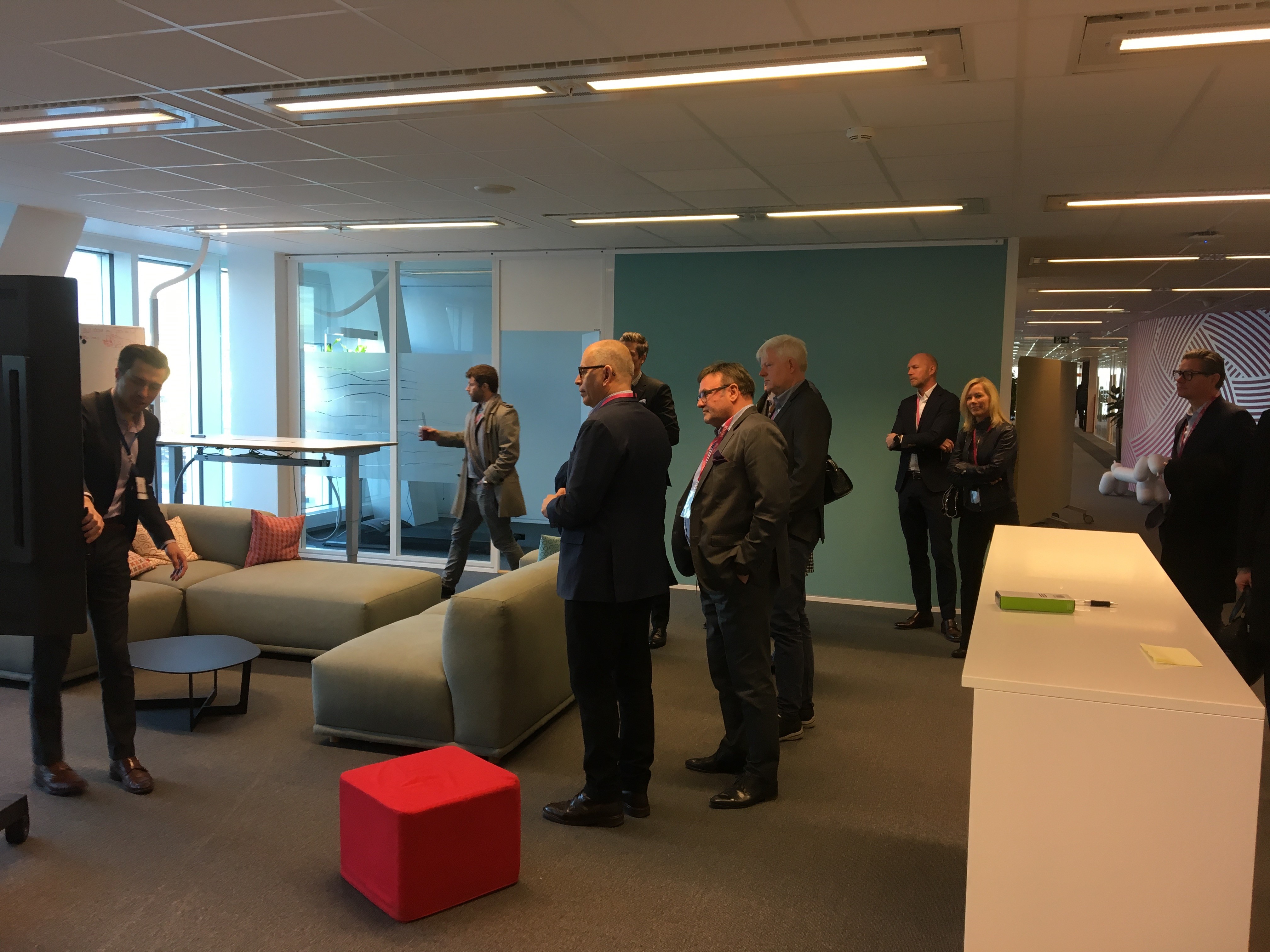
The session – moderated by AmCham Director Jason Turflinger — concluded with an open Q&A session before AmCham member company representatives enjoyed a tour of the dedicated, fresh digital center in the middle of Equinor’s Oslo headquarters.


U.S. Department of Energy awards study of bifacial PV technology, which could prove a 10% increase in energy output

DNV GL, the world’s largest resource of independent energy experts and certification body, announced that it was selected to receive a USD 200,000 award from the U.S. Department of Energy (DoE) Solar Energy Technologies Office (SETO) for a photovoltaic (PV) research project of bifacial PV technology. 

Bifacial PV modules have the potential to increase energy output by 5-10 percent annually in many locations. To achieve commercial viability, the products need to demonstrate their bankability. Common testing models, have begun to incorporate bifacial models. However currently only little validation data for bifacial PV modules exists, which also often lacks third-party evaluation.

The project will validate energy models created for bifacial PV modules by commissioning a large-scale comparative energy yield analysis and creation of energy simulations in PVsyst software, based on the collected field data.

“This study represents the most comprehensive comparative energy yield analysis for bifacial PV modules to date,” said Richard S. Barnes, Executive Vice President, DNV GL – Energy, North America. “Because the solar industry is projected to grow rapidly, it is necessary to understand how new technologies, like bifacial PV modules, will perform.”

“The aim of the study is to accelerate commercial deployment of bifacial PV modules at scale,” said Tara Doyle, head of business development for DNV GL’s PV module testing lab. “If proven viable through extensive performance and reliability testing, bifacial PV modules have the potential to become the preferred technology for ground-mounted PV installations around the world.”

The project will entail collection of field data over the course of one year at DNV GL’s outdoor solar test facility in Davis, California. It will include bifacial and monofacial 1500 V PV modules provided by LONGi Solar, Astronergy Solar, Hanwha Q CELLS and Trina Solar, tested on single-axis trackers provided by solar tracking company NEXTracker, and two albedo ground types. Data acquisition will be highly granular, using actively calibrated equipment. The collected measurements will be used to generate PAN files and subsequent energy simulations in PVsyst.

“Bifacial delivers proven performance with increased energy yield in PV systems, especially in purpose-designed single-axis trackers,” said Dan Shugar, NEXTracker CEO. “World class measurement and verification testing is very helpful to validating the technology, and we’re very pleased to be a part of this important project with DNV GL. It is wonderful that this test is happening at the site in Davis, which has the pedigree of one of the largest collaborations of early PV system testing dating back to the mid-eighties.”

The validation study was awarded as part of the U.S. Department of Energy’s allocation of USD 27.7 million for photovoltaics research and development, issued in conjunction with USD 25.1 million to projects that address other aspects of solar development. Along with other awarded projects that address bifacial PV technology, this study aims to accelerate the commercial adoption of reliable, high-performance PV systems by providing comprehensive field data, data analysis, and PVsyst models that will validate the relevant work that has been done to date.

“Energy modelling validation for bifacial PV modules and systems is needed to provide assurance to owners and financiers that PV systems using this technology will yield expected energy gains,” said Frank Faller, vice president, technology at 8Minutenergy, one of the largest utility scale developers in the U.S. “DNV GL Labs’ study is an important step toward addressing the lack of commercially representative, high-quality field data that’s required to validate contemporary energy models and thus accelerate the bankability of this technology.”

DNV GL was selected as a part of the Energy Department’s FY2018 SETO funding program, an effort to invest in new projects that will lower solar electricity costs and support a growing solar workforce. DNV GL is one of several photovoltaics research projects that will focus on improving the performance and reliability of PV cells, modules, and systems and reducing materials and processing costs.

About DNV GL
DNV GL is a global quality assurance and risk management company. Driven by our purpose of safeguarding life, property and the environment, we enable our customers to advance the safety and sustainability of their business. We provide classification, technical assurance, software and independent expert advisory services to the maritime, oil & gas, power and renewables industries. We also provide certification and supply chain services to customers across a wide range of industries. Operating in more than 100 countries, our experts are dedicated to helping customers make the world safer, smarter and greener.

DNV GL in the power and renewables industry
DNV GL delivers world-renowned testing and advisory services to the energy value chain including renewables and energy management. Our expertise spans onshore and offshore wind power, solar, conventional generation, transmission and distribution, smart grids, and sustainable energy use, as well as energy markets and regulations. Our experts support customers around the globe in delivering a safe, reliable, efficient, and sustainable energy supply.

Huddly: One year on, the Google and Huddly partnership is thriving

A little more than a year ago, we proudly announced that Huddly GO had been selected by Google to be a part of their Hangouts Meet kit. For Huddly, a then-unknown Norwegian start-up, this was a historic step. Google believed in our technology, and we are happy to say that one year on, the partnership is going strong. We are still shipping large volumes of Huddly GO as part of the agreement.

Huddly CEO Jonas Rinde says: “With Google choosing a modular approach for their Hangouts Meet hardware kit, they were looking for best-in-class components. Early on, their team recognised the value in working closely with Huddly to leverage our competence in video collaboration technology and our AI capabilities. At the time, we were still yet to release our first product – we were still a little Norwegian start-up, so they took a calculated risk in choosing us as a hardware partner. What they identified was that Huddly had, and still has, industry experience and a technology platform that is far ahead of everything else in the space.

“Google’s trust in our technology has paid off. To this day, we still have the most capable huddle room camera in the market. Nobody else has been able to do the 150° wide-angle field of view from a single lens with distortion correction. Nobody else has been able to deliver our single lens, three streams technology. To package all that in a small form factor, USB-powered video conferencing camera is an amazing achievement by our team. We are very proud of the fact that our first product, Huddly GO managed to do that and that we launched it together with Google. The first year of our partnership has been a huge success and we look forward to seeing our relationship go from strength to strength.”

Stein Ove Eriksen, Huddly CTO co-founder, adds: “We are very proud of our partnership with Google for a number of reasons. Firstly, it was a huge milestone for our company and a great validation of our technology platform at an early stage, and secondly, the Google Hangout meet kit has set a new standard for meeting solutions in the workplace. We have worked closely with the Google engineering team to deliver a fantastic user experience utilizing Huddly’s API to deliver breakthrough features like Auto-Zoom and after a year in the market, we’ve seen great traction and happy users around the world.”

The Google Hangouts Meet hardware kit is a curated set of four components that work together end-to-end to make engaging HD meetings affordable and hassle-free for meeting rooms of any size. It consists of an ASUS Chromebox, a touch controller, a speakermic (custom-designed and built by Google) and the Huddly GO camera.

Equinor made a gas discovery northwest of Atlantis

Equinor Energy AS, operator of production license 615, has completed the drilling of wildcat well 7324/3-1.

The well was drilled about 15 km northwest of discovery well 7325/1-1 (Atlantis) and 370 km north of Hammerfest.

The well’s primary exploration target was to prove oil in reservoir rocks from the Late Triassic Age (upper part of the Snadd formation).

The secondary exploration target was to prove petroleum in reservoir rocks from the Middle Jurassic Age (Stø formation) and in a deeper exploration target from the Middle Triassic Age (lower part of the Snadd formation). The secondary exploration target in the Snadd formation was the same stratigraphic level as gas discovery 7325/1-1 (Atlantis), and well 7324/3-1 was also intended to delimit this discovery. Before well 7324/3-1 was drilled, the resource estimate for discovery 7325/1-1 (Atlantis) was between 0.5 and 2 billion Sm3 of recoverable gas.

In the primary exploration target, a total gas column of about 30 m was encountered in the upper part of the Snadd formation, of which 20 m was in an effective reservoir of primarily moderate to poor reservoir quality. The gas/water contact was encountered 1,492 m below the sea surface.

In the secondary exploration target, in the lower part of the Snadd formation, gas was also encountered in sandstone of poor to moderate reservoir quality. The gas column has not been clarified, as efforts to define a gas gradient were unsuccessful due to the tight formation.

In the other secondary exploration target, 15 m of aquiferous reservoir sandstone was encountered in the Stø formation, with moderate to good reservoir quality.

Preliminary calculations of the size of the discovery in the upper part of the Snadd formation are between 10 and 20 Bcm of recoverable gas. In the lower part of the Snadd formation, the gas volume is estimated at between 1 and 4 Bcm of recoverable gas. The discovery’s profitability is currently unclear.

The well was not formation-tested, but extensive data acquisition and sampling were carried out.

This is the third exploration well in production license 615, which was awarded in the 22nd licensing round in 2011.

The well was drilled to a vertical depth of 1,678 m below the sea surface and was terminated in the Snadd formation from the Late Triassic Age. Water depth at the site is 452 m. The well will now be permanently plugged and abandoned.

Well 7324/3-1 was drilled by the West Hercules drilling facility, which will now drill appraisal well 7122/7-7 S on the Goliat field in the Barents Sea in production license 229, where Eni Norge AS is the operator.

Jotun: How will digitalisation impact shipping?

Digitalisation is a hot discussion topic and the key question that is being asked is, how will it impact shipping? Leading industry players believe developments in digital will provide many opportunities and benefits but the industry-wide digital transition will take time.

Until recently, the shipping industry was largely an analogue operation, relying heavily on traditional methods. With the advent of new technologies such as big data, connectivity and the internet of things, owners and operators are seeing the benefits of digitalisation as they push for greater operational efficiencies and competitive advantage.

A.P.Møller – Maersk, the Danish  shipping and energy conglomerate, has been very active in the push for digitalisation of the shipping industry and new ways business is done. The market leader has joined forces with IBM to set up the blockchain platform TradeLens. The open standard platform for global trading and supply chains already has over 90 organisations signed up, including major ports, custom authorities, liner operators and cargo owners.

Cross-industry collaboration
“The opportunities are enormous,” says CEO Søren Skou, “but so is the possibility of disruption with the emergence of new competitors that were born digital. Our industry must develop new technology and software solutions in open, innovative communities. We need to digitize from the inside of our business, but at the same time, finding the best solutions will require our industry to partner with companies across a wide range of industries.”

Skou’s view is echoed by Thomas Wilhelmsen, CEO of the Wilhelmsen Group. Speaking at the DNB Industry conference in Oslo, Wilhelmsen said, “Our industry must change its traditional, conservative approach. Digitalisation offers great opportunities for efficiencies, growth and innovation. To succeed it is necessary to share knowledge and experiences between companies and industries, to create new ways of working and better customer interfaces and services.”

As part of the Oslo-headquartered company’s commitment to digitalisation, Wilhelmsen has established a digital solutions unit to help transform its way of doing business. An example of its innovative approach is the work its service arm WSS (Wilhelmsen Ships Service) is doing as regards the application of drones in the marine environment. WSS has signed a collaboration agreement with the aviation company Airbus and is currently working on pilot trials to develop automated package delivery systems (shore-to-ship deliveries) with drone technology.

Kongsberg, one of the world’s leading high-tech companies, also has clear priorities to use resources to help companies with their digital transformation. It has established Kongsberg Digital and the Kognifai digital platform to exploit the potential to help make maritime operations more efficient.

Changing the way companies work
“Digitalisation is one of the key focus areas in industry today, and it is changing the way companies work: it’s tearing down walls, changing business models, and it’s happening rapidly,” says Hege Skryseth, President of Kongsberg Digital. Recognised for developing new digital solutions and related technology alliances, Kongsberg predicts technologies such as the internet of things (IOT), big data, automation and robotics will lead to significant changes for the industry.

DNV GL is also playing an integral role in the digital push. The class society has developed an industry platform – Veracity – to facilitate connections between different industry players, domain experts and data scientists. The data platform, built in collaboration with Microsoft Azure, helps maritime and energy industries boost profitability and explore new business models through digitalisation.

“Leading companies are exploring ways to leverage new technologies to improve the safety and productivity of their assets,” said DNV GL – Maritime CEO and former IACS chairman Knut Ørbeck-Nilssen when addressing delegates at the Fleet Transformation Event in London. Ørbeck-Nilssen firmly believes digitalisation, and the use of advanced digital solutions, will play a big role in shipping in the years to come. “Using big data effectively can transform the way the industry works, helping ship owners and operators significantly improve the performance of their fleet, increase the safety of their vessels, reduce operational costs and become more efficient.”

Barriers to adoption
While there is growing consensus that digitalisation is necessary to help transform the shipping industry, some see challenges. Ship owners are naturally cautious when it comes to new technology, and some predict the uptake will take time. Lack of funding and proven return on investment are  often cited as barriers.  Another main barrier owners have with regard to the adoption of digitalisation is cyber security. Some believe greater connectivity brings greater hacking risks, as witnessed by the spate of high-profile ransomware attacks across various sectors last year.

As Rashid Baba, Chief Commercial Officer at Thuraya, a leading mobile satellite communications company, put it in a recent Asia Shipping Media interview: “Shipping is only just waking up to the potential impact of global connectedness and is some way from feeling the full benefits. But the adjustment is taking place at an increasing pace, not least because attitudes are changing as a generational shift takes place and technology-phobia recedes.”

Despite all the talk of disruption and uberisation, Baba believes shipping is for the most part still at the data gathering stage. “Some leaders began this process sooner and will benefit faster but there are no magic bullets. Even some of the best-known names are working on ways to generate higher levels of efficiency using data, automation and communications to improve their business processes,” opines Baba.

Shipping analyst Martin Stopford of Clarksons Research believes shipping could reap great benefits from the adoption of new digital technologies, but warns the path ahead is far from clear. “There’s every indication that technology is going to get better and better, and more owners are likely to embark on the journey into digitalised smart shipping. The problem is that the business model running through the shipping cycles is not a suitable platform for introducing this new technology. Smart ships, smart fleets and smart global logistics are needed to change this business model,” argues Stopford.

Industry needs to adapt
Stopford firmly believes smart shipping has the potential to deliver owners improved performance in practically every part of their business and, in turn, help the industry become more efficient. “It’s not going to be easy but shipping is uniquely well placed to put the digital revolution to work. The industry needs to accept that today’s problems will not be solved by better ships, what’s needed is a better transport system. And shipping will need to be much more efficient than today if it is to service the increase in cargo demand expected in the coming decades,” points out Stopford.

With new technology and ways of doing business, industry experts recognise there is a need for behavioural change in the maritime industry. This naturally has its challenges but is needed if the digital, technical and autonomous elements of the industry are to be integrated successfully argues Inge Sandvik, Chief Digital Officer at Wilhelmsen.

“New regulations, technology and ways of doing business will, for sure, bring challenges but they are needed if the shipping industry is to transform successfully,” says Sandvik, and adds, “To this end, there is a need for a behavioural change in shipping and that’s why the leading companies are making greater use of digitalisation, to create new efficient ways of working and improve customer interfaces.”

Clearly, the number of companies that are embracing digitalisation is growing. For its part, Jotun is working to be at the forefront of using big data efficiently and considers data exchange and digitalisation has the foundation for future partnerships and creating value.

“The shipping industry is changing and will be impacted by new regulations and technologies that aim to ensure that this vital industry is environmentally sound, energy efficient and safe. It’s always difficult to align the interests of different stakeholders, but it is our opinion that we are likely to see more disruption and collaboration as companies sharpen their traditional skills with new high-tech edge to achieve greater efficiencies, market shares and sustainable operations,” concludes Dr. Erik Risberg, Global Marketing Director of Jotun Marine Coatings.