All posts by Margrethe Harboe

A new tax treaty with the United States is unlikely to be ready in the near future

A recent response from Norway’s Minister of Finance to the Storting suggests that a new tax treaty between Norway and the United States is unlikely to be ready in the near future.

We have previously commented on the negotiations between Norway and the United States regarding a new tax treaty: Still unclear when the new tax treaty with the U.S. will be signed.

In a recent response from Jens Stoltenberg to the National Parliament, the Minister of Finance gives little reason to hope that a new agreement will be ready any time soon. He writes the following in his response:

“Norway and the United States are negotiating a new tax treaty. It has taken time to complete the work, due to reforms in the U.S. tax system and major international tax developments in recent years. I would also note that the United States has ratified very few tax treaties in recent years.”

In other words, not very specific. Reforms in the United States and the international processes continue their course. When the Minister of Finance refers to international processes in the tax area, he is presumably referring to OECD’s BEPS project. Here, the Trump administration has decided to withdraw from the processes, but it is unclear what this entails and what consequences it will have.

Read more.

Halliburton acquires Norway’s Sekal to expand automated drilling capabilities

(WO) — Halliburton has acquired Sekal AS from Sumitomo Corporation, strengthening its position in automated drilling and digital well construction technologies.

Sekal, a Norway-based specialist in drilling automation, will be integrated into Halliburton’s existing digital and remote operations portfolio. The deal brings together Halliburton’s LOGIX automation systems with Sekal’s DrillTronics platform to deliver a more advanced, fully integrated drilling automation offering.
The combined technologies are designed to improve well placement, optimize drilling parameters in real time and automate key rig operations, including tripping and pressure management.

“This acquisition rapidly expands our automation capabilities and delivers industry-leading digital solutions that lower well construction costs, increase recovery, and reduce operational risks for our customers,” said Jim Collins, vice president, Halliburton Sperry Drilling. “By bringing together our field-proven technologies, we unlock the full potential of digital well construction and set a new standard for automated drilling operations.”
Sekal’s systems have already been deployed in more than 1,300 wells globally. The integration is expected to accelerate adoption of automated drilling workflows across both onshore and offshore operations.
Read more.

American Industry Powers America’s Return to the Moon

Artemis II will attempt something the United States has not done in more than half a century: send a crewed mission around the Moon. The mission will not land on the lunar surface. But it will navigate the route, validate the spacecraft and life support systems, and demonstrate that America’s return to deep space is operationally real.

That may sound like an incremental step. It is not. It is the critical transition from design to crewed operations — and a proving ground for the government-industry partnership that makes sustained exploration possible.

A Public-Private Partnership Model that Works
Artemis is a government-industry partnership in the fullest sense: NASA leads mission design and integration, and American industry builds, tests, and sustains the capability. From prime contractors responsible for the Space Launch System (SLS) and the Orion spacecraft to the hundreds of specialized suppliers whose avionics, materials, software, and manufacturing expertise build out the program, the stakes are high, and American innovation stands with the government every step of the way.

When Artemis II launches, it is a win for an American nationwide ecosystem: manufacturers, test operators, software teams, materials specialists, and a supply chain operating under exacting requirements and real pressure, with many U.S. Chamber members contributing directly to this mission at every tier.

Read more.

Tech Talent Network kicks off 2026 with site visit to Bulk Data Centers’ Oslo Internet Exchange

Talent Network kicks off 2026 with site visit to Bulk Data Centers’ Oslo Internet Exchange

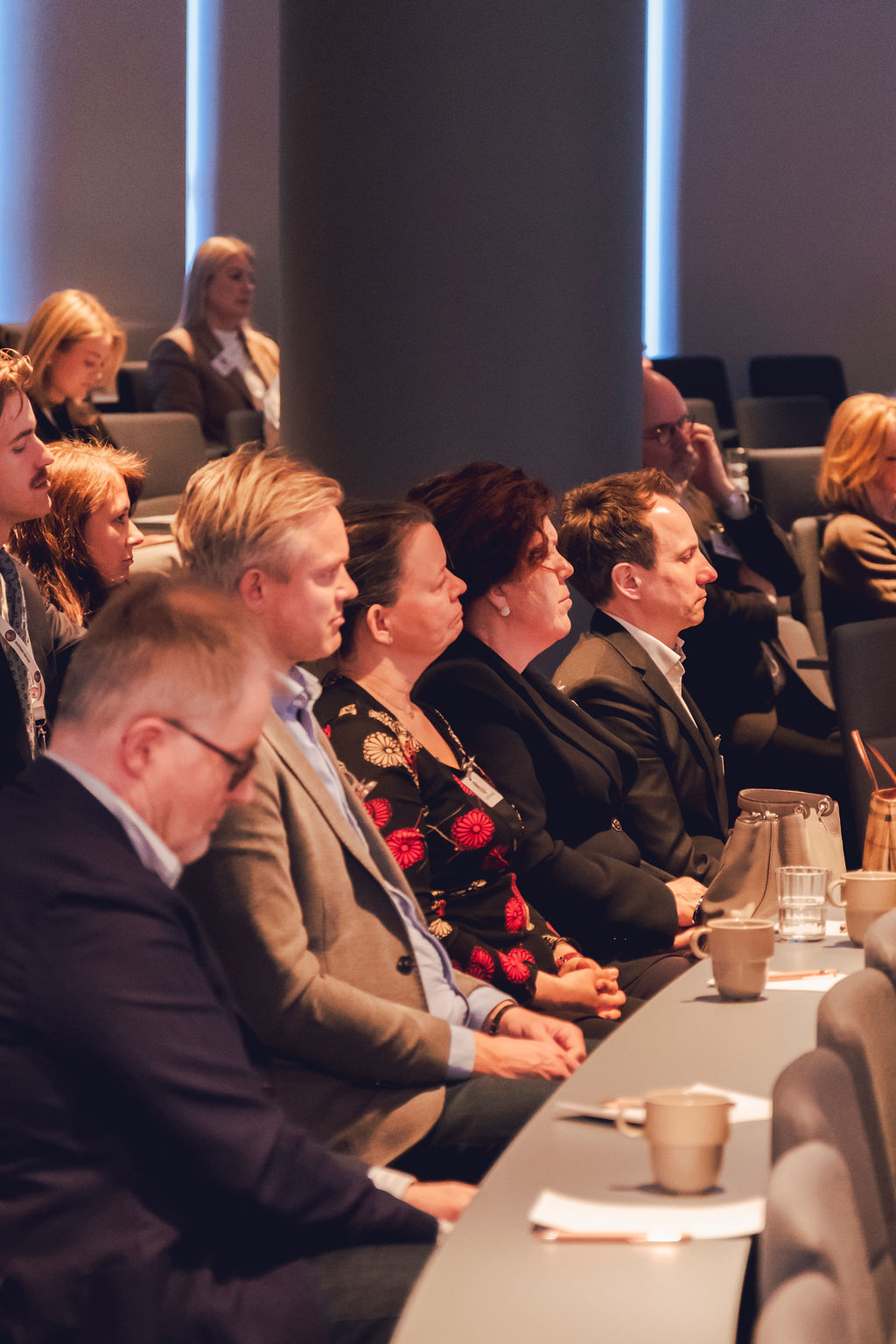
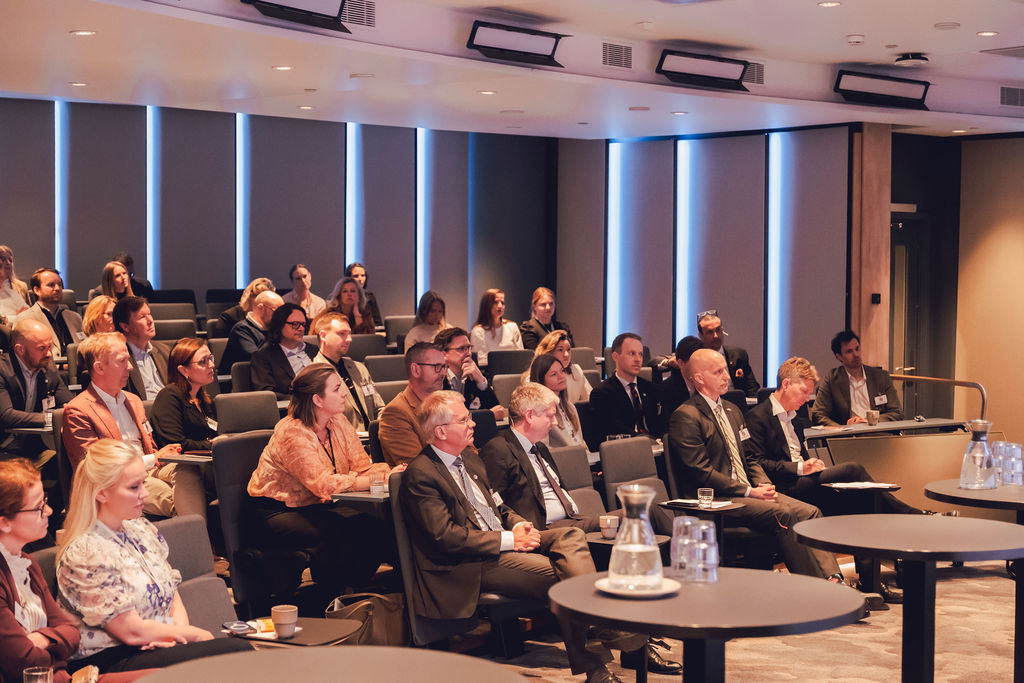
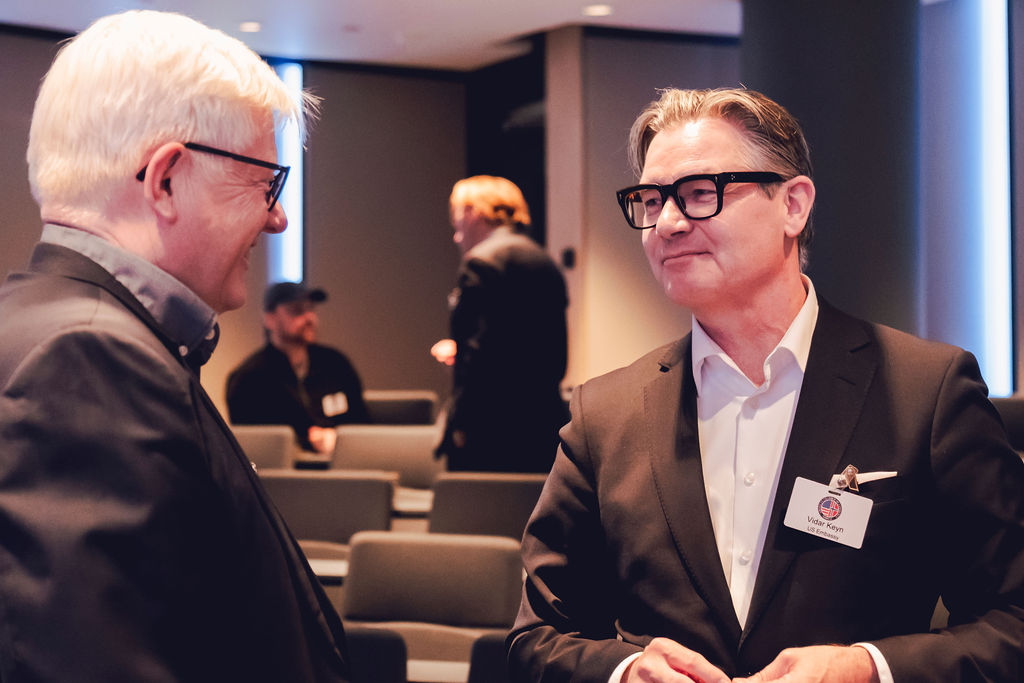
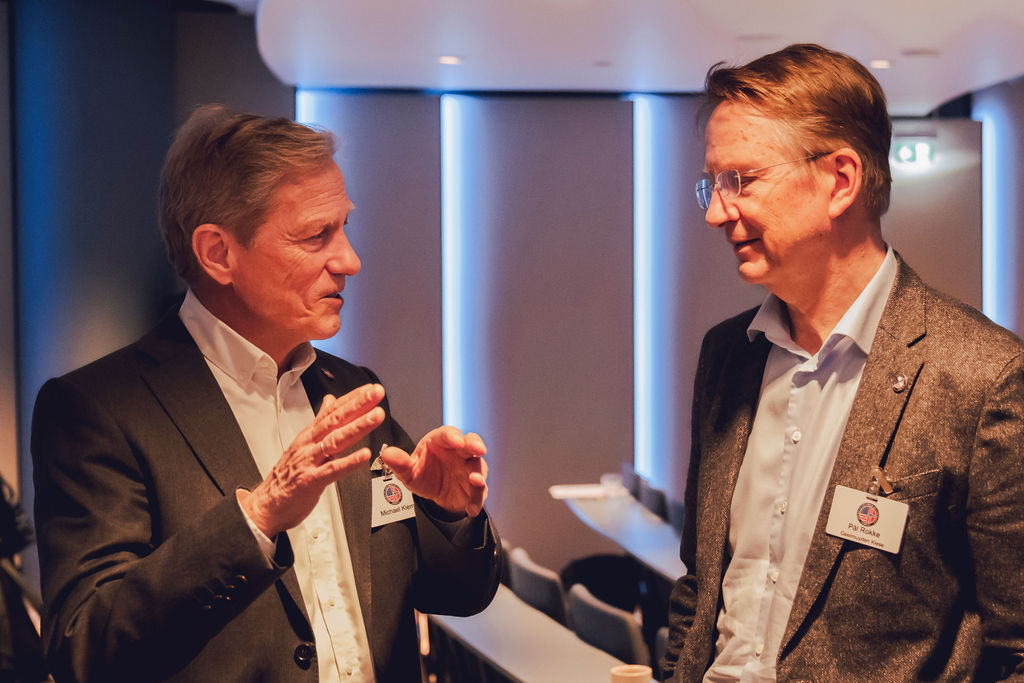
AmCham’s quarterly Tech Talent Network (TTN) recently convened for an exclusive site visit hosted by Bulk Data Centers at their Oslo Internet Exchange (OS‑IX). The session offered members a rare, behind-the-scenes look at the physical infrastructure that makes modern life possible.

Kristian Kofoed‑Solheim, Business Development Director at Bulk Data Centers, provided a deep dive into the infrastructure powering Norway’s digital economy. He highlighted Bulk’s 20‑year journey since its founding in 2006, during which the company has built more than 600,000 m² of data center capacity and established a “fiber highway” that underpins Norway’s digital growth. Today, Bulk employs around 300 people and continues to scale to meet rapidly accelerating global data demands.

He emphasized that 90% of data center activity is processing rather than storage, reflecting the shift toward cloud services, enterprise workloads, and AI-driven applications. With each of us unknowingly interacting with over 40 data centers every day – from replying to emails to streaming videos – the role and complexity of modern data centers are expanding quickly. Over the past decade, global data traffic has increased 25-fold, and AI workloads are doubling every three to four months.

Kristian Kofoed‑Solheim and participants

Inside OS‑IX: Norway’s Most Connected Facility

Following the presentation, TTN members were guided through a tour of OS‑IX, a high‑security, Tier III‑rated colocation facility situated in a former central Oslo printing press. Opened in 2014, the site maintains:

• 80% of Norway’s internet traffic traversing the facility
• A high concentration of global network operators and fiber routes
• Easy access to both regional enterprises and international markets
• Strategic proximity to key transport hubs

The tour provided TTN participants with a rare, firsthand look at the physical infrastructure enabling Norway’s digital resilience, competitiveness, and future AI capacity – a fitting start to the network’s 2026 program.

About the AmCham Tech Talent Network

TTN is a non-competitive arena for knowledge sharing, professional development, and expanding international market insights, comprised of select Patron-level technology industry member-representatives. Exclusive quarterly sessions with industry leaders and external speakers create opportunities for collaboration and leadership development.

For further information and interest in the program, please contact amcham@amcham.no.

US Chamber: US Medical Innovation has Delivered $167.5T in Societal Value”

Groundbreaking Study Reveals $167 Trillion in Societal Value Generated by American Medical Innovation.

New analysis highlights the human and economic impact of medical breakthroughs as policymakers consider harmful MFN‑style pricing controls

WASHINGTON, D.C. – A pioneering new study by University of Chicago economist Dr. Tomas Philipson, commissioned by the U.S. Chamber of Commerce, finds that American medical innovation has delivered $167.5 trillion in societal value based on a 30-year horizon across four major medical diseases. The analysis creates a comprehensive new framework and quantifies societal value, based on the extraordinary gains generated through advancements in treatments for HIV, heart disease, breast cancer, and obesity—including longer lives, improved quality of life, productivity growth, and strengthened federal tax revenues.

Read more.

Succession Planning in an Age of Geopolitical Fracture

Geopolitical fracture is rewriting the rules of succession planning, and most boards have not caught up.
The Oliver Wyman Forum and NYSE CEO Survey 2025 found that nearly nine in ten CEOs now cite geopolitics, trade policies, tariffs, and industrial policy as a risk to their business, up 20 percentage points from the previous year. That jump, the largest of any risk factor in the survey, places geopolitical disruption at the centre of the leadership agenda. And yet, succession planning in most organisations still treats geopolitics as somebody else’s problem: a background condition to be monitored rather than a defining variable in who should lead next.

The consequences of this disconnect are becoming visible across every major economic area. In late December 2025, China sanctioned 20 US defence companies and 10 senior executives, barring those individuals from entering mainland China, Hong Kong, and Macau. That same month, the US expanded its own travel ban to 39 countries. Earlier in 2025, the EU sanctioned two Chinese banks for helping Russia circumvent European restrictions, setting a precedent that financial institutions anywhere can be designated if they frustrate EU policy. India’s Press Note 3 requires government approval for any investment by entities from countries sharing a land border, a rule that has primarily affected Chinese investors but creates precedent for broader application. These are not isolated incidents from one country, they are parallel actions by competing powers, each one narrowing the space in which global executives can operate.

Read more.

Meet Mastercard’s new generative AI model

Generative AI completely changed the world of chatbots. Now, talking to a robot isn’t sci-fi, it’s just something we do.

We believe this same gen-AI technology won’t just transform chat — it will transform commerce. It will make payments faster, retail experiences more personalized and cybersecurity tools more precise.

To make this vision happen, our teams have been researching and building a new foundation model, which is a large-scale AI model that can be used as a basis for a wide range of applications. We are training our foundation model on Mastercard’s unique datasets, starting with billions of transactions.

To protect user privacy, we remove all personal data from these transactions. After analyzing enough of these anonymized transactions, this model can start to predict future transactions.

Read more.

The US drops Section 301 trade bombshell on 16 countries

The US dropped a new Section 301 trade investigation against 16 of its most important trade partners, including the EU, Singapore, Japan, China, and India. The accusations range from low utilization of chemical facilities in Germany, expansion of industrial capacity in spite of a drop in industrial occupancy rates in Singapore, currency manipulation in Switzerland, and excess steel production in China. Here’s what to know.

The US Trade Representative’s Office (USTR) dropped its latest bombshell on 11 March, opening a new Section 301 trade investigation against 16 of its most important trade partners.1 The list includes China, the European Union, Singapore, Switzerland, Norway, Indonesia, Malaysia, Cambodia, Thailand, Korea, Vietnam, Taiwan, Bangladesh, Mexico, Japan, and India.

Read more.

Kongsberg secures NOK 2 billion contract from Lockheed Martin to supply components for F-35 fighter jets

Norwegian defence company Kongsberg Defence & Aerospace has signed an agreement with Lockheed Martin valued at approximately NOK 2 billion to supply components for the F-35 Joint Strike Fighter programme. The contract extends Kongsberg’s participation in the programme and covers deliveries supporting aircraft production through 2030.

The agreement includes deliveries for production lots 20 to 22 of the F-35, covering all three variants of the aircraft. Components to be manufactured include rudders, vertical leading edges and main landing gear closeout panels.

Read more.


Norges rederiforbund: Konjukturrapport 2026

Når Norges Rederiforbund legger frem konjunkturrapporten for 2026, gjør vi det i en
tid preget av økende uro og uforutsigbarhet. Internasjonale spilleregler er i endring, og
normer for samarbeid og handel er under press. Krigen i Ukraina og angrepene på Iran
har utløst den største sikkerhetspolitiske krisen siden andre verdenskrig og den mest
alvorlige situasjonen i Midtøsten på flere tiår. Det er for tidlig å si hvilke langsiktige
konsekvenser dette vil få for skipsfarten, men næringen forbereder seg på vedvarende
usikkerhet i regionen.


Geopolitiske spenninger påvirker norske rederier i økende grad, både direkte og
indirekte. Konflikter i strategiske farvann, handelsrestriksjoner og ustabile diplomatiske
relasjoner skaper et risikobilde som krever kontinuerlig overvåkning og tilpasning.
Samtidig møter næringen stadig strengere krav innen klima, bærekraft, digitalisering
og innovasjon – utviklingstrekk som vil forme fremtidens rederivirksomhet og krever at
næringen tiltrekker seg de kloke hodene som kan drive omstillingen.

Les mer og last ned rapporten HER.