All posts by Margrethe Harboe

TGS Announces New OBN Multi-client Survey in the US

OSLO, Norway (15 January 2026) – TGS, a leading provider of energy data and intelligence, is pleased to announce APEX 1, a first-of-its-kind, next-generation multi-client long-offset Ocean Bottom Node (OBN) acquisition campaign in the Gulf of America. Node deployment for APEX 1 commenced in December 2025, and acquisition is expected to be completed in late Q2 2026. Early products are expected in Q3 2026 and final data delivery Q4 2027.

APEX 1 sets a new benchmark for large-scale long offset multi-client seismic by deploying a denser node grid than previous ultra-long offset OBN programs and by being designed as a stand-alone exploration dataset, without reliance on underlying streamer seismic coverage.

APEX 1 is enabled by TGS’ Gemini™ enhanced frequency source and leverages the TGS’ deep expertise in long-offset OBN acquisition, processing, and Dynamic Matching FWI (DM-FWI). The combination of dense node spacing, ultra-long offsets, and advanced imaging workflows is designed to deliver a step-change in subsurface resolution, velocity accuracy, and geological confidence for exploration and appraisal.

This survey creates a highly flexible, future-proof exploration dataset that supports a wide range of geological objectives. The approach opens new opportunities for operators to deploy one of the industry’s most powerful exploration tools, not only in the Gulf of America, but also in other offshore basins worldwide.

The project is supported by industry funding.

Read more.

AmCham Financial Forum - 2026 Economic Outlook & AI at Scale

AmCham Financial Forum: 2026 Economic Outlook & AI at Scale

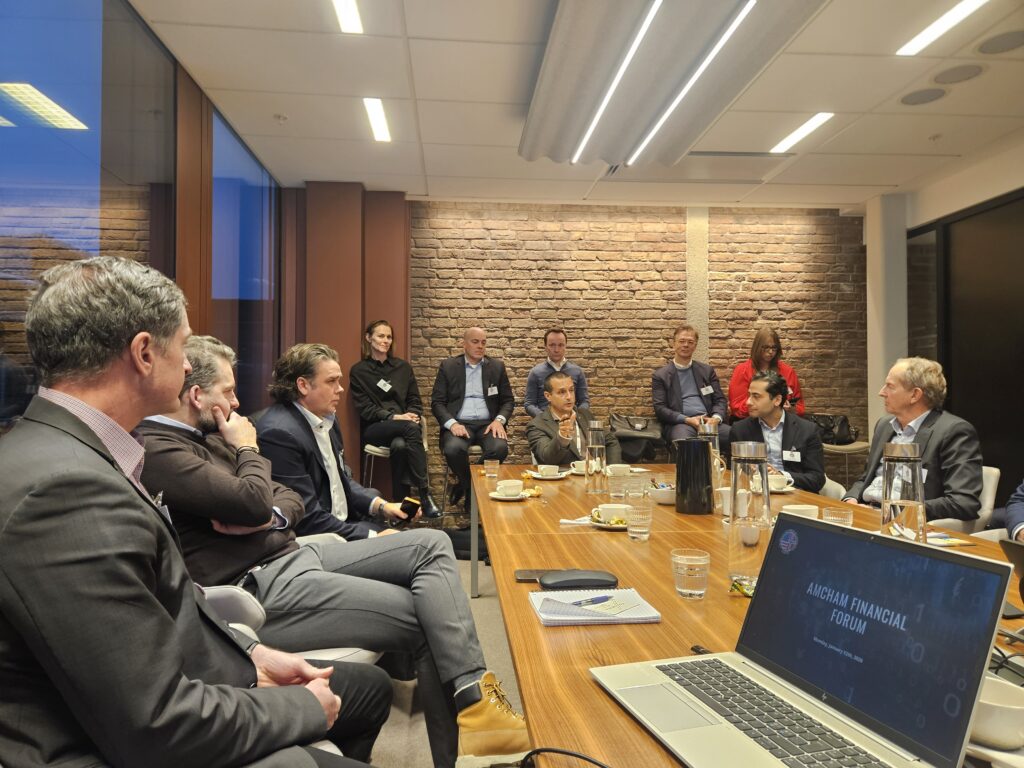
Cross-industry AmCham member leads convened at Citi’s Aker Brygge offices for an assessment of 2026 economic trends and a case study on the growing impact of AI investments.

Speaker Images_Sockin

Robert Sockin
Senior Global Economist

Speaker Images_Tømmeraas

Petter M. Tømmeraas
Managing Director of Data Center Services

"Goldilocks” Performance, but Risks Linger

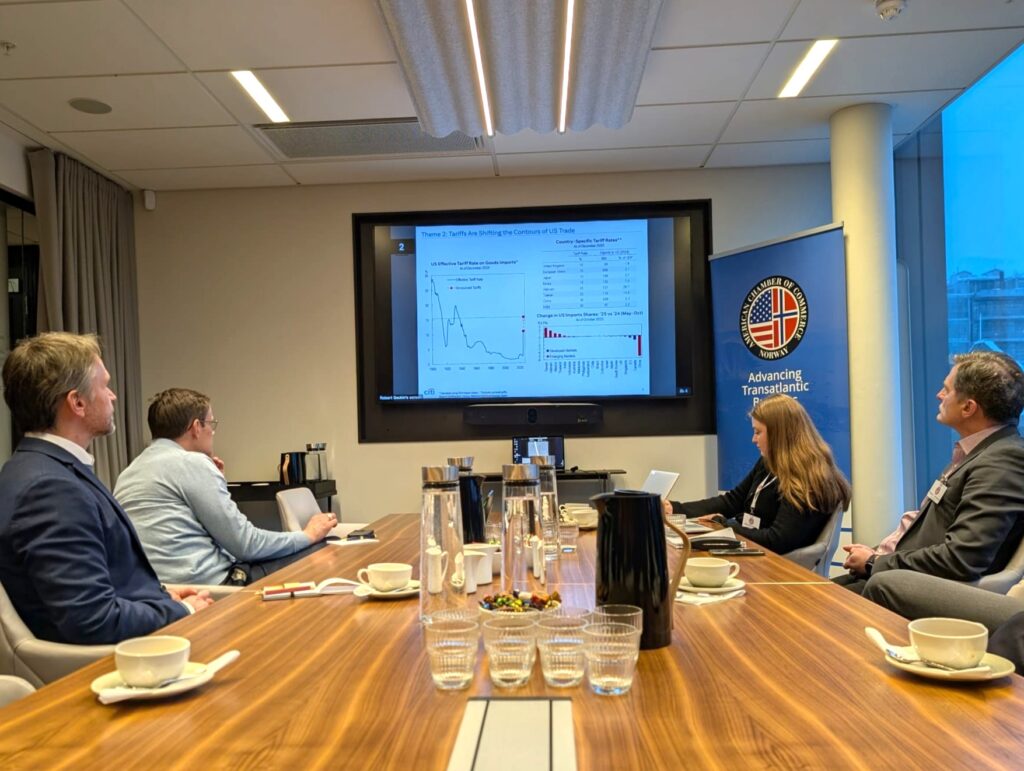
Joining virtually from New York, Robert Sockin, Senior Global Economist at Citi, opened the session by outlining key themes shaping the global economy in 2025 and highlighting what decision-makers should monitor closely in 2026.

The 2026 outlook points to a “Goldilocks” scenario with close to trend growth, moderating inflation, and central bank rate cuts:

• Resilient Economic Performance: The global economy continues to defy expectations despite ongoing challenges. Sockin described this as the “most bullish economic outlook in years.

• US/Global trade shifts due to tariffs: Tariffs have had notable effects on global trade patterns, inflation, and spending, though their impact has so far been less severe than initially anticipated. Tariffs are contributing to a global rebalancing, with the largest gains seen in emerging markets well positioned to compete with China.

• Diverging US & Global Inflation: In the US, spending has been frontloaded in anticipation of higher tariffs, exceeding earlier expectations. As a result, tariffs are delaying the return to the Federal Reserve’s 2% inflation target. Outside the US, inflation continues a downward path and is not a major concern.

• Global Monetary Policy Easing: Globally, central banks are now well into an easing cycle, though approaches vary across countries. Norway, for example, has already begun easing. Sockin noted increasing pressure on the Federal Reserve, including political influence and the prospect of more dovish-leaning appointees over time. While news flow can generate concern, these dynamics are clearly part of the current environment.

• Advances in Artificial Intelligence: AI-related spending remains a positive driver of economic activity. Sockin suggested AI could potentially contribute up to three percentage points to US economic growth, with broader transformation of the US and global economy possible over the next three to five years. AI could also be transformational for developing economies.

However, questions remain around productivity gains. It is still unclear how much of current productivity trends can be attributed to AI versus tight labor markets. Analysts are examining whether AI exposure correlates with unemployment across industries and expressed concern about long-term labor market implications. Investor patience will be critical, particularly as bond investors continue to fund much of the AI buildout.

AI at Scale: From Vision to Reality

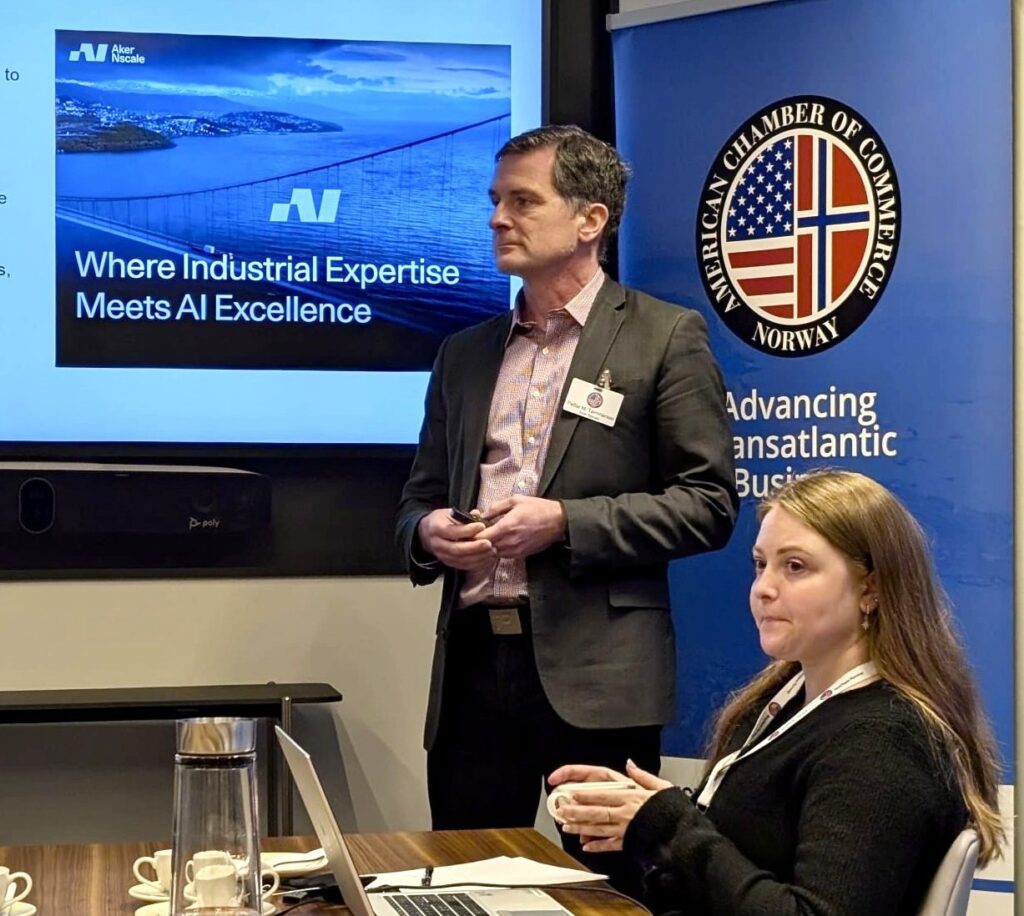
Petter M. Tømmeraas, Managing Director of Data Center Services at Aker Nscale, presented how Aker and Nscale, with the support of Nordkraft, developed Aker Nscale, now building an AI hyperscale site in Northern Norway with OpenAI and Microsoft as two key partners.

During the session, he responded to participant questions and highlighted Aker Nscale’s focus on capital discipline, risk management, and long-term value creation, drawing on his extensive experience in data centers and hyperscale infrastructure. He also addressed common misconceptions about the project, including stakeholder roles, service offerings, and alignment with Norwegian and EU regulations.

“Instead of producing goods, we produce intelligence. I think it is much more important for Norway to export intelligence than energy.”

The Norwegian AI Ecosystem – Credibility on the Global Stage

Tømmeraas underscored how large-scale investments strengthen Norway’s global credibility in AI. He referenced the launch of Stargate Norway in Narvik, announced on July 31 by Nscale, Aker ASA, and OpenAI, followed by the September 17 agreement between Microsoft, Nscale, and Aker to build scalable, renewable AI infrastructure in Narvik, valued at an estimated $6.2 billion.

Tømmeraas stressed the need to optimize a coordinated Norwegian and Nordic AI ecosystem. While acknowledging positive political efforts, he called for faster progress and bolder action to maintain competitiveness. He highlighted Norway’s strong position in global AI adoption, as reflected in Microsoft’s AI Diffusion Report: Global AI Adoption in 2025, and pointed to opportunities for increased productivity, competitiveness, greener transitions, and improved public services when technology is combined with trust, skills, and sound regulatory frameworks.

The establishment of Aker Nscale in Narvik represents a significant long-term investment in Northern Norway, creating jobs and positioning the region as an attractive location for AI infrastructure. Aker Nscale has also entered into a ten-year partnership with UiT The Arctic University of Norway, committing NOK 100 million to strengthen AI expertise in Narvik and the surrounding region. The initiative aims to attract leading researchers and lecturers, encourage collaboration, and build strong links between research and startups.

About the AmCham Financial Forum

AmCham’s collaborative Financial Forum enables cross-industry leaders to openly exchange and learn from their peers – building a better understanding of what it takes to maintain successful international operations in Norway.

Please contact madeleine.brekke@amcham.no for interest in future meetings.

Previous Forums

AmCham Financial Forum: Advanced Economics – Tech and Policy Evolution

Cross-industry member leaders gathered at IBM’s inspiring Client Center for our Financial Forum focusing on the future of financial trends – an evolving financial landscape. Taking the stage was Paolo Sironi, Global Research Leader in Banking & Financial Markets at IBM’s Institute for Business Value (IBV). With his immense background from fintech innovation, he is considered one of the most respected fintech voices globally.

Read More »

Aker Solutions secures long-term maintenance and modifications frame agreements with Equinor

Aker Solutions has been awarded multiple five-year frame agreements with Equinor. Under the agreements, Aker Solutions will provide maintenance and modifications services for a range of assets on the Norwegian Continental Shelf (NCS) and onshore Norway.

Reference is made to the stock exchange release published on January 7, 2026

The agreements represent a likely major[1] order intake for Aker Solutions. The five-year agreement provides Equinor with the flexibility to extend the contract for two further periods of three and two years.

Read more.

Wiersholm og Thommessen samarbeider om tidenes første transaksjonskurs på jussen

Handelshøyskolen BI startet året friskt med et helt nytt transaksjonskurs for jusstudenter.

Kurset, som arrangeres i samarbeid med Thommessen og Wiersholm, er case-basert og skal gi studentene praktisk øvelse i kjøp og salg av bedrifter. Foreløpig er det «one of a kind» og gjennomføres i tett dialog med advokatfirmaene.

– Det hele skal likne en virkelig transaksjon så mye som mulig, og studentene får veiledning av noen av landets mest erfarne transaksjonsadvokater, sier kursansvarlig professor Morten Kinander.

– Formålet er å vise frem hvordan kjøp og salg av bedrifter foregår i praksis slik at studentene forstår den kommersielle konteksten jussen skal anvendes i. Dette er en både en pedagogisk innovasjon i det juridiske landskapet, og noe ingen juridisk utdanning har hatt før nå.

Les mer.

Norway zips ahead in EV race as car sales hit 96% electric

Almost all new cars registered in Norway last year were fully electric, official data showed on Friday, headed by booming Tesla (TSLA.O), opens new tab sales as the Nordic country cements its global lead in phasing out petrol and diesel-powered vehicles.
Oil-producing Norway’s rapid switch to battery-powered vehicles contrasts with the rest of Europe, where weak demand for EVs prompted the European Union last month to reverse its planned 2035 ban on internal combustion engine cars.

Driven by tax incentives, 95.9% of all new cars registered in Norway in 2025 were EVs, with that number at almost 98% in December. The annual figure was up from 88.9% in 2024, Norwegian Road Federation (OFV) data showed.

A record 179,549 new cars were registered in Norway during the year, a 40% increase from 2024, the OFV said.

EV TAXES SET TO RISE
Tesla was Norway’s top-selling car brand for a fifth consecutive year, with a 19.1% market share, followed by Volkswagen at 13.3% of registrations and Volvo Cars (VOLCARb.ST), opens new tab at 7.8%.
Led by the mass-market crossover Model Y, Tesla sold 27,621 cars in Norway in 2025, more than any other automaker has sold in the country in a single year, overcoming a consumer backlash plaguing the brand in much of Europe over CEO Elon Musk’s support for far-right parties and his backing of U.S. President Donald Trump.

Read more.

Ranking Member Shaheen, Senator Tillis Statement on Greenland’s Sovereignty and Upholding America’s Alliance with Denmark

WASHINGTON – Today, U.S. Senators Jeanne Shaheen (D-NH) and Thom Tillis (R-NC), Co-Chairs of the bipartisan Senate NATO Observer Group, issued the following statement defending the United States’ alliance with Denmark and reaffirming the territorial integrity of the Kingdom of Demark:

“Denmark is one of our oldest and most reliable allies. Danish troops have fought and died alongside Americans in numerous conflicts, and Denmark was among the first to stand with us when NATO invoked Article 5 following the 9/11 attacks. Today, Denmark is significantly increasing its defense spending and remains a critical partner in Arctic security. This is an ally that has earned our unwavering respect.

“When Denmark and Greenland make it clear that Greenland is not for sale, the United States must honor its treaty obligations and respect the sovereignty and territorial integrity of the Kingdom of Denmark. Any suggestion that our nation would subject a fellow NATO ally to coercion or external pressure undermines the very principles of self-determination that our Alliance exists to defend.

Read full statement.

Tech Talent Network: Smart Aviation and Data-Driven Transformation

Tech Talent Network: Smart Aviation and Data-Driven Transformation

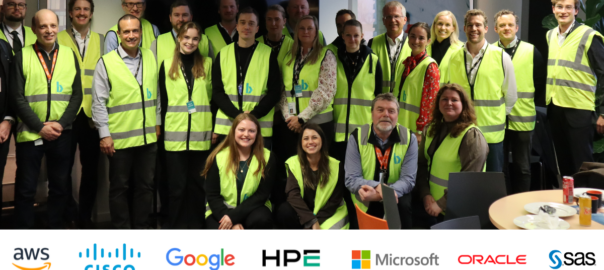
The AmCham Tech Talent Network recently gathered, with this installment exploring how artificial intelligence, data, and emerging technologies are transforming aviation and airport operations. The group was welcomed by HPE Nordic Cluster Lead Carsten Nielsen at HPE’s Skøyen office. Participants then heard from our two keynote speakers Knut-Olav Traa, Head of Enterprise Architecture at Avinor, and Geir Leirvik, Solutions Architect at HPE Aruba, who shared how AI and data are being applied in practice to drive efficiency, sustainability, and better airport experiences.

Knut-Olav Traa presented an overview of Avinor’s role and scope, highlighting key figures and the company’s vision of “connecting Norway and the world through sustainable aviation.” Traa emphasized that technology is not a support function at Avinor, but a core part of every operation, spanning both information technology and operational technology.

Traa showcased several of Avinor’s major technology initiatives, including the pioneering development of digital air traffic control towers which strengthen competence development, enhance resource efficiency, and ensure more effective use of expertise across the organization.

He also underscored Avinor’s growing focus on cyber and information security, as well as the expanding use of artificial intelligence throughout the company. AI is already being applied to optimize everything from operational efficiency to value creation. Avinor will continue to invest in forward-looking technology development to stay ahead in an increasingly digital aviation industry.

Geir Leirvik from HPE followed with a presentation on smart aviation and hyper-aware environments, focusing on how data and AI can improve airport performance and passenger experience. Leirvik underlined the central role of data in enabling AI, and the importance of reliable, continuous data flows to deliver real operational value.

"We need to focus on outcomes - not just the data we collect".

Drawing on HPE’s experience, Leirvik explained how airports generate vast amounts of data and how IoT systems can capture and analyze data flows in real time. He stressed the importance of shifting focus from data collection alone to understanding the outcomes data can deliver, such as improved efficiency, reduced energy consumption, and enhanced passenger satisfaction.

Ultimately, understanding how data moves and influences behavior is key to creating more sustainable, efficient, and user-friendly airport environments.

About the AmCham Tech Talent Network

TTN is a non-competitive arena for knowledge sharing, professional development, and expanding international market insights, currently open to select Patron-level technology industry member representatives. Exclusive quarterly sessions with industry leaders and external speakers create opportunities for collaboration and leadership development.

For further information and interest in the program, please contact Ragnhild.Dalen@amcham.no.

Equinor challenges US order to suspend Empire Wind project

Jan 2 (Reuters) – Norwegian energy group Equinor (EQNR.OL) said on Friday it had filed a civil suit in the U.S. District Court for the District of Columbia challenging a U.S. Department of the Interior order to suspend its Empire Wind project. “As part of that case, Empire plans to seek a preliminary injunction and allow construction to continue while the litigation proceeds,” Equinor added.

Last week, the Trump administration suspended leases for five large offshore wind projects that are under construction off the U.S. East Coast over what it called national security concerns, sending shares of offshore wind companies plunging. The suspension was the latest blow for offshore wind developers that have faced repeated disruptions to their multi-billion-dollar projects under U.S. President Donald Trump, who has said he finds wind turbines ugly, costly and inefficient.

Read more.

Empire receives stop work order from US Department of the Interior’s Bureau of Ocean Energy Management

Empire Offshore Wind LLC (Empire) is complying with the notice received from the Bureau of Ocean Energy Management (BOEM) on 22 December, ordering the suspension of ongoing activities on the Outer Continental Shelf citing national security concerns.

The Department of Interior has confirmed that a total of five offshore wind projects under construction have received notices. Empire Wind is engaging with relevant authorities to better understand this matter. Equinor has extensive experience in the US and around the world operating offshore energy infrastructure and working with military and civilian authorities to ensure compliance with national security requirements.

Empire Wind will connect to New York’s grid, delivering reliable power and strengthen the state’s energy security. Once completed, the project will provide enough power to electrify 500,000 homes. Empire Wind has coordinated closely with the federal officials on national security reviews since it executed its lease for the project in 2017, including with the Department of War.

Read more.

AmCham Sustainability Forum – Navigating AI & New Energy Realities

AmCham Sustainability Forum – Navigating AI & New Energy Realities

Cross-industry AmCham members convened for the latest Sustainability Forum to examine how Generative AI, shifting global energy dynamics, and long-term policy trends are reshaping both opportunity and risk for businesses in Norway, North America, and beyond.

Speaker Images_Gelderen

Derreck van Gelderen
Associate Partner, Head of AI Strategy & AI Energy Lead

Speaker Images_Rinaldo

Mats Rinaldo
Deputy Director and Senior Principal Researcher – ETO

Harnessing the Power of Generative AI to Accelerate Energy Transition

Opening the session, Derreck van Gelderen, Associate Partner, Head of AI Strategy & AI Energy Lead at PA Consulting, addressed the rise of the intelligent enterprise and implications of Generative AI to the energy sector. He noted that AI is rapidly becoming embedded into organizational life. As AI reshapes digital landscapes and decision-making processes, van Gelderen emphasized the importance of strategic direction, underscoring the need for step-by-step planning and incremental releases, as companies scale AI across complex systems.

“We should be holding AI to a higher standard than we are holding ourselves to."

Van Gelderen further outlined what he called the sector’s emerging “energy paradox” – the tension between AI-driven innovation and the rising demands associated with it. While AI presents opportunities to optimize, decarbonize, and accelerate industrial processes, he warned that the excitement around AI is also “creating an unprecedented energy crisis and putting Net Zero targets at risk”, referencing computational costs, impacts on existing energy infrastructure, and current shortage of reliable, renewable energy sources. He concluded with perspectives for 2026, proposing that AI will be utilized not only to execute isolated projects within organizations, but will drive material impact on fundamental decision-making.

DNV’s Energy Transition Outlook 2025

Mats Rinaldo, Deputy Director and Senior Principal Researcher  at DNV, presented findings from DNV’s Energy Transition Outlook 2025, offering a long-term forecast of global and regional energy developments. The in-house model’s horizon to 2050 enables DNV to capture shifts in technology and policy, derived from research covering 10 world regions, 12 energy carriers, and more than 20 end-use sectors including transport, buildings, and manufacturing.

“Energy production is 'greening' and growing everywhere."

Rinaldo noted that major geopolitical developments have pushed many countries toward a heightened focus on energy security and independence, with implications for the pace of sustainability transitions. In North America, electricity demand is growing, dominated by data centers and EV charging; data center energy is expected to double by 2030. Despite short-term policy decisions, solar and wind will expand from 19% of electricity generation today to 55% by 2040. In other words, “solar is unstoppable”, and new milestones solar-generated energy production will be met.

On the discussion of Norway’s energy positioning, attendees engaged actively with questions on energy demand and long-term transition pathways. Rinaldo emphasized that global dynamics continually affect Norway’s energy transition, and that wind is the only scalable source of new energy. Norway’s energy transition is slowed by geopolitical tensions and national priorities. Domestically, hydropower is expected to remain at a stable rate, with no foreseeable growth. Per today’s forecast, Norway will not reach its national emissions targets without extensive use of carbon credits. Rinaldo mentioned agriculture as a hard-to-abate sector, with no significant opportunities to reduce emissions through current technologies.

Against a backdrop of accelerating technological change and geopolitical uncertainty, the session centered on how organizations can make informed and resilient decisions in an increasingly complex landscape.

About AmCham Sustainability Forum

Future success is dependent upon running a sustainable business – for people, planet, and profit. Hence, AmCham brings select, cross-industry member company representatives together on an ongoing basis to discuss opportunities, facilitate open exchange and determine how AmCham members can best contribute to Norwegian and US sustainability agendas going forward.

Please read more about our Sustainability Forum and contact Margrethe.Harboe@amcham.no for interest in future meetings.