All posts by admin

Bloomberg: Norway Labor Lawmaker Says He’s Open to Debate on Oil Policy

For establishment politicians in Norway, discussing changes to the country’s oil policies is akin to swearing in church.

That’s what happened this week, when the Labor Party’s top energy lawmaker, said he was open to debating taxes and incentives for oil companies, including a lucrative exploration cash refund. Labor is the biggest opposition party and the comments carry extra weight because the group is backed by powerful oil worker unions and has been an industry ally since Norway started producing petroleum in the 1970s.

Even if Labor’s Espen Barth Eide, a former foreign minister, later downplayed his comments, saying in an interview that no imminent changes are planned, Norway’s top oil lobbyist called the situation “very serious” and demanded a clarification from the party leadership.

“The oil industry is extremely vulnerable to uncertainty,” said Karl Eirik Schjott-Pedersen, the head of the Norwegian Oil and Gas Association, and also a former Labor Party minister. “Investors aren’t just looking at the current term. Uncertainty about what might come from future governments will also have an impact on their investments.”

Read entire article HERE.

Government.no: Expanded Norwegian Government headed by four female leaders

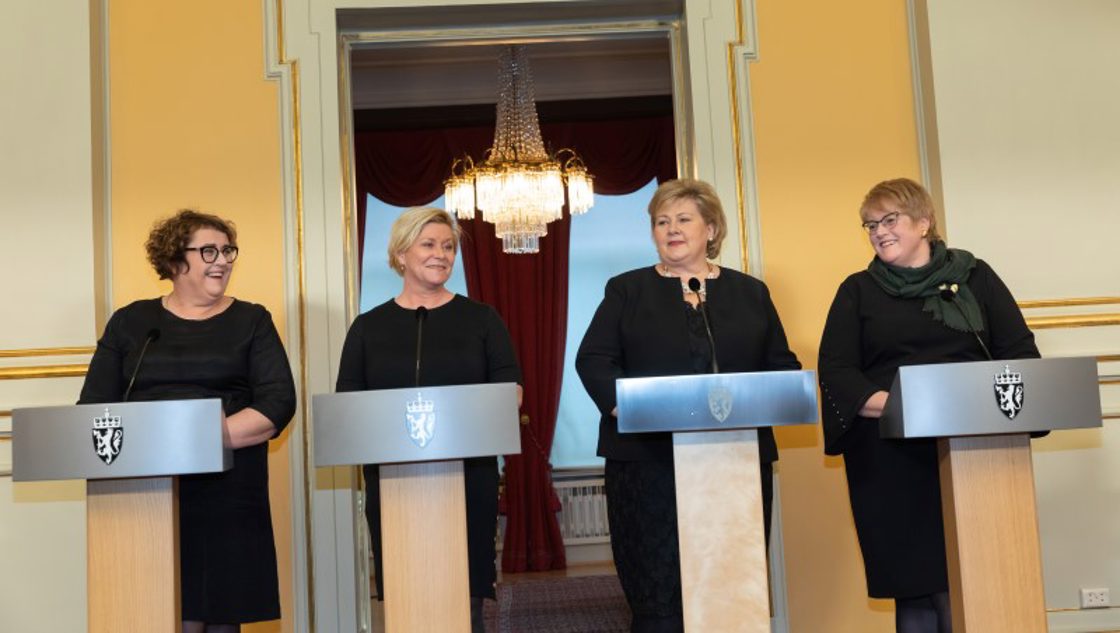
Conservative Prime Minister Erna Solberg expanded her Coalition Government Tuesday, to include the Christian Democratic Party along with coalition partners The Progressive Party and The Liberal Party.

All four parties are now headed by women: Prime Minister Erna Solberg (Conservative Party) Minister of Finance Siv Jensen (Progressive Party), Minister of Culture and Equality Trine Skei Grande (Liberal Party) and Minister of Agriculture Olaug Vervik Bollestad (Christian Democratic Party).

Olaug Vervik Bollestad, Siv Jensen, Erna Solberg og Trine Skei Grande
Olaug Vervik Bollestad, Siv Jensen, Erna Solberg og Trine Skei Grande. Credit: Hans Kristian Thorbjørnsen

– I am very happy to form a non-socialist majority government, for the first time since 1985. The fact that that four women are now heading the coaltion is an expression of the strong position of women in Norwegian society, and that female leadership today comes as natural as male leadership once did. Women leaders take on all challenges, but I do believe female representation makes a difference in politics, with emphasis on equal rights and the situation for families, says Prime Minister Erna Solberg.

Bloomberg & DNV GL: Confident Oil Industry Set to Ratchet Up Spending in 2019

After years of gloom, the oil industry’s out of its slump.

Three-quarters of senior oil and gas professionals surveyed by energy and maritime services company DNV GL AS say they are optimistic about the sector’s growth in 2019, their sunniest outlook since before the crude-price collapse in 2014. Confidence across the energy industry is now where it was in 2010, when Brent soared to $95 a barrel, about 50 percent above today’s level.

That good cheer will translate into higher spending, with 70 percent of professionals saying they’ll maintain or increase capital expenditure budgets this year. Many companies now say they’re competitive even as oil-price volatility heightens in reaction to geopolitical turmoil, after cutting costs to survive a collapse that lasted until 2017.

“Growth will be important and there is a strong belief in new investment,” said Liv Hovem, chief executive officer of DNV GL’s oil and gas unit. “They’re quite confident that there will be a demand for oil and gas going forward. They’re also confident about their competitiveness.”

Read entire article HERE.

KPMG: Verdens 10 største geopolitiske farer i 2019

Geopolitiske spenninger som har bygget seg opp over tid, utgjør den aller største risikoen i år.– Alle piler peker i feil retning, sier Agathe L’Homme, analytiker i KPMGs Corporate Intelligence-avdeling.

KPMGs alliansepartner Eurasia Group, et ledende selskap innenfor geopolitiske analysearbeid, har utarbeidet en liste over de ti største geopolitiske utfordringene de mener verden står overfor i 2019.
De mener det er lav sannsynlighet for store geopolitiske katastrofer i 2019, men advarer mot de mange mørke skyene i horisonten.

– Politisk utvikling er avgjørende for internasjonale markeder og måten vi lever våre liv. Oversikten over de største risikoområdene hjelper deg med å forstå hvilke politiske saker du bør følge med på. Med dagens nyhetsstrøm har det aldri vært vanskeligere skille mellom signaler og støy, forklarer Agathe L’Homme.

De 10 største risikoene for 2019 pekes ut som:

  1. Geopolitiske spenninger over hele verden
    Den aller største risikoen i 2019 er faren for utløsning av spenningene som har bygget seg opp over tid. Eurasia Group ser at 90 prosent av alle utsatte geopolitiske områder nå beveger seg i feil retning, blant annet svekkede politiske og multilaterale institusjoner, populisme på fremmarsj, EU, NATO, Midtøsten, forholdet mellom USA og Europa, Russland og Kina.
  2. USA og Kina
    Det er knyttet stor usikkerhet til relasjonen mellom verdens to mektigste land, USA og Kina. Dette skaper usikkerhet og bekymringer, blant annet knyttet til hvordan uenigheter om handel og økonomi skal løses. Selv om handelskonflikten løses, så vil like fullt konkurranse knyttet til teknologi, økonomi og sikkerhet fortsette å skape friksjoner. Eskalering i 2019 øker risikoen for utenrikspolitiske kriser.
  3. Tøffere cyberkonflikter
    Hackere har blitt mer sofistikerte, men samarbeid om å forhindre cyberangrep har så langt ikke har gitt betydelige resultater. Dette året blir også et vendepunkt fordi USA nå går inn for å utøve cybermakt på en mer aggressiv måte. Dette kan lede til flere angrep, snarere enn å motvirke dem.
  4. Europeisk populisme
    I 2019 vil populistiske bevegelser stå sterkere enn noensinne. Eurasia Group frykter spesielt at oppslutning om populistiske bevegelser i Italia, Østerrike, Ungarn og Polen vil kunne svekke samarbeid i Europa. Det er en stor risiko for at EU-motstandere vinner mange flere mandater i EU-parlamentet etter valget i mai, noe som vil svekke EU.
  5. USA på hjemmebane
    2019 blir et kaotisk år for amerikansk innenrikspolitikk. Sjansen for at Trump blir stilt for riksrett og fjernet fra embete er lav ifølge Eurasia gruppen, men den politiske situasjonen vil være svært ustabil.
  6. Kaldt klima for innovasjon
    Teknologisk konkurranse ble svært politisert i løpet av 2018. I 2019 må investorer og markeder betale prisen for dette. Voksende bekymring knyttet til sikkerhet, personvern og økonomi gjør at myndigheter over hele verden setter opp barrierer for samarbeid og internasjonal handel. Disse barrierene vil forstyrre global innovasjon på et kritisk tidspunkt, og kan føre til at 5G-nettverk og andre innovasjoner forsinkes eller legges på is.
  7. Koalisjon mellom “de uvillige”
    Den USA-ledede verdensordenen med Washington DC i førersetet har forvitret i løpet av de siste 20 årene. Dette ble kraftig forsterket med valget av Trump i 2016. Men det er også andre verdensledere som ikke ønsker en global liberal orden. Her finner man en blanding av nasjonalister (Brasil og Italia), ledere som taktisk omfavner Trump (Russland, Tyrkia og Nord-Korea), eller andre ledere som ser alliansen med USA som et middel for å overleve (Saudi-Arabia og Israel).
  8. Mexico
    Landets nye president, Andres Manuel Lopez Obrador, starter sin embetsperiode med en grad av kontroll og makt over det politiske systemet som ikke har vært sett i Mexico siden tidlig 90-tallet. Han mener at mange av Mexicos problemer skyldes strukturelle reformer fra 80-tallet: en mer åpen økonomi, ortodoks makroøkonomisk politikk, privatisering og deregulering. For Lopez betyr “making Mexico great again” å ta tilbake 60- og 70-tallet.
  9. Ukraina
    Spenningene mellom Russland og Ukraina vil sannsynligvis forsterkes i forbindelse med landets presidentvalg og parlamentariske valg i 2019. På slutten av 2018 fikk man en forsmak på dette da russisk marine tok flere ukrainske marinefartøy i forvaring i Kerch Strait. Det er en økende risiko for at konflikten skal eskalere, og dermed forverre forholdet mellom Russland og vesten.
  10. Nigeria
    Valget i 2019 vil ha det høyeste konfliktnivået siden overgangen til demokrati i 1999. Kandidatene Muhammadu Buhari og Atiku Abubakar anses begge som dårlige kandidater, førstnevnte uten evne til å gjennomføre reformer, den andre mest opptatt av private interesser og egen berikelse.


Les også: De ti største geopolitiske utfordringene i 2018


– Som en liten, åpen økonomi, er Norge avhengig av å ta del i den globale verdenshandelen og være med på internasjonale avtaler og ordninger. En mindre stabil verdensorden med økt proteksjonisme og svekkede institusjoner, vil stille nye krav til små nasjoner, og det gir økt usikkerhet for norsk næringsliv, forteller KPMG-eksperten, som til daglig hjelper norske selskaper med å forstå og håndtere geopolitiske muligheter og utfordringer.

Hun understreker at mange av punktene på listen er langsiktige trender som ikke er presserende, men som heller ikke vil forsvinne, slik spenningene mellom USA og Kina er et eksempel på. Analytikeren understreker at det er mulig å håndtere disse risikoene.

Analytikeren er sikker på at dersom Norge havner i skvisen i verdikjeder som er berørt av en global politisk nedkjøling, så vil vi merke det. Det samme gjelder eksport av norske varer.

Les mer i Eurasia-rapporten HER.


AmCham Mentorship Program – Third Edition Successfully Concluded

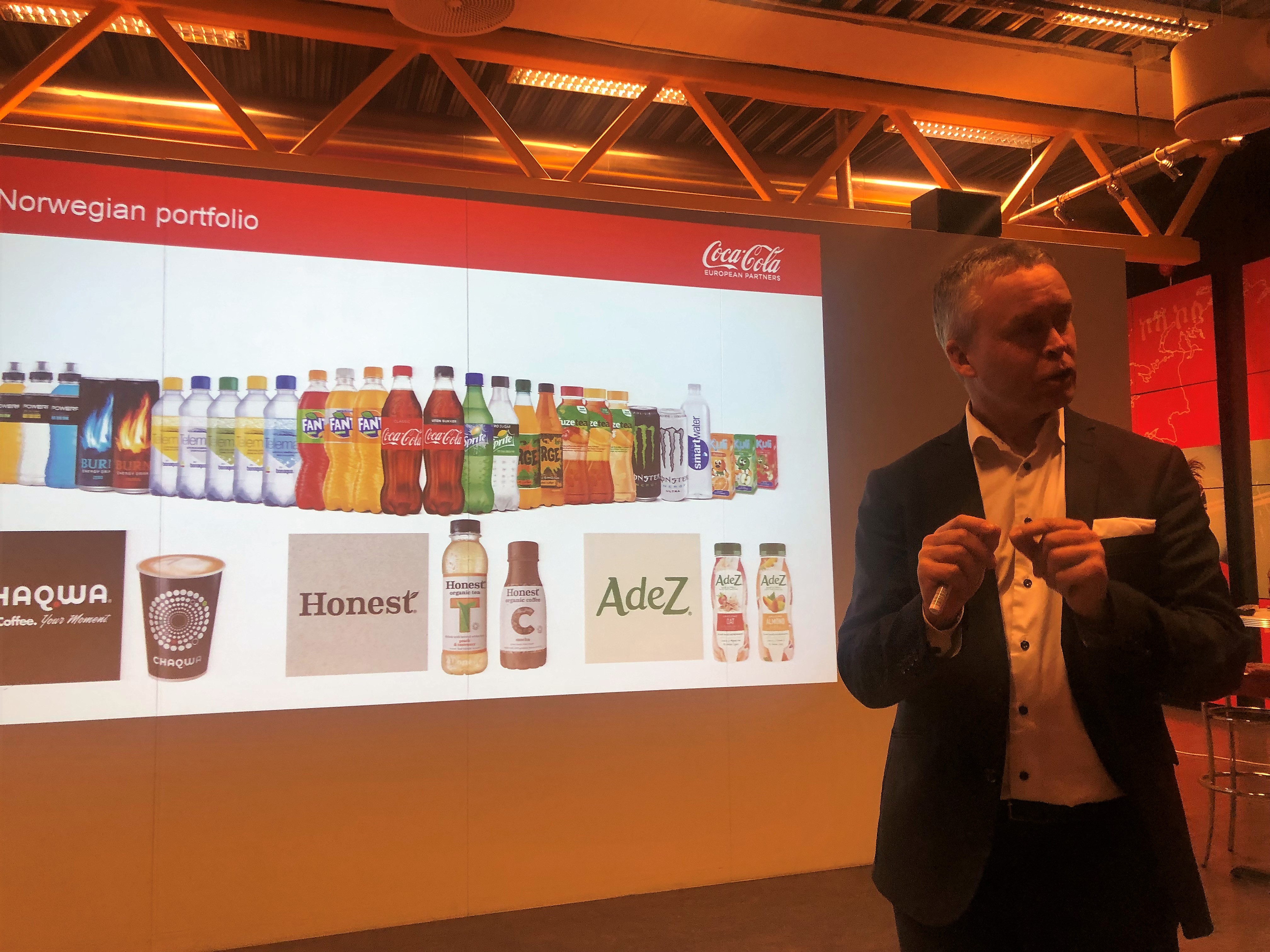
AmCham completed a rewarding third year of our popular Mentorship Program, with Stein Rømmerud, VP & Country Manager at Coca-Cola European Partners Norge, hosting the session and providing an exclusive tour of the beverage giant’s Norway headquarters.

Initiated in May 2018, this edition included mentor directors and their respective mentee colleagues from 3M, AIG, AmCham, Bristol-Myers Squibb, British American Tobacco, Citi, Gambit H+K, IBM, Janssen-Cilag, KPMG, MSD, Philip Morris, Radisson Hotel Group, Roche and the US Embassy.

All participants were paired across industries, based on interests and goals, to facilitate leadership dialogue, share best practices, and learn from one other through AmCham’s set nine-month curriculum.

Leading Through Change

Ranked as the fifth strongest brand in the world and present in 206 global markets, Coca-Cola has remained a relevant and dominant actor since its establishment in 1886. More than 1,9 billion units of their products are consumed globally each day.

AmCham Mentorship Program – Third Edition

The key to this success, according to Rømmerud, is to understand trends, invest heavily in R&D and diversify country portfolios to meet changing consumer needs. Since the launch of Diet Coke in 1982, the company has continued to diversify their portfolio to include juices, coffee, water, energy drinks and, most recently, to include organic products, such Honest Organic Iced Tea.

 “Sometimes, you have to make tough choices by changing the product portfolio. That can mean discontinuation of product lines in order to successfully compete on a global scale, where consumer demands vary drastically between different markets.”

“The volume of niche products is expanding, and Coca-Cola must embrace this and be a part of the change. Last year, Coca-Cola launched 24 new products, and this year, we are launching 30,” Rømmerud said.

Highlighting Coca-Cola’s efforts to reduce their carbon footprint, Rømmerud noted that the Norwegian market is unique, with well-developed and advanced bottle deposit systems. Coca-Cola anticipates that such systems will evolve in other countries.

To be a part of the solution, Coca-Cola continuously strives to make their packaging more environmentally sustainable by reducing the volume of plastic. Further, Coca-Cola Norway has invested in modernizing their logistical operations by switching to electric vehicles to reduce their carbon footprint.

2019-2020 Mentorship Program

To further leverage our unique network of internationally-oriented executive leaders, AmCham is now planning the next edition of our Mentorship Program.

The 2019-20 program is open for all AmCham Patron-level members. Please contact Katja Dahl Murphy (kdm@amcham.no) for additional information and registration.  

AmCham Mentorship participants enjoying the tour of Coca-Cola’s facilities.

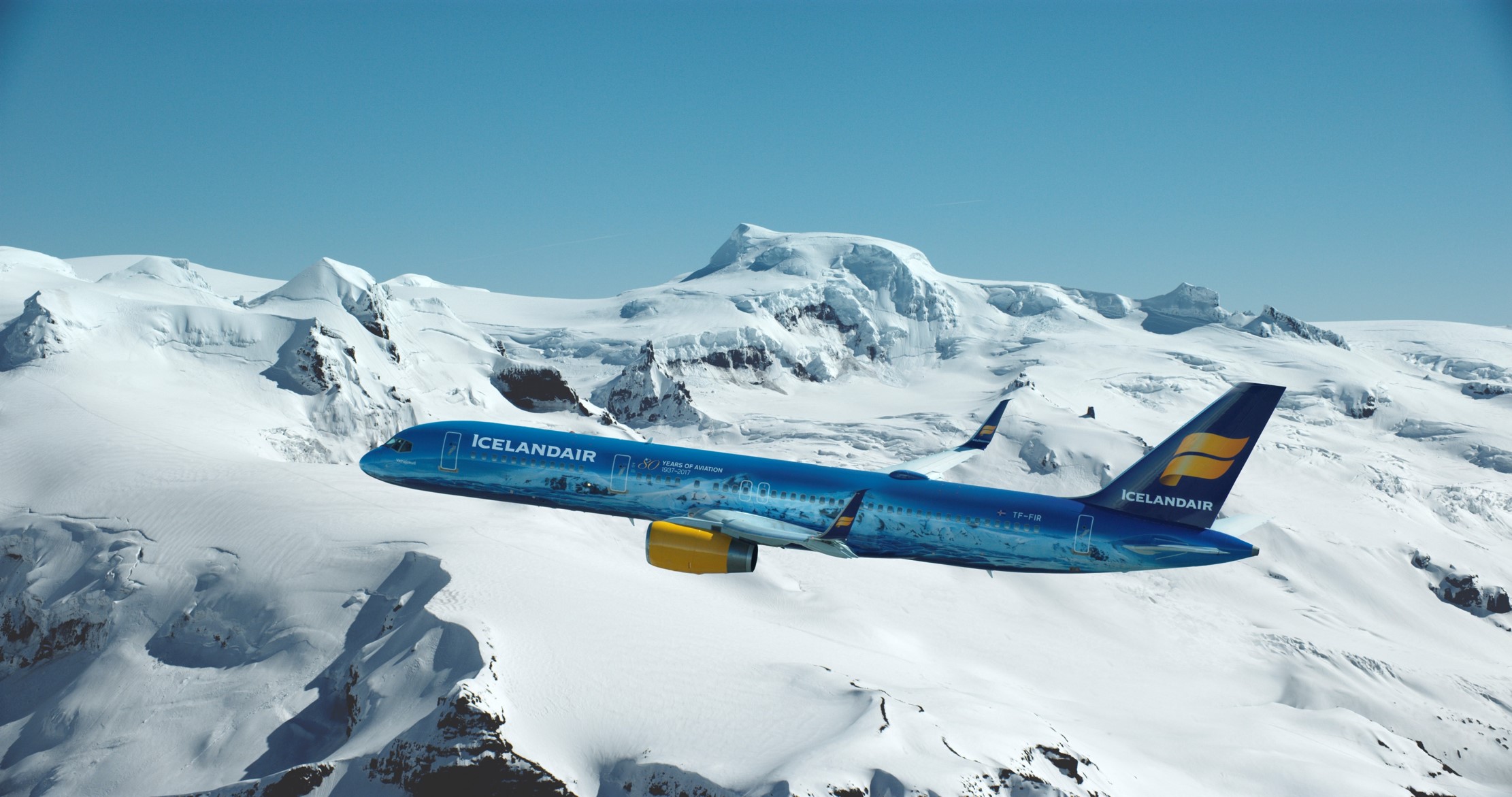
Company Profile: Icelandair – The Shortest Flight-Route Between America & Europe


With simulated Northern Lights in the cabin and extra legroom for all passengers, Icelandair utilizes its unique geographical location to provide the shortest flight-route between North America and Europe. That passengers also have the option of exploring the Saga island on their way, is an added bonus.

Company Profile: Icelandair

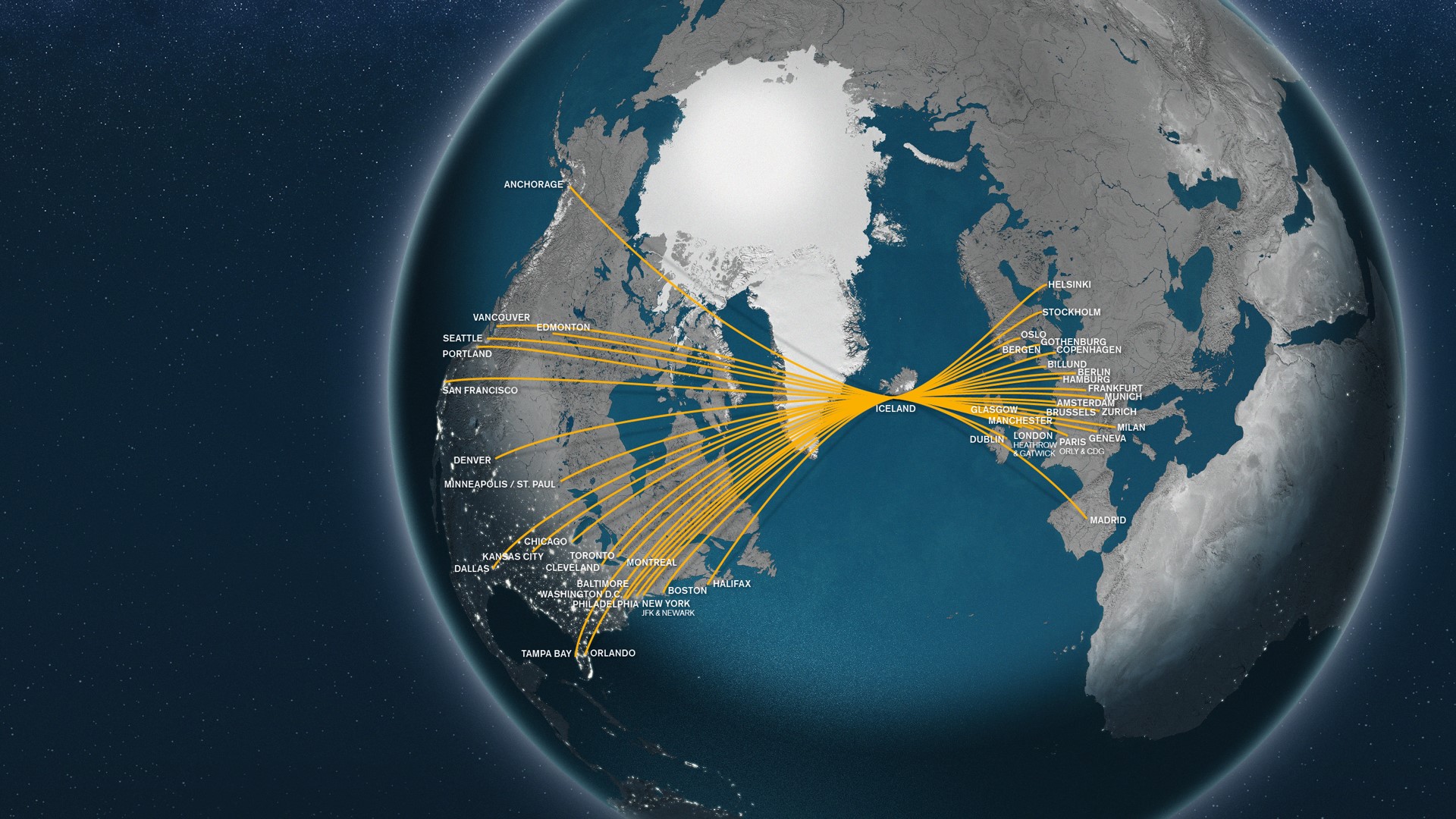
With over twenty US destinations, close to thirty European destinations and several hundred connection options, Icelandair is emerging as a leading carrier for transatlantic routes.

“Our competitive advantage is Iceland. Not only the location, but also the Icelandic culture and nature. We therefore strive to develop our service with the authentic Icelandic experience.”

“Our vision is to unlock Iceland’s potential as a year-round destination, to strengthen Iceland’s position as a connecting hub and to maintain our focus on flexibility and the in-flight experience,” Bjørn Tore Larsen, Icelandair’s Sales Manager in Norway, says.

Connection Hub

Founded in 1937, the airline has connections throughout Europe and North America, and when channeling flights through their main hub at Keflavik airport, they ensure minimal delays and supreme baggage control.

Company Profile: Icelandair
Icelandair Routes

“Regarding our market development, we are still experiencing that about 50% of all passengers use Icelandair as the “via alternative,” meaning passengers flying between Europe and North America only stop on the island to catch the next flight out. Interestingly — as this number has grown over the years — one third of the people using Iceland as a layover hub have chosen to make a prolonged stop on the island.”

“Although also increasing, about 36% of our customers are flying Icelandair to get to Iceland as their final destination, additionally boosting the country’s economy through tourism” Larsen says.

Highest Number of Female Pilots

The Saga Island’s leading airline operated 26,500 flights last year, which covered more than eight million kilometers flown- equivalent to 25 trips to the moon.

Characteristically when representing Iceland, which is a leader in global gender equality rankings, Icelandair is the airline with most female pilots in the world.

Company Profile: Icelandair

“As the airline’s strategy is to highlight the Icelandic culture, nature and experience, being the airline with most female pilots exemplifies that we respect the country’s focus on equality,” Larsen says, who also says that the number of tourists visiting Iceland has grown significantly in recent years— particularly in the winter months.

Sustainability Goals

Having undertaken ambitious measures to improve aircraft fuel efficiency and implement other sustainability efforts, Icelandair recently introduced the Boeing 737 Max, which uses less fuel and creates less noise for passengers.

“We have seen a drastic increase in fuel efficiency and all of our subsidiaries have introduced certified environmental management systems.”

“Additionally, as all flights go through Keflavik airport, our fleet plan is very flexible and when needed, we can reorganize the passengers to other flights, hence adjusting the number of aircraft in operation in accordance with market conditions and passenger needs,” Larsen says.

Icelandair offers corporate deals and has been an AmCham member since 2004.

Norwegian-American: Hotel Amerikalinjen- an interesting new attraction

Ask a guidebook writer- David Nikel answers Norway travel FAQs.

Is there anything new opening in 2019?

David Nikel

Photo: Amerikalinjen
What you can expect from Oslo’s new Norwegian American hotel, Amerikalinjen.

The most interesting new attraction for readers of The Norwegian American is actually a hotel. Set to open in March, Amerikalinjen is the refurbished headquarters of the Norwegian America Line on Jernbanetorget in central Oslo. It’s from here that the forefathers of many readers of The Norwegian American set sail for America a century ago. It’s a compelling narrative, so I’m excited as anyone to see if the experience lives up to the expectations.

If you’re traveling to Norway in 2019, have a great time and if you happen to stop by Trondheim, feel free to look me up for a coffee and a chat!

Read the full story HERE.

Norway Exported for NOK 999,8 bn in 2018

The external trade statistics comprise the development in Norway’s trade with other countries in terms of value and volume figures. Aggregated as well as detailed imports and exports figures between Norway and partner countries, trade regions and continents are provided.

External trade in goods

UPDATED

15 January 2019

CORRECTED15 January 2019

NEXT UPDATE

15 May 2019

Key figures

999.8

NOK billion – Exports in 2018

NOK BillionShare in per centChange in per cent
201820182017 – 2018
Imports711.8100.04.0
Ships and oil platforms2.60.4-88.3
Exports999.8100.016.2
Crude oil264.026.418.3
Natural gas263.826.429.9
Natural gas condensates6.50.730.4
Ships and oil platforms7.90.8-28.1
Mainland exports457.645.89.3
The trade balance288.0.63.5
The mainland trade balance-251.7.-3.2

The Top-50 biopharmaceutical investors in the world.

The European Commission (@EU_Commission) Industrial R&D Investment Scoreboard 2017/18 comprises of the 2,500 private-sector companies investing the largest sums in research and development in the world . These companies, based in 46 countries, invested a total of €736.4 Bn which is approximately 90% of the world’s business-funded R&D.

The Scoreboard included 154 biopharmaceuticals manufacturers, contributing a total of €138.9 Bn in research and development – approximately 19% of the global estimate. The sector is the one of the most research-intensive in the world. Sixteen of the Top-50 innovative companies in the world are drugmakers. 

Here is the list of the Top-fifty biopharmaceutical investors in the world 

The NCS is barely halfway through its oil and gas story, according to NPD

STAVANGER — The Norwegian Petroleum Directorate’s forecasts show that, after a minor decline in 2019, oil and gas production will increase from 2020 and up to 2023. Overall production will then approach the record year of 2004. 

“The activity level on the Norwegian Shelf is high. Production forecasts for the next few years are promising and lay a foundation for substantial revenues, both for the companies and the Norwegian society. There is considerable interest in exploring for oil and gas,” says NPD Director General Bente Nyland.

Exploration activity was considerably higher last year than in the two previous years. The number of exploration wells has increased dramatically, and 87 new production licenses were awarded, which is a new record.

A total of 53 exploration wells were spudded last year, compared with 36 in 2017. The companies’ plans show that this number will probably remain at the same high level in 2019. Eleven discoveries were made, with a preliminary resource estimate of 82 MMsm3 of recoverable oil equivalents. This is higher than each of the three previous years.

“The high level of exploration activity proves that the Norwegian Shelf is attractive. That is good news! However, resource growth at this level is not sufficient to maintain a high level of production after 2025. Therefore, more profitable resources must be proven, and the clock is ticking,” says Nyland.

She notes that nearly two-thirds of the undiscovered resources are in the Barents Sea. This area will be important for maintaining high production over the longer term.

Norway is an important long-term supplier of gas to Europe. Gas can contribute to more sustainable development in three ways: by providing reasonable and stable access to energy, by displacing use of coal and by supporting renewable energy production.

“In the time ahead, there will be more available capacity in pipelines and other infrastructure for gas. This means that it is more attractive to explore for gas, and it is important that the industry exploits this opportunity,” says Nyland.

At year-end, there were 83 producing fields on the Norwegian Shelf. One of these – Aasta Hansteen – came on stream in 2018. Simultaneously with start-up of Aasta Hansteen, the Polarled pipeline commenced operation to route gas in to the process facility at Nyhamna in Møre og Romsdal county. Aasta Hansteen and Polarled provide new infrastructure in the northern part of the Norwegian Sea, thus opening up new opportunities in this part of the Shelf.

The companies submitted plans for development and operation (PDOs) for three new projects last year, while nine plans were approved. Seven of the plans relate to field developments linked to existing infrastructure.

“Good exploitation of infrastructure and cooperation across production licenses mean lower development costs and make it possible to develop small and medium-sized discoveries in a way that is profitable. This is becoming increasingly important as the Shelf matures.”

Reserves are resources for which development plans have been adopted. Last year, for the first time, reserve growth for oil exceeded the Norwegian Petroleum Directorate’s ambitious curve for reserve growth for the period 2013 – 2023. The reasons for this very positive development are that more fields are being developed and more good work is being done to improve recovery on fields in operation.

Investments on the Norwegian Shelf in 2018 were at approximately the same level as the previous year, but several of the developments that are underway, led by Johan Sverdrup and Johan Castberg, will contribute to substantial growth in 2019.

The industry has done good work on cost control and efficiency in recent years, which has led to a considerable reduction in both exploration, development and operating costs. This is important to ensure that the Norwegian Shelf is competitive and has good resource management.

“A lower cost level is also reflected in the new projects that are approved. These are projects that are profitable for both the companies and the Norwegian society. The general scenario is that the new development projects will be profitable with significantly lower oil prices than the current level,” says Nyland.